- +86 13922774531
- info@gionar.com

English


English
November 3 , 2026
In leather goods and luxury handbag manufacturing, perfect edge painting generally refers to the meticulous finishing of cut leather edges to achieve a smooth, flat, even, and durable result. It is the standard for edge finishing in high-end leather goods.
Have you ever gently run your fingers along the edge of a luxury leather handbag and marveled at how smooth it feels? That is the result of high-quality edge paint.
The key to perfect edge painting lies in applying multiple thin layers. High-quality bags typically have at least three layers of edge paint, while thick leather requires six or more. Each layer is sanded after drying before the next layer is applied. The final result is an edge that blends seamlessly with the leather, without sitting on the surface or appearing bulky.
Therefore, perfect edge finishing does not depend on expensive materials, but on the strict execution of every step in the process.
Leather edge finishing refers to the treatment of the cut edges of leather, where the fibers are exposed, to seal, protect, strengthen, and enhance the appearance of a bag. It also makes the bag look neat, professional, and durable, while providing a comfortable grip.
Without edge finishing, raw edges can easily fray, absorb water, and crack, giving the bag a rough and unfinished appearance.
The quality of a bag can be judged by examining its edge finishing. Therefore, edge finishing is one of the clearest indicators of a bag’s quality and price tier.
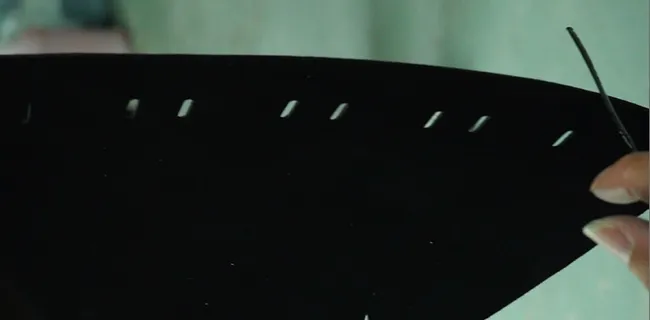
| Technique | How It Works | Best For | Appearance | Durability | Skill Level |
|---|---|---|---|---|---|
| Edge Painting (Edge Coat) | Apply 2–8 thin layers of edge paint (PU, acrylic, latex, water-based or solvent-based). Sand between layers. | Chrome-tanned calfskin, goatskin, exotic leathers | Smooth, glossy, uniform, colour-matched | High if 6–8 layers; can crack if too thick or inflexible | Medium–High |
| Burnishing | Dampen edge, rub with canvas/wood slicker to create friction heat, then apply wax/gum. | Vegetable-tanned leather | Natural, rounded, glossy, warm tone | High; ages beautifully | Medium |
| Folding / Turned Edge | Fold the leather edge inward and stitch it down. Raw edge is hidden inside. | Lambskin, soft leathers, suede, delicate skins | Clean, soft, no visible edge paint | High; avoids cracking | Medium–High |
| Piping / Binding | Wrap the edge with same/contrast leather, fabric, or grosgrain ribbon. | Canvas, nylon, raffia, woven materials | Decorative, clean, structured | High; protects raw fabric edge | Medium |
| Rolled Edge | Roll leather over itself or a cord, then stitch. | Handles, straps, top edges | Rounded, comfortable, luxurious | Very high | High |
| Raw Edge | Leave edge intentionally unfinished or lightly sealed. | Rustic, vintage, casual, suede bags | Natural, rugged, artisanal | Low–Medium; prone to wear | Low |
| Edge Dyeing + Sealing | Dye the edge, then seal with wax, gum, or edge paint. | Veg-tan, custom colours | Custom colour, natural or glossy | Medium–High | Medium |
| Metal Edge Trim | Metal frame or trim wraps the edge. | Hard evening bags, minaudières, structured clutches | Luxurious, rigid, protective | Very high | — |
Edge painting is the most widely used leather finishing technique and one of the clearest indicators of quality in leather goods.
The cut edges of the leather are first sanded smooth, then coated with a specialized edge paint (a type of resin-based coating). Once dry, the edges are sanded again. This process is repeated over multiple layers until the edges achieve a smooth, mirror-like finish.
This is a standard finishing technique for mid-range to top-tier leather goods and one of the key factors that distinguishes different quality levels, because the number of layers determines the quality of the finish.
| Tier | Number of Coats | Effect | Lifespan |
|---|---|---|---|
| Low-end | 1–2 coats | Rough, grainy, prone to peeling | 6 months – 1 year |
| Mid-range | 3–5 coats | Relatively smooth, uniform color | 2–3 years |
| High-end | 6–8 coats | Smooth and fine, with rounded edges and corners | 5–10 years |
| Top-tier | 8–12 coats | Amber-like semi-translucent texture, hand-sanded layer by layer | 10+ years |
Edge Skiving: Thick leather must be thinned before edge painting; otherwise, the edges will look bulky and heavy.
Layer-by-Layer Sanding: Sanding between each layer with 400–800 grit sandpaper is the key to achieving a smooth finish.
Manual Touch-Ups: Straight sections can be finished using an automatic edge-painting machine, but corners and irregular areas must be touched up by hand; otherwise, the transitions will look harsh and uneven.
Drying in Stages: The process should not be rushed. Applying a layer that is too thick at once can cause cracking and bubbling.
Hermès-Level Standards: Edge paint must be applied in more than eight layers, with each layer air-dried naturally before sanding. Finishing the edges of a single bag takes more than three days—this is the price of top-tier craftsmanship.
Advantages: Smooth and refined finish, water and stain resistance, a luxurious appearance, customizable colors, suitability for mass production, and the ability to match any handbag color design.
Disadvantages: Complex, time-consuming, and costly process. The edge paint is most likely to chip at corners and areas subjected to repeated bending.
Process: Instead of using edge paint, the leather edges are progressively sanded, from coarse to fine grit, until smooth. Beeswax, neatsfoot oil, or specialized edge wax is then applied. Friction generates heat, allowing the wax to penetrate the leather fibers and create a natural sealed edge.
Suitable only for thick vegetable-tanned leather, this technique is a favorite among handmade leathercraft enthusiasts.
| Dimension | Description |
|---|---|
| Suitable Materials | Vegetable-tanned leather, thick cowhide, vintage-style leather goods |
| Advantages | Most natural; can self-repair and be maintained; becomes more lustrous with use (like polishing jade) |
| Disadvantages | Only suitable for thick vegetable-tanned leather; extremely labor-intensive; high requirements for leather quality |
| Hand Feel | Warm and smooth, natural, with a patina feel |
| Cost Share | 20–30% |
Advantages: Preserves the leather’s natural texture, is eco-friendly with no risk of peeling, and develops an increasingly beautiful sheen with use.
Disadvantages: Suitable only for thick, firm leather; colors cannot be customized uniformly; and the technique requires a high level of skill.
How to Identify It: The edges reveal the natural texture of the leather fibers rather than an entirely smooth, plastic-like finish, giving them a distinctive “breathable” quality.
Maintainability: If the waxed edges become scuffed, you can sand them lightly with sandpaper and apply a little wax to restore them to like-new condition. This ability to be maintained and renewed over time is one of the reasons many people are drawn to this technique.
Process: The edges of the leather or fabric are folded inward and then stitched in place, concealing the raw edges within the layers.
| Dimension | Description |
|---|---|
| Suitable Materials | Thin leather, sheepskin, soft cowhide, thin fabric, lining |
| Advantages | Low cost, simple process, soft edges without hard edges |
| Disadvantages | Edges become thicker, not abrasion-resistant, prone to wrinkling and material buildup at corners |
| Tier Positioning | Entry-level to mid-range, thin leather soft bags, small leather goods lining |
| Cost Share | 5–8% |
Advantages: No additional paint is required. Both the inner and outer surfaces are made of the original leather, resulting in a soft texture that is less prone to peeling and more durable.
Disadvantages: Requires more leather material and manual work, resulting in higher costs and slightly thicker edges.
✅ High-End: Consistent fold width, smooth corners without excess material buildup, and even stitching.
❌ Low-End: Inconsistent fold width, bulging and wrinkled corners, and crooked stitching.
Key point
The edges must be thinned through skiving before folding. Otherwise, the folded edges will be too thick, making the finished bag look bulky and less refined.
Process: A separate strip of leather or fabric is used to completely wrap the raw edges before being stitched in place.
| Dimension | Description |
|---|---|
| Aliases | Binding, piping, welt |
| Suitable Materials | Canvas, woven bags, fabric bags, spliced styles, straw bags |
| Advantages | Clean and neat; can use contrasting colors for decoration; cost-controllable; prevents raw edges from fraying |
| Disadvantages | Has splice seams; increased thickness; medium texture/feel |
| Tier Positioning | Mid-range bags, canvas bags, woven bags |
| Cost Share | 8–12% |
Advantages: Effectively protects the edges, allows contrasting colors to be incorporated for a more distinctive appearance, and offers excellent durability.
Disadvantages: Increases manufacturing complexity and material costs, and makes the edges slightly bulkier.
Process: An overlock machine is used to wrap the raw edges to prevent fraying, similar to the overlocking used in garment construction.
| Dimension | Description |
|---|---|
| Advantages | Extremely fast, extremely cheap, prevents thread unraveling |
| Disadvantages | Very rough, looks very cheap |
| Tier Positioning | Only suitable for invisible lining edges and interiors of low-end bags |
Quality red flag
If a bag’s exposed edges are finished with overlock stitching, it is generally a clear sign of a low-end product.
| Leather Type | Recommended Edge Finish | Reason |
|---|---|---|
| Top-grain cowhide (smooth) | Edge painting (6–8 layers) | Classic, premium, durable |
| Vegetable-tanned leather | Burnishing + wax | Enhances natural ageing and patina |
| Lambskin / soft leather | Folded edge + thin edge paint | Prevents cracking; keeps soft feel |
| Canvas / nylon | Piping / binding | Covers raw fabric edges cleanly |
| Raffia / straw | Leather piping + inner fabric backing | Stops fibres unraveling; adds structure |
| Suede / napped leather | Folded edge + binding | Suede cannot be edge-painted |
| Crocodile / snake skin | Same-leather piping + inner edge paint | Highest-grade finish for exotic skins |
| Evening / hard bags | Metal edge trim | Luxury look; protects corners |
| Quality Indicator | Good Sign | Bad Sign |
|---|---|---|
| Smoothness | Even, glass-like, no bumps | Bubbles, streaks, drips |
| Thickness | Thin, flexible, multiple layers | Thick, rigid, single heavy coat |
| Colour | Matches leather or hardware tone | Mismatched, yellowed, patchy |
| Adhesion | No peeling at flex points | Lifts, cracks, separates |
| Edge shape | Rounded, sealed, comfortable | Sharp, raw, fuzzy |
| Consistency | Same across all edges | Uneven between panels |
For Luxury Handbags: Edge painting or folded edges are ideal for achieving a clean, refined appearance.
For Handmade Leather Bags: Burnishing is most suitable when the leather is in good condition and a natural look is desired.
For Soft Leather Tote Bags: Either folded edges or binding can be used, depending on the design and leather thickness.
For Structured Designer Bags: Edge painting or decorative binding helps emphasize the bag’s shape.
For Rugged-Style Leather Bags: Carefully finished natural edges may better complement the design.
Quality tip
Inspect corners and areas that bend frequently. These areas are prone to edge paint cracking or peeling, and poorly executed folded edges can become bulky.
High-End Genuine Python Leather Handbags: Beveled edges with burnishing, or high-quality flexible edge paint.
Vegan Bio-Based Leather (Banana Leather, Apple Leather, etc.): Edge painting or edge binding. Avoid excessive burnishing, which may damage the delicate fibers.
Vintage Vegetable-Tanned Leather: Waxed edges or gum burnishing.
Low-Cost Promotional Leather Bags: Basic single-layer edge painting.
1. Set Clear Standards During Sampling: Specify binding width (e.g., 2 mm ± 0.2 mm), the number of edge paint layers, and edge margins in the contract. These are the details most likely to be compromised during mass production.
2. Use High-Quality Thread: Binding thread should match the material in color. Poor-quality thread that frays can look very unattractive.
3. Inspect the Corners: Corners are the ultimate test of craftsmanship. High-end bags have smooth, consistent corners, while low-end bags often have uneven spacing and crooked finishes.
4. Do Not Overlook the Interior: If the inner edges look rough when you open the bag, the overall impression of quality can drop dramatically.
Perfect edge finishing is an essential technique for high-end leather goods. The edges should be smooth, even, flexible, and durable, without appearing bulky, lumpy, or prone to cracking. Achieving this result requires the right materials, precise techniques, and patience.
There is a saying in the leather craft industry: “Beginners look at the leather surface; experts look at the edges.” A perfect painted edge, often referred to in the industry as a “mirror edge” or “amber edge,” is one of the most patience-demanding processes in leather craft. There are no shortcuts—only the repeated cycle of skiving, sanding, painting, and drying.
Edge painting is challenging because it is an “additive process”: layers are applied one by one, and each layer must dry completely and be sanded smooth before the next is applied. Any shortcut at any stage—applying the paint too thickly, failing to let it dry completely, or skipping sanding—will become visible in subsequent layers. Furthermore, defects cannot be repaired locally; the entire coating must be stripped off and redone.
A proper edge finish typically requires 4–6 layers. High-end standards call for 6–8 layers, while top-tier standards require 8–12 layers, with each layer air-dried naturally before sanding. This is why edge painting alone can take more than three days on a Hermès bag.
Edge painting is a process in which time is exchanged for quality and refinement. If you rush, the results will suffer. Every step below depends on allowing sufficient drying time between layers. This process demands considerable skill and patience from the craftsperson.
A Smooth Base: The edges of the leather bag must be completely smooth and free of any impurities.
Thin Coats: Apply multiple thin layers rather than one thick coat.
Allow Sufficient Drying Time: Each layer must dry thoroughly before the next is applied, and the final layer must also be allowed to dry completely.
Maintain Cleanliness: The work area and tools must be kept clean at all times.
| Category | Recommended |
|---|---|
| Edge Paint | Flexible polyurethane edge paint (e.g., Stahl, Fenice, Giardini) |
| Applicator | Edge roller, fine brush, or edge pen |
| Sanding | 400, 600, 800, 1200 grit sandpaper / sanding block |
| Cleaner | Alcohol or edge prep cleaner |
| Sealer | Wax or edge sealant (gloss, semi-gloss, matte) |
| Polishing | Canvas cloth, felt wheel, or wool dauber |
| Heat Source | Heat gun or edge iron (optional) |
Water-Based Edge Paint: Low in toxicity, environmentally friendly, low in odor, and easy to clean. It is essential for exports to the EU. However, it has slightly weaker adhesion and is more affected by humidity during drying. Suitable for vegetable-tanned and oil-tanned leather.
Solvent-Based Edge Paint: Offers strong adhesion, a good gloss, and fast drying, but has a strong odor and contains VOCs. Suitable for smooth leather surfaces, but requires a well-ventilated environment and offers less flexibility on thin leather.
High-End Brands: Brands with strict environmental requirements tend to use water-based edge paint. As a result, the edges on luxury handbags may actually be more prone to cracking. This is the trade-off for environmental compliance, not necessarily poor craftsmanship.
Color Considerations: Black is more forgiving. White, beige, red, and bright fashion colors reveal every pinhole, dust spot, sanding mark, and shadow from a dark base. These colors therefore require more surface preparation and multiple coats.
The cut must be perpendicular, straight, free of jagged edges, and without fraying, forming a clean 90-degree angle.
Use a high-precision cutting machine or a sharp leather knife to make a clean cut in one pass. Do not repeatedly saw back and forth.
Uneven edges or angled cuts cannot be corrected by painting later, no matter how carefully the edge paint is applied.
Watch out
This is where beginners most often go wrong: The cut is rough and uneven. Subsequent sanding only shortens the frayed fibers, so the finished edge still looks like a “mirror image of a frayed edge” once the paint is applied.
Use an edge beveler to create a small rounded edge or slight bevel along the leather.
The purpose is to allow the edge paint to wrap around the leather edge rather than simply adhere to the vertical cut surface.
Beveler size selection:
Neither too much nor too little beveling is acceptable. If too much leather is removed, the edge becomes too thin and loses its firmness. If too little is removed, the edge paint cannot properly wrap around the edge and will eventually peel off with use.
Standard
The bevel should account for approximately one-third to one-half of the leather thickness. The edge should feel smoothly rounded to the touch, not like a sharp, hard right angle.
Before sanding, use a suitable cleaner to remove dust, grease, and residual adhesive from the edge.
Oil and adhesive residue can directly cause poor adhesion, bubbling, and peeling of the edge paint.
Use a cotton swab dipped in cleaner to wipe along the edge once, then allow it to evaporate and dry completely.
Sand progressively without skipping grits: Use 240 grit to level the edge, 400 grit to refine it, and 600 grit to polish it.
Place the sandpaper on a wooden block or sanding stick to keep the sanding surface flat.
Sand along the edge in one direction or with controlled back-and-forth strokes, applying even pressure. Avoid rubbing repeatedly in one spot and creating dips.
The goal is to create a flat, smooth surface free of frayed fibers.
Why it matters
This step determines the uniformity of the subsequent edge paint. If the base is uneven, even multiple coats will still produce a wavy edge.
Use an edge-paint applicator to apply a thin, even coat of edge paint.
It is better to apply multiple thin coats than one thick coat. A coat that is too thick is likely to bubble and crack.
Hold the applicator at a 45-degree angle and move it steadily along the edge in one continuous stroke without interruption.
After application, lay the piece flat to dry rather than standing it upright, as the edge paint may run or sag.
Air-drying: Typically, allow 20–40 minutes per coat, depending on temperature and humidity.
Humidity is critical: When humidity exceeds 60%, water-based edge paint dries more slowly and is more likely to develop a whitish appearance and poor adhesion.
Low-temperature drying at 40°C or below may be used. However, excessive heat can cause the surface to dry before the interior, inevitably leading to cracking later.
How to tell when the paint is completely dry: Lightly touch it with a fingernail. It should not feel sticky or soft, the color should be uniform, and there should be no visible changes in gloss.
Warning
Applying the next coat before the previous one is fully dry can be disastrous. If the surface dries while the interior remains wet, moisture can accumulate beneath the successive layers, eventually pushing up the surface and causing bubbles or entire sections of paint to peel away.
After each coat of edge paint has dried completely, sand it gently with fine-grit sandpaper.
The purpose is to remove surface irregularities and tiny particles, creating a suitable bonding surface for the next coat.
Use light pressure and sand only the high spots. Do not sand through the coating.
Clean the edge again to remove all dust after sanding.
Repeat the cycle of “apply one coat → dry completely → sand lightly → remove dust.”
The number of layers determines the quality tier:
| Coats | Effect | Positioning |
|---|---|---|
| 1–2 coats | Rough, grainy | Low-end |
| 3–5 coats | Relatively smooth, uniform color | Mid-range |
| 6–8 coats | Smooth and fine, rounded beveled edges | High-end |
| 8–12 coats | Mirror-like / amber-like finish | Top-tier |
Apply a Top Coat: Apply a top coat as the final layer to improve abrasion resistance, prevent stains, and control the desired sheen (matte, semi-gloss, or glossy).
Polishing: Use a wool wheel or cotton cloth to rub the surface quickly, generating gentle warmth and making the edge paint appear clearer and more refined.
Wax Sealing (Optional): Apply a layer of wax and polish it to improve smoothness and provide additional protection.
Beveling: A high-end finishing technique involves lightly sanding both sides of the edge at an angle, creating a softer feel to the touch. This is the source of the refined feel associated with luxury craftsmanship.
| Variable | Correct Practice | Consequences of Doing It Wrong |
|---|---|---|
| Coating Thickness | Thin multiple coats | Thick coating → bubbling, cracking, drips |
| Drying Level | Each coat completely dry | Dry surface but wet inside → later bubbling, peeling |
| Sanding Precision | Progress through grits step by step; use a sanding block | Skipping grits / sanding by hand → wavy edges, sanding through the coating |
| Temperature & Humidity | 20–25°C, 40–60% humidity | High humidity → whitening, not drying, poor adhesion |
| Edge Skiving / Beveling | Rounded edge accounts for 1/3–1/2 of the leather thickness | Too much skiving → edge lacks firmness; too little → edge cannot be properly wrapped |
| Edge Paint Applicator Quality | Good applicator + 45-degree angle at constant speed | Poor tool → paint goes out of bounds, uneven thickness |
| Defect | Main Cause | Solution |
|---|---|---|
| Bubbling | Coating too thick / underlying layer not fully dry / oil or grease on substrate | Scrape off and redo; switch to thin multiple coats; improve cleaning and drying |
| Cracking | Too thick in one coat, drying too fast, edge paint too brittle | Reduce single coat thickness; control drying speed; switch to more flexible edge paint |
| Uneven color / blotchiness | Edge paint not stirred evenly; inconsistent coating thickness | Stir thoroughly; apply thin even coats; build up with multiple layers |
| Whitening | High humidity environment; water-based edge paint not fully dried | Control humidity; extend drying time; switch to edge paint suitable for high humidity |
| Paint loss / peeling | Insufficient edge skiving; substrate not cleaned; poor adhesion | Re-skive edge; clean thoroughly; choose edge paint with strong adhesion |
| Overspill onto leather surface | Applicator too large or unsteady hand | Switch to finer applicator; or apply masking tape to protect leather surface |
| Wavy edge / uneven | Sanding without wooden block; skipping grits | Re-sand progressively starting from 240 grit |
| Graininess / orange peel | Insufficient sanding; impurities in edge paint | Fine sand between each coat + dust removal; filter edge paint |
| Hard, brittle edge | Too many coats but each too thick | Maintain thin coats; control total thickness |
Quick self-inspection
Hold the bag edge at an angle against a strong light. A mirror-finished edge should appear as a continuous band of light. Any breaks, particles, or color differences will become immediately visible.
| Method | Suitable For | Advantages | Disadvantages |
|---|---|---|---|
| Machine Edge Painting | Straight sections, large-volume production | High efficiency, consistent spacing | Stiff corner handling; difficult for irregular shapes |
| Hand-Painted Edge | Corners, curves, small items | Natural transitions, precise control | Extremely time-consuming; depends heavily on worker skill |
| Hybrid Process (Recommended) | Mid-to-high-end mass production | Straight lines by machine, corners touched up by hand | Balances efficiency and quality |
Industry Practice: Reputable mid- to high-end factories generally use a combination of machine application and manual edge finishing. Machines are used to efficiently apply the initial layers, while corners and irregular areas are touched up by hand. The edges are then polished uniformly as the final step.
If you are planning to customize a bulk of leather bags, make your requirements explicit to your OEM factory. Include the following details in the specifications rather than relying on standard workshop practices:
High-quality edge finishing reflects true luxury craftsmanship. Hermès uses a precise process involving more than seven layers on painted edges. Improper application indicates a risk of peeling. The key is not the technique itself, but the discipline with which the process is executed.
Senco Group was founded in 1997, initially focusing on the sale of leather edge paint and footwear chemicals. In 2002, it established its first production facility in Dongguan. In 2011, it set up a water-based polymer plant in Dongguan, followed by the launch of its water-based polymer production base at Gantang Industrial Park in Shaoguan in 2017.
The operating entity is Dongguan Lianke Environmental Protection Materials Co., Ltd., established in 2018 and headquartered at No. 25 Simao Road, Houjie Town, Dongguan. It has registered capital of RMB 10 million and approximately 115 employees as of 2024. It is the group’s business unit specializing in edge paint.
Since 2013, Senco Group has established production facilities and customer service centers in Vietnam, the Philippines, Cambodia, Italy, the United States, and India, giving it global supply capabilities.
Senco positions itself as a vertically integrated manufacturer of environmentally friendly, water-based edge paint. It offers a one-stop solution covering polyurethane synthesis, formulation design, edge paint production, after-sales service, and application training.
Its entire product range is certified to ISO 9001:2015, ISO 14001:2015, and ISO 45001:2018, and complies with REACH, RoHS, and ZDHC MRSL V3.1 standards. These credentials align with the environmental chemical requirements of European and American brands and are a key reason the company has become a designated supplier to several world-renowned fashion brands.
The three core products:
Edge Paint Primer: High viscosity, strong penetration, and resistance to edge cracking and bursting.
Colored Edge Paint: Available in three sheen levels—matte, semi-gloss, and high-gloss—with support for trendy and custom colors.
Adhesion Promoter: Enhances adhesion between the primer and the substrate.
Environmental Innovation: The BIO-Circul® bio-based edge paint series features bio-based content tested in accordance with ASTM D6866. The company has consequently been recognized as a Champion of the USDA BioPreferred® Program.
Special-Effect Products:
Both product lines are also available in bio-based versions. The company also promotes its anti-cracking primer, designed to address the common problem of edge splitting on handbags.
Applications: Handbags, belts, watch straps, leather shoes, and other leather goods. It is particularly suitable for brands seeking OEM mass production, environmental compliance, and stable large-scale manufacturing.
FENICE was founded in 1973 and is headquartered in Italy. It is a specialist leather chemicals company with an internationally advanced testing laboratory and a technical team comprising more than 50 PhD-level experts.
FENICE is a well-established name in luxury goods supply chains, serving top-tier brands such as Hermès, Gucci, and Chanel. In 1985, it received Italy’s highest national CISQ award. In 1994, it obtained the European Community UNI-EN 9001 and international ISO 9001 quality certifications.
Its product portfolio began with leather finishing and gradually expanded to include leather care, repair products, automotive and aircraft interiors (obtaining EU EASA Part 145 certification in 2015), and water-based polyurethane raw materials.
In China, FENICE Fenxi China was established in 2021, followed by the establishment of Fenxi (Guangzhou) in 2024. The company operates through general distributors and partner companies.
Industrial / Factory Range (supplied to tanneries and leather goods manufacturers):
Handcraft / Retail Range:
FENICE offers a complete color chart and custom color matching. Common retail color ranges in China include colors numbered 1–56 and 57–94. Orders should be placed using the complete product code or official color name, such as AR6460/T1214, because numbering systems independently assigned by different sellers are not interchangeable.
Applications: Handmade leathercraft studios, high-end custom handbags, vegetable-tanned leather, and vintage-style leather goods. FENICE products are also used in premium finished leather goods for brands with stringent material and component requirements, such as The Row, where such specifications may be treated as standard requirements.
| Comparison Dimension | Fenice | Xianke (Edge Polymer) |
|---|---|---|
| Brand DNA | Italian tradition, industry gold standard | Chinese intelligent manufacturing, innovation & scale |
| Visual Style | Thin yet full, clean and straight lines | Three-dimensional & rounded, stronger edge presence |
| Core Strengths | Ultimate flexibility and adhesion, dry touch | Strong R&D, extremely wide product line, leading eco-tech |
| Signature Products | Classic matte/gloss series, balanced & stable performance | BIO-Circul® bio-based series, crack/flow/gradient special effect edge paints |
| Best For | Pursuing classic, delicate, reliable luxury quality; high-end custom and replication | Pursuing design sense, artistic effects, and eco-concepts; fashion brands, creative leather goods, and mass production |
Other brands, including Youyoufang (Humen, Dongguan), Tengfei (Shenzhen), Zuoli, Aoyate, Huiqi, and Boao, are primarily major wholesale and DIY suppliers on platforms such as 1688 and Taobao.
| Brand | Country | System | Representative edge-paint products | Core advantages | Best-fit positioning |
|---|---|---|---|---|---|
| Fenice | Italy | Water-based SECTION LACQUER | AR 6450/T matte, AR 6350/P gloss, Diamond series | Ultra-thin, cold/heat resistant, optimal performance at 48h, gold-standard hiding power | High-end/luxury handbags, fine edge finishing |
| Stahl | Netherlands (global) | Water-based PU, bio-based | EDGION® C90/C79, Imperia®, Orion, Ymagine® | Resists cracking/peeling/color migration, fast drying with fewer coats, bio-based, ZDHC | Luxury + industrial mass production, full coverage |
| Kenda Farben | Italy | Water-based, ZDHC | Orly BT Extramat / Orly K Mat / Orly SL + Filler HK | Ultra-matte, highly elastic & abrasion-resistant, Italian style | Fashion bags / belts / footwear |
| Giardini | Italy | Professional edge paint | Basic Edge Paint (100+ colors) | Widest color range, custom matching, 9.5/10 | Luxury / small leather goods |
| Uniters Pro | Europe | Water-based PU | EP Filler, EP Reflex | Heavy-duty durability, strong filling | High-stress bags / travel pieces |
| Xianke D&A | China (Dongguan) | Vertically integrated water-based PU | DAS680/C anti-burst primer, DHS-05 high-filling, BIO-Circul® bio-based, special-effect edge paints | −30°C cold resistance, 10,000-cycle anti-burst, bio-based, designated by international-brand OEM factories, REACH/ZDHC | Mass-production value + high-end innovative effects |
| Fiebing’s | USA | Solvent-based | Edge Kote | Cheap, fast-drying, easy to use | Entry-level / DIY (not recommended for frequently flexed areas) |
Gionar (Guangzhou Gionar Leather Goods Co., Ltd.) is a mid- to high-end genuine leather goods OEM/ODM manufacturer based in Baiyun District, Guangzhou. The company has obtained certifications including the ISO 9001:2015 quality management system certification. Its edge painting process is implemented according to different order grades, with an overall standard that falls within the export-quality mid- to high-end range.
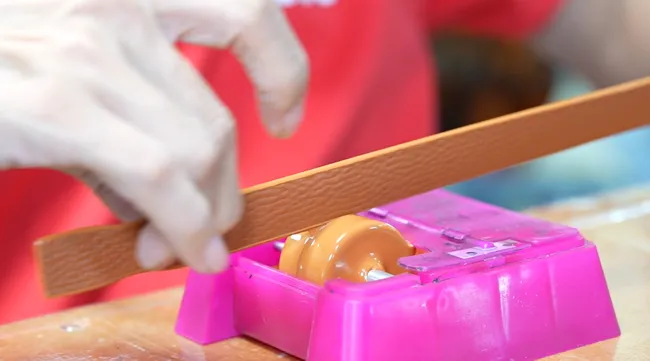
Gionar’s edge finishing process features multiple layers of hand-applied paint, strict quality control, and a clear distinction between water-based and oil-based finishes.
Gionar uses two main types of edge paint, each with distinct characteristics:
| Type | Finish | Key Characteristics |
|---|---|---|
| Water-Based | Matte | Can be ironed; considered more environmentally friendly. |
| Oil-Based | High Gloss | Should not be ironed; provides a shinier, harder finish. |
Both types can be adjusted in terms of color, consistency (thick or thin), and sheen (matte, semi-gloss, or high-gloss) according to the bag’s leather material and design.
| Category | Gionar Configuration | Description |
|---|---|---|
| Edge Paint Type | Primarily water-based eco-friendly edge paint; solvent-based for a small number of orders | Must comply with REACH and RoHS for exports to Europe and the US; water-based edge paint has low VOC and no heavy metal exceedance |
| Edge Paint Brand | Domestic first-tier leather chemical brands (e.g., mainstream industry suppliers); imported brands can be specified for high-end orders | Selected according to customer tier; imported edge paint offers better adhesion and color saturation |
| Color Service | Supports color matching based on customer’s leather / Pantone color numbers | Color difference controlled at ΔE ≤ 2.0–2.5 (regular styles); high-end orders can achieve ≤1.5 |
| Edge Skiving Tools | Skiving tools (#0–#2) used in different grades | Select by leather thickness: #0 for thin leather, #1 for medium-thick, #2 for thick |
| Sanding Consumables | Sandpaper 240 → 400 → 600 → 800 grit progressively | Strictly progress step by step, no skipping |
| Edge Painting Tools | Automatic edge painting machine + manual edge applicator / edge paint pen | Machine for straight lines, hand touch-up for corners |
Gionar emphasizes that edge painting is a highly technical process that requires manual work. To ensure high-quality handbags, its standard bags require 5–6 layers of hand-applied edge paint. A small number of bags use three layers, while premium leather requires six or more layers.
Application Method: The coating is applied to the cut edges of the leather, such as the edges of handles and shoulder straps, to cover exposed fibers and protect the leather.
Quality Standards: The finish must be even, complete, smooth, and flexible, with no “surface-floating” effect (meaning the coating must not adhere unevenly to the surface). It should also offer crack resistance, moth resistance, and environmentally friendly properties.
Cost and Durability: Low-quality coatings cost approximately US$1 and last only two to three months, while high-quality coatings cost around US$3 and can last at least five years.
| Tier | Number of Coats | Process Details | Target Customers | Edge Cost per Bag (USD) |
|---|---|---|---|---|
| Mid-range Mainstream | 5–6 coats | Sanding between each coat with 400–600 grit, water-based eco-friendly edge paint, precise color matching | European/American mid-range brands, own-brand bestsellers | $0.55 – $1.19 |
| High-end Custom | 6–8 coats | Layer-by-layer sanding, wear-resistant topcoat, rounded corners, hand-finished edges | High-end designer brands, vegetable-tanned leather collections, limited editions | $1.49 – $2.98 |
To address the effects of various challenging environments on handbags, Gionar optimizes its edge paint formulations by carefully selecting suitable resins, flexible components, and additives. This helps maintain coating hardness, surface integrity, flexibility, and adhesion under different environmental conditions.
For brands targeting Russia, Northern Europe, and North America, cold resistance is a non-negotiable requirement. Conventional edge coatings, particularly lower-cost oil-based formulations, contain polymers that can become stiff and brittle at low temperatures. When a bag is exposed to freezing conditions, typically between -20°C and -40°C, the edge coating contracts. Once the bag is bent or subjected to impact, the brittle coating may crack, peel, or even detach completely from the leather.
Gionar uses high-quality, cold-resistant edge paint that maintains a high degree of flexibility even at extremely low temperatures. For the European and Russian markets, cold-resistant edge coatings are essential to preserving product integrity during winter.
Testing Method: Place the finished handle at -20°C (or -30°C for the Russian market) for four hours, then bend it around a 10 mm steel mandrel. No cracking, whitening, or loss of adhesion should occur. Thermal cycling tests should also be conducted between -30°C and +40°C for 20 cycles to simulate real-world usage conditions.
In contrast to regions such as Russia and Northern Europe, the Middle East presents the opposite extreme. In countries such as the UAE, Saudi Arabia, and Qatar, summer temperatures frequently exceed 50°C (122°F). Handbags are often left in hot vehicles or transported in environments without air conditioning.
Under prolonged exposure to high temperatures, conventional edge coatings may soften, become sticky, and migrate into the leather or lining, causing a blocking effect. This not only damages the bag’s appearance but also leaves residues that are difficult to remove.
Gionar uses specially formulated heat-resistant edge coatings that have been tested to remain firm, dry, and non-sticky at temperatures between 60°C and 80°C. For partner brands serving the Middle Eastern market, working with an experienced manufacturer such as Gionar helps protect brand value and prevent damage to brand image.
Heat-Aging Test: Maintain the sample at 70°C for 168 hours, then inspect it for cracking, color changes (ΔE ≤ 1.5), softening, and reduced adhesion.
After heat aging, the coating must achieve a colorfastness rating of at least Grade 4 in dry and wet rubbing tests in accordance with ISO 105-X12. This ensures that the edges will not stain customers’ light-colored abayas or shirts.
International fashion brands place considerable emphasis on environmental protection and sustainability. The European Union and several other markets also impose stringent environmental requirements. Gionar aims to meet these needs by evaluating raw materials and formulations and selecting environmentally friendly edge coatings that reduce environmental impact while maintaining the performance required for high-quality edge finishing.
Gionar uses modern, environmentally friendly edge paints designed to significantly reduce VOC emissions. These coatings are free from harmful heavy metals such as lead and chromium and do not use toxic solvents. High-quality eco-friendly coatings comply with strict international regulations, including EU REACH, RoHS, and California Proposition 65.
For handbags used daily, edge coatings—particularly those on handles and shoulder straps—are in repeated contact with the skin. Low-quality coatings may contain residual monomers, nickel, or aggressive chemical solvents that can trigger allergic contact dermatitis.
Gionar uses low-allergen edge coatings that are free from common allergens and formulated to minimize skin irritation. These products may also carry OEKO-TEX Standard 100 certification or specific approvals for skin-contact safety. This is particularly important for premium handbags, medical bags, and children’s products.
Low-cost edge coatings, which may contain animal fats, natural resins, or certain plant starches, can attract pests. In humid climates or during long-term storage in warehouses, wardrobes, or showrooms, mice, rats, and cockroaches may seek out and consume these natural ingredients, damaging the bags.
Gionar uses edge coating materials formulated to resist rodents and insects by eliminating organic food sources that may attract pests. In addition, advanced formulations may incorporate non-toxic, food-grade bittering agents, such as disodium benzoate. Although safe for humans, these bittering agents can significantly reduce the appeal of edge coatings to rodents and insects.
| Property | Target Requirement | Test / Proof |
|---|---|---|
| Cold resistance | No cracking at –20°C / –30°C; Tg ≤ –30°C | Mandrel bend + thermal cycling |
| Heat resistance | No blocking, no colour loss at 70 °C / 168 h | Heat ageing + rub-fastness |
| Eco compliance | Water-based, REACH/RoHS, APEO/formaldehyde/Cr VI-free, phthalate-free | SDS + SGS/Intertek report |
| Skin safety | ISO 10993-10, OEKO-TEX Class I/II, fully cured | Patch test + lab certificate |
| Anti-pest | Inert synthetic film, no organic filler; optional Bitrex | Cockroach/rat 72-h exposure test |
After cutting, skiving, and gluing, the cut edges of the leather often have burrs, loose fibers, or uneven thickness. The edges must first be trimmed to ensure they are flat, clean, and free of loose fibers. This step directly affects the adhesion of the edge paint and the final appearance.
If the edges are uneven, subsequent paint application may result in inconsistent thickness, bubbling, or peeling. Therefore, edge preparation is the foundation of high-quality edge painting.
The edge paint is selected according to the design requirements and the characteristics of the leather. Water-based edge paint produces a matte finish, can be heat-finished, and is more environmentally friendly. Oil-based edge paint produces a high-gloss finish, is not suitable for heat finishing, and offers greater gloss and hardness.
The color, consistency, and sheen must also be adjusted to match the leather and hardware. High-quality bags manufactured by Gionar generally use stable, high-performance edge paint to ensure long-term durability.
The first coat of edge paint is applied thinly by hand to the prepared edge, covering the exposed fibers and preventing roughness and cracking.
The first coat must be even and complete, but not too thick, as excessive thickness can cause bubbling or poor surface adhesion.
Manual application allows better control over how deeply the edge paint penetrates the fibers, making it a delicate process that is difficult to replace with machinery.
After the first coat is applied, it must be allowed to air-dry according to the type of edge paint used. Drying time depends on whether the paint is water-based or oil-based, the ambient temperature and humidity, and the coating thickness.
The previous coat must be completely dry before the next coat is applied. Applying another layer before the previous one has dried can create uneven internal stress in the coating, making it more prone to cracking or peeling over time.
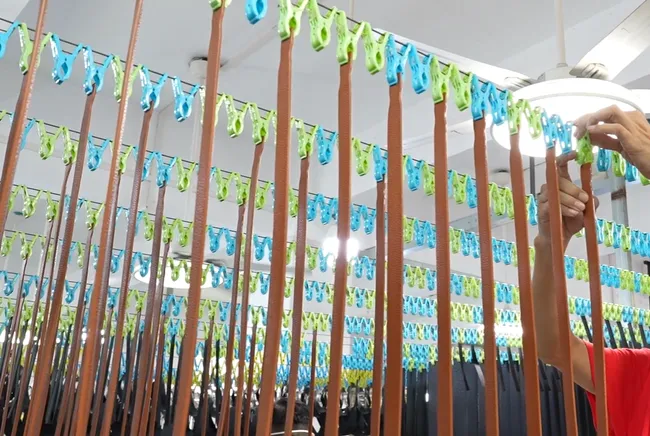
When necessary, the edge is lightly sanded with fine-grit sandpaper to smooth the surface, improve adhesion between layers, and enhance the final feel.
Sanding removes small particles, brush marks, and surface irregularities from the first coat, allowing the next coat of edge paint to adhere more evenly.
This step is not necessarily performed after every coat, but for high-quality handbags, sanding can significantly improve the fineness of the edges and the consistency of their gloss.
Repeat the process of applying edge paint, drying, and sanding.
High-quality handbags require at least four coats, while premium leather bags require six or more coats. Each coat must be applied thinly to prevent cracking or poor surface adhesion caused by excessive thickness.
Low-quality edge paint costs approximately US$1 and lasts only two to three months, while high-quality edge paint costs around US$3 and can last at least five years. The number of layers and the quality of the materials together determine the service life of the edge finish.
Water-based edge paint can be heat-finished, while oil-based edge paint is not suitable for this process.
Heat finishing or polishing is used to achieve a matte or high-gloss finish while improving smoothness and flexibility.
Heat finishing helps the edge paint bond more closely, creating a smooth, full edge. Polishing is used to adjust the sheen so that the edge paint harmonizes with the overall texture of the leather.
This step requires a high level of craftsmanship, with careful control of temperature and pressure.
Inspect the edge paint to ensure that it is even, complete, smooth, and flexible, without sitting unevenly on the surface. It should also provide crack resistance, insect resistance, and environmental compliance.
High-quality edge paint should appear integrated with the leather rather than simply looking like a coating laid on top of it.
The color match must also be checked, along with the edges for bubbles, gaps, or missing sections of paint.
This is the final quality checkpoint in the edge painting process and directly affects the overall quality of the handbag.
Once edge painting is complete, the bag moves on to subsequent production stages, including logo application, stitching, and hardware installation.
At this stage, the edges have been protected and can withstand the friction associated with stitching and hardware installation.
The quality of the edge finish directly affects the durability and appearance of the bag. Therefore, all preceding steps must meet the required standards before production proceeds to the next stage.
Gionar’s edge finishing process has been integrated into its overall quality management system.
Preventive Quality Control: Its production process follows a five-stage system: preventing problems, establishing standards, operating according to standards, inspecting according to standards, and submitting reports for verification.
Material Testing: Its leather, hardware, edge coatings, reinforcement materials, and lining materials have undergone environmental testing by SGS and UL.
Certifications: The company holds ISO 9001:2015 certification and a valid pollutant discharge permit, indicating compliance with applicable environmental regulations.
| Inspection Item | Mid-range Regular Standard | High-end Custom Standard |
|---|---|---|
| Uniformity | Edge width tolerance ≤ ±0.2 mm | ≤ ±0.15 mm |
| Appearance | No bubbles, no orange peel, no sandpaper marks, no glue overflow | Mirror-level smoothness, no pinholes |
| Color | Color difference from leather ΔE ≤ 2.5 | ΔE ≤ 1.5 |
| Adhesion | No paint loss when scratched with fingernail; no cracking after 100–200 bends | No cracking or whitening after 1,000 bends at 180° |
| Corners | Natural curvature, no material buildup, no obvious joints | Smooth transitions, rounded bevels that don’t scratch hands |
| Environmental Compliance | Passes REACH/RoHS testing, heavy metals meet standards | Same as left; third-party test reports available |
| Check | Pass | Fail |
|---|---|---|
| Thickness & layering | Subtle layered appearance; natural gradation of sheen from multiple thin coats + sanding | One thick flat layer; no depth or gloss variation |
| Plumpness / 3D profile | Full, rounded, three-dimensional; smooth and fluid to the touch | Flat, thin, uneven; stiff or rough |
| Paint-to-leather transition | Flush junction, clean and sharp; no bleeding, no recession, no adhesive residue | Bleeds onto the face, recedes inward, glue marks at the junction |
| Seam junctions | Smooth transition at corners and flap turns — no build-up, no breaks, continuous | Lumps, breaks, or missing paint at junctions |
| Bottom edge reinforcement | Noticeably thicker and more rounded than side edges (it contacts surfaces) | No thickness difference; rough, easily damaged |
| Consistency across areas | Identical process and color on handles, flap, base, and sides | Varying thickness, color drift, uneven workmanship |
| Shrinkage compatibility | Paint moves with the leather as it stretches/contracts | Separates or lifts, creating visible gaps |
| Gloss level | Soft natural sheen, consistent with the leather’s lustre | Plastic-like gloss, or dead matte |
| Under magnification | Fine sanding marks and hand-finished texture | Perfectly uniform (machine-slapped) or rough with pinholes |
| Aging | Even natural maturing; no cracking or peeling | Uneven cracking, flaking, chalky or sticky |
| Color logic | Harmonizes with hardware (gold hw → warm-toned edge paint) | Clashing—e.g. silver hardware with yellowed edge paint |
| Defect | Main Cause | Gionar’s Solution |
|---|---|---|
| Bubbling | Thick coating, underlying layer not fully dry, grease on substrate | Scrape off and redo, switch to thin multiple coats, strengthen cleaning and drying |
| Cracking | Single coat too thick, drying too fast | Reduce single coat thickness, control drying speed |
| Whitening | High humidity environment, water-based edge paint not fully dried | Control humidity (dehumidifier / air-conditioned room), extend drying time |
| Paint Loss | Insufficient edge skiving, substrate not cleaned | Re-skive edge, thoroughly clean |
| Uneven Color / Blotchiness | Edge paint not stirred evenly, inconsistent thickness | Stir thoroughly, apply thin even coats, build up with multiple layers |
| Overspill onto Leather Surface | Applicator too large or unsteady hand | Switch to finer applicator, apply masking tape for protection |
Leather bag edge finishing refers to a series of techniques used to seal, protect, and enhance the appearance of a leather bag’s edges. Common edge-finishing techniques include edge painting, burnishing, folding, stitched binding, and metal trim. The choice of technique depends on the type of leather, the bag’s design, and its quality grade.
Good edge finishing improves durability, prevents damage, and demonstrates superior craftsmanship. It is one of the most visible indicators of a bag’s quality and an effective way to distinguish mass-market products from high-end luxury goods.
Leather edge painting is a surface-finishing technique in which multiple thin coats of paint, either water-based or oil-based, are applied to the cut edges of the leather. After each coat dries, the surface is usually sanded before the next coat is applied.
This process creates a smooth, even edge with consistent coloring, seals the leather fibers, and protects them against moisture and wear. High-quality bags require at least three coats, while thick, mid- to high-end leather bags may require six or more.
Neither technique is inherently better than the other. The right choice depends on the type of leather and the desired appearance.
Edge painting is suitable for chrome-tanned calfskin, goatskin, and exotic leathers. It provides color matching, improves durability, and creates a glossy finish.
Burnishing is best suited to vegetable-tanned leather. It creates a naturally rounded, lustrous edge that gradually develops a distinctive patina over time.
For high-end handbags and mass-produced bags, multi-layer edge painting is more common. For small-batch natural leather goods, burnishing is often the more suitable choice.
A well-made luxury handbag should have at least three hand-applied coats of edge paint, while premium products typically require six to eight coats.
However, the number of coats is less important than the quality of the workmanship. Each coat should be applied as thinly as possible, allowed to cure completely, and lightly sanded before the next coat is applied.
A newly made handbag with overly thick, hastily applied coatings may initially look acceptable but can develop cracks within a few months.
The ideal finish has smooth, slightly rounded edges with uniform coloring and no obvious sharp corners, bubbles, or brush marks.
Edge paint is prone to cracking when it is applied too thickly, when the leather is repeatedly bent, or when low-quality paint lacks sufficient flexibility. Other causes include insufficient drying between coats, exposure to harsh chemicals, and extreme temperatures.
As a consumer, you can extend the life of edge paint by purchasing high-quality leather bags, choosing products with edges that can remain crack-free for years, avoiding excessive bending of rigid handles, and storing your bags properly away from heat sources and damp environments.
Perfect edge finishing is not just about appearance. It directly affects a bag’s durability, lifespan, and perceived value, making it an important detail that distinguishes ordinary products from luxury-quality goods.
The success of a perfect leather edge finish depends not simply on the paint itself, but on the craftsmanship behind every step: proper preparation, thin coats, thorough drying, and careful sanding between layers.
Edge painting is a highly technical process that requires skilled manual work. To ensure high-quality handbags, Gionar applies at least three hand-painted coats to its standard bags, while premium leather bags require six or more layers. Its craftsmanship meets the standards expected of high-end luxury handbags.
If you are developing a high-end handbag collection, we welcome you to contact us.
Previous :
How to Evaluate a Manufacturer: Factory Visit vs. Canton FairNext :

Mobile Website

Inquires Whatsapp