- +86 13922774531
- info@gionar.com

English


English
June 2 , 2026
What kind of plating technology are used for the hardware of luxury handbags? When you purchase a bag, do you consider the aesthetics and durability of the hardware? When you create your own bag brand, do you pay attention to the plating process of the hardware?
Let me tell you a fact. The metal components visible on luxury handbags – such as clasps, buckles, chains, zipper pulls, rivets and brand logos – not only have decorative value, but are also crucial for the overall craftsmanship and brand image of the product.
Therefore, the hardware of luxury handbags adopts a variety of high-quality coating processes, which are both aesthetically pleasing and durable for a long time. Thus, luxury fashion brands will invest a large amount of money in advanced surface treatment technologies.
This post will explore the plating technology processes of the hardware of luxury bag.
The hardware components of the bag are mainly made through electroplating (rack/barrel), PVD vacuum coating, as well as electroless nickel, zinc plating, and antique finishing processes, to achieve various appearance effects and durability.
The hardware components of the bag are not merely functional parts. The surface treatment and plating of zippers, buckles, locks, chains and clasps greatly influence the appearance, durability and quality perception of the bag. Different plating techniques result in different colors, textures and corrosion resistance.
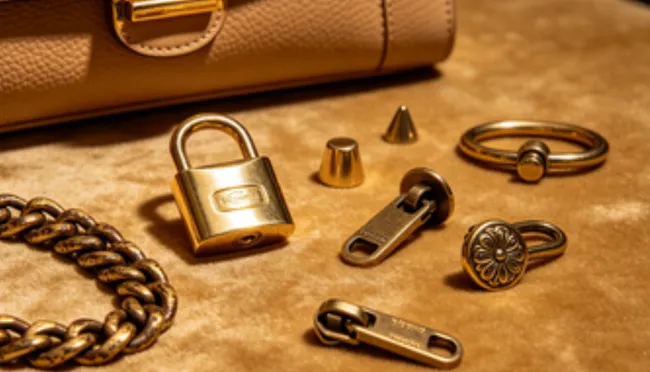
Different finishes set the tone for the style of the bags, ranging from luxurious to retro:
| Type | Purpose | Notes |
| Gold Plating (14K/18K/24K) | Luxury finish | 0.1–0.5 µm thick; real gold in chemical bath gives deeper luster than “gold tone” |
| Nickel Plating | Barrier layer | 3–5 µm thick; prevents metal migration & adds hardness |
| Chrome Plating | Shine & corrosion resistance | Shifting from hexavalent → trivalent chrome (eco-friendly) |
| Palladium | Silvery-white, anti-tarnish | Popular for silver-tone luxury hardware |
| Ruthenium | Dark gunmetal/anthracite finish | Very durable, premium look |
| Copper Plating | Adhesion base layer | Applied before nickel/gold |
| Rhodium Plating | Bright mirror finish | Often over gold for extra brilliance |
Typical luxury stack: Zinc Alloy / Brass → Copper → Nickel (3–5 µm) → Gold/Palladium (0.1–0.5 µm) → Clear lacquer seal
Ion sputtering/vacuum plating – can form a coating that is denser, more uniform and more wear-resistant than water-coated films.
It performs better in terms of scratch resistance, corrosion resistance and color consistency.
The price is higher, but it has become the preferred choice for mid-to-high-end brands (such as Hermès and Chanel).
Unlike electroplating, PVD coatings do not peel off or flake off – their erosion process is slower.
| Feature | Detail |
| Hardness | ~10x harder than standard electroplating — almost impossible to scratch or fade |
| Process | Vacuum evaporation, ion plating, or sputtering |
| Cost | Significantly more expensive |
| Use Case | The “gold standard” for durability — used in high-end luxury watches and premium bag hardware |
PVD is increasingly the go-to for top-tier brands where scratch resistance and color permanence are non-negotiable.
It is also known as vacuum coating. This is a more complex and costlier alternative technology compared to electroplating.
Process Flow:
Surface cleaning & de-static → Primer spray → Bake primer → Vacuum plating → Top coat spray → Bake top coat → Packaging
| Feature | Detail |
| Applicable Materials | ABS, ABS+PC, PC plastics, and metals |
| Advantage | Superior adhesion, uniform thickness, strong metal-substrate bond |
| Cost | Higher than water electroplating due to complex equipment & environment requirements |
| Method | Description | Quality |
| Rack Plating | Pieces hung on racks, plated individually | More even thickness, better for complex shapes — used by premium factories |
| Barrel Plating | Pieces tumbled in a barrel | Faster & cheaper, but uneven coating (thicker at edges due to “tip effect”) — common in fast fashion |
| Technique | Use Case |
| Alloy Plating | Custom colors (rose gold, antique gold, etc.) |
| Chemical Plating | Uniform coating on complex geometries without electricity |
| Multi-layer / Composite Plating | e.g., Cu → Ni → Au for maximum durability |
| Passivation / Black Oxide | Matte dark finishes, often on iron/steel hardware |
| Process Name | Principle | Key Advantages | Limitations | Typical Applications (Bags) |
| Traditional Electroplating | Electrolytic deposition of metal layers (copper → nickel → chromium → top coat) on a conductive substrate | Low cost, mature process, wide colour range (gold, silver, gunmetal, rose gold, etc.) | Lower hardness (HV < 800), moderate wear resistance; traditional hexavalent chromium process has environmental & health risks | Mid-to-low end bag locks, zippers, D-rings, logo plates; mass-produced general hardware |
| PVD Multi-Arc Ion Plating | Vacuum arc discharge “bites” the target, producing highly ionised metal plasma that deposits on the workpiece | Extremely high hardness (HV 1500–3000), excellent wear & corrosion resistance; good coverage on complex shapes; zero-emission, eco-friendly | Expensive equipment; micro-droplets may affect mirror finish | High-end luxury handbag locks, chains, zipper pulls, decorative buckles (e.g., Hermès, Chanel black hardware) |
| PVD Magnetron Sputtering | Magnetically confined ions bombard the target; sputtered atoms deposit as a dense film | Dense coating, strong adhesion, smooth surface (no droplets), good uniformity | Lower coverage on complex shapes compared to multi-arc; high equipment cost | High-end flat hardware requiring mirror finish (e.g., logo plates, square buckles) |
| Vacuum Evaporation | Heating coating material (e.g., aluminium, chromium) in vacuum; vapour condenses on the workpiece | High deposition rate, high film purity, metallic appearance (e.g., bright silver) | Relatively weak adhesion, low abrasion resistance – mostly decorative, not for load-bearing parts | Hot-stamping foil for interior logos, decorative sequins, metal-look finishes on plastic (non-structural parts) |
| Anodizing | Electrochemical oxidation of aluminium (or its alloys) to form a ceramic aluminium oxide film | Hard, wear-resistant, dyeable (many colours), corrosion-resistant | Only applicable to aluminium & its alloys; film is non-conductive, poor weldability | Aluminium frames, pull rods, corner guards, reinforcement strips on high-end bags / suitcases (e.g., Rimowa) |
| Eco-friendly Plating (Trivalent Chromium / Nickel-Free) | Same principle as traditional electroplating, but uses trivalent chromium instead of hexavalent chromium, or completely nickel-free | No hexavalent chromium, no nickel – meets REACH and other environmental regulations; skin-friendly (no nickel allergy risk) | Higher cost than traditional hexavalent chrome; slightly less stable colour | High-end bag hardware for export to Europe/USA; products claiming “nickel-free” or “hypoallergenic” |
| Liquid Metal Coating | Spraying metal-powder-containing paint onto the surface, cured at room or elevated temperature | Can be applied to non-metal substrates (plastic, resin) to achieve metallic look | Lower wear resistance than real electroplating; easily scratched – mostly for decorative parts | Designer bag logos, decorative pieces (e.g., metal-effect accents on transparent resin bags) |
| Requirement | Recommended Process |
| Cost priority, mass production | Traditional electroplating (prefer trivalent chromium) |
| Extreme wear & scratch resistance | PVD Multi-Arc Ion Plating |
| Mirror finish + complex shapes | PVD Magnetron Sputtering (flat) / Multi-Arc Ion Plating (3D) |
| Aluminium structural parts (frames, pull rods) | Anodizing |
| Eco-friendly export, hypoallergenic | Trivalent chromium plating or PVD |
| Non-metal substrates (plastic) metallic look | Vacuum evaporation or liquid metal coating |
| Tier | Technique | Typical Brand Positioning |
| Highest | Thick precious-metal electroplating (2–3 microns) + e-coat | Hermès, Chanel, Bottega Veneta |
| High | PVD or palladium/ruthenium plating | Premium designer brands |
| Mid | Standard electroplating (0.5–1 micron) + lacquer | Contemporary fashion brands |
| Low | Thin flash plating (<0.25 micron) or spray paint | Fast fashion, budget bags |
| Brand Tier | Recommended Plating |
| Luxury | Rack-plated, multi-layer (Ni + Pd/Ru/Au) or PVD |
| Mid-range | Rack-plated gold/nickel with lacquer seal |
| Fast fashion | Barrel-plated, thin coating — prone to tarnish & erosion |
The luxurious bag design aims to combine elegance, durability and long-lasting performance. The hardware parts of high-end handbags usually use high-quality basic materials and advanced plating technologies to achieve their unique appearance, weight and durability.
To achieve outstanding aesthetic effects and extremely high durability, the hardware components of luxury bags (such as clasps, zipper pulls, chains) mainly adopt PVD vacuum electroplating technology, which is the standard configuration of the current international first-class luxury brands. The core lies in elevating performance, aesthetics and environmental protection to the utmost to meet the strict requirements of luxury goods for durability and texture.
| Base Technology | Plating/Finishing Technique | How It Works | Key Advantages | Applications in Bags |
| Electroplating | Gold / 18K Gold | Uses electric current to deposit a gold layer onto the brass base. | Classic, warm, traditional look | Lock hardware, chains, zippers, decorative plates |
| Electroplating | Gold / 24K Gold | Thicker, purer layer of real gold (often vintage). | Richer color, heavier weight, higher value | Vintage Chanel bags, very rare HSS Hermès bags |
| Electroplating | Palladium | Platinum-group metal electroplated onto brass. | Cool, white-silver tone. More scratch-resistant than gold | Hermès standard production, Dolce & Gabbana, Cartier, Rimowa |
| Electroplating | Ruthenium / Rhodium | Rare, dark metals from the platinum group. | Unique gunmetal, grey, dark silver aesthetic. Darker than palladium. Rhodium offers a bright silver finish. | Bags aiming for a modern, edgy, or antique look |
| Electroplating | Nickel | Silver-white metal plated onto brass. | Good corrosion resistance, but can cause metal allergies. | Mid-range or lower-end bags, internal hardware |
| PVD | Physical Vapor Deposition | A coating process where metal is vaporized in a vacuum and bonds at a molecular level. | Extremely hard (2-4x steel), scratch-resistant, durable, chemical-resistant, eco-friendly | Hermès “So Black” (black hardware), Versace, high-end zippers (e.g., Lampo, Riri), RIMOWA |
| PVD | DLC | A specific type of PVD coating that creates a diamond-like carbon layer. | Extremely hard, exceptionally wear-resistant, deep black | Top-tier luxury hardware, watches, and fashion accessories |
| Electroplating / PVD | Rose Gold | Gold with copper/silver alloy, sometimes via PVD. | Pinkish, romantic, feminine tone. Copper improves scratch resistance | Leather goods, watches, high-end jewelry |
| Electroplating / PVD | Permabrass / Pale Gold | A champagne-colored gold finish. | Muted, neutral tone. Subtle, versatile, modern feel | Newer Hermès styles, travel bags, modern designs |
| Electroplating / PVD | Brushed / Matte | A mechanical finish applied to the plated surface, done with or without PVD topcoat. | Understated, minimal, hides fine scratches well. Modern, elegant | Hermès HSS special orders, contemporary bag styles |
| Electroplating | Guilloché | A mechanical, not a plating, technique that engraves intricate patterns into a plated surface. | High-end artisanal detail. Reflects light beautifully | Rare Hermès limited editions only |
| Oxidation | Anodizing | An electrochemical process that grows a protective oxide layer on aluminum. | Wear-resistant, corrosion-proof, allows vibrant, long-lasting colors | Rimowa’s aluminum luggage |
Choosing different coated metals will have a significant impact on the appearance and durability of the bag.
| Finish | Characteristics & Durability |
| Gold (GHW) | The most classic finish, offering a timeless, luxurious look. Traditionally a thicker 18K or 24K gold electroplating. |
| Palladium (PHW) | A cool, bright, silver-white finish from the platinum family. Extremely durable and scratch-resistant, making it a highly practical choice for daily-wear bags. |
| Ruthenium (RHW) | A unique, darker, grey-tone finish that creates a modern, edgy, and “cooler” aesthetic. |
| Permabrass | A champagne-toned metal exclusive to Hermès, described as a warm, neutral fusion of gold and palladium. |
| Rose Gold (RGHW) | A pinkish, warm, and romantic finish. It is often produced via PVD to enhance durability. |
| Gunmetal / Matte Black | A dark, non-reflective finish offering a contemporary and understated look. |
| Brand | Base Metal | Plating Type | Thickness | Gold Content (Au %) |
| Hermès | Brass / Stainless Steel | 23.5K Gold electroplating | ~3 μm (gold pieces) | 20%–70% (avg 20%+) |
| Silver + Palladium (for silver hardware) | 1 μm Ag + 2 μm Pd | Pd-based, not gold | ||
| Louis Vuitton | Brass | PVD coating (on chains) | 0.5–2.5 μm | ~15–18% Au equivalent |
| Dior / BVLGARI / YSL / Saint Laurent | Brass / Zinc alloy | Electroplated gold | 0.1–0.5 μm | ~15–18% Au |
| Prada | Zinc alloy | Electroplated gold | 0.1–0.5 μm | ~10% Au |
| Gucci | Brass | Electroplated gold / PVD | 0.1–0.5 μm | Varies, some pieces near 0% |
The key insights from Hermès’ own documentation are as follows: Their gold accessories are directly plated with 3 micrometers of 23.5K gold on the surface of the brass. Their silver/palladium alloy accessories are first plated with 1 micrometer of silver, and then 2 micrometers of palladium is plated on top. For rose gold, they use K gold containing copper. For matte surfaces, they use the same metal but coat the surface with a matte coating.
Although traditional electroplating was once the industry standard, PVD (Physical Vapor Deposition) has now become the gold standard for high-end luxury items. It has several significant advantages:
| Tier | Base Material | Plating Method | Typical Finish |
| Hermès / Delvaux / Moynat | Solid brass or stainless steel | Rack electroplating (multi-layer) + PVD | 23.5K gold, palladium, rhodium |
| Chanel / Louis Vuitton / Dior | Brass / zinc alloy | Rack electroplating, sometimes PVD | Gold, ruthenium (dark gunmetal), palladium |
| Gucci / Celine / Bottega | Brass | Rack or barrel electroplating + PVD | Antique gold, palladium, ruthenium |
| Coach / MK / Tory Burch | Zinc alloy | Barrel electroplating (cheaper, uneven) | Gold-tone, nickel |
| Brand Using PVD | Application |
| Hermès | Stainless steel hardware on newer collections |
| Gucci | Watch cases & bag hardware (ion-plated gold) |
| Chanel | Ruthenium dark hardware |
| Louis Vuitton | Hard-side trunk hardware (stainless steel + PVD) |
Coating is atomically bonded (not just sitting on top) → won’t peel or flake
5–10× more wear-resistant than electroplating
Can coat every angle including inner holes (line-of-sight isn’t required)
| Material | Used By | Pros | Cons |
| Stainless Steel + PVD ⭐ | Hermès (newer), LV trunks, Rimowa | Highest durability, best colorfastness | Expensive, hard to polish |
| Brass + Multi-layer plating ⭐ | Hermès (classic), Chanel, Dior | Best weight/feel, takes thick plating well | Can dezincify if plating fails |
| Zinc Alloy + Electroplating | Coach, MK, fast fashion | Cheap, easy to cast | Light, feels hollow, plating wears fast |
| Metric | Standard | Luxury (Hermès-level) |
| Gold thickness | 0.1–0.5 µm | 3 µm (23.5K) |
| Palladium thickness | 0.05–0.2 µm | 2 µm |
| Salt spray test | 24–48 hrs | 72+ hrs (no white rust) |
| Taber wear (1000 cycles) | ~0.05g loss | ≤0.02g loss |
| Cost share of plating | ~20% of hardware cost | 50%+ of hardware cost |
Hermès = 3µm 23.5K gold or 1µm Ag + 2µm Pd on brass, rack-plated.
Louis Vuitton trunks = stainless steel + PVD (chrome/ruthenium).
The rest of luxury = brass + multi-layer rack electroplating (Ni → Au/Pd/Ru), increasingly adding PVD for dark finishes (ruthenium, black PVD).
Physical Vapor Deposition (PVD) is a high-tech coating technology that operates under vacuum conditions and uses physical methods to vaporize materials from solid or liquid sources, depositing them in the form of atoms, molecules, or ions onto the surface of a substrate to form a film.
Due to its excellent durability, corrosion resistance, and high-quality appearance, this technology has been widely applied in industries such as luxury fashion accessories, watches, jewelry, automotive parts, electronic devices, and medical equipment.
In the high-end bag industry, PVD coatings are commonly used for metal accessories, such as locks, chains, buckles, zipper pulls, signboards, and clasps. Compared with traditional electroplating processes, PVD can provide a harder and more wear-resistant surface, while also enabling a more environmentally friendly production process.
The entire PVD process takes place in a vacuum chamber and typically consists of the following three basic steps:
| Advantage | Explanation |
| Extreme hardness | The coating is denser and more scratch-resistant than electroplating |
| Molecular bonding | The coating literally fuses into the surface rather than sitting on top of it |
| Corrosion resistance | Impermeable barrier against sweat, humidity, and oxidation |
| Thin but tough | Typically 0.2–5 microns thick — far thinner than paint, yet vastly more durable |
| Color stability | Does not tarnish, fade, or discolor over time |
| Precise finishes | Can achieve true matte black, gunmetal, satin gold, and mirror effects with batch-to-batch consistency |
| Eco-friendly | A dry process with no toxic chemical baths, wastewater, or heavy metal runoff |
| Finish | Appearance | Notes |
| PVD Black / IP Black | Deep, rich matte or satin black | Replaces painted hardware; will not chip or peel |
| PVD Gold / Titanium Nitride | Warm gold tone, harder than electroplated gold | Resists wear at clasp corners and chain links |
| PVD Rose Gold | Copper-pink metallic | More color-stable than electroplated versions |
| PVD Gunmetal | Dark charcoal with metallic depth | Modern, edgy aesthetic |
| PVD Champagne | Soft, muted gold | Subtle luxury |
Luxury manufacturers are increasingly adopting physical vapor deposition technology (PVD) because this technology has the following advantages:
This is particularly important for frequently touched hardware components (such as clasps, chains, and buckles).
| Reason | Explanation |
| No oxidation | Atoms travel without hitting O₂ or H₂O → coating is pure, not contaminated |
| Long mean free path | Atoms fly straight to the target without scattering |
| Clean bond | Surface is bombarded with ions first → atomic-level cleaning before deposition |
| Technique | How It Works | Best For | Hardness |
| Thermal Evaporation | Heat metal until it evaporates (like a light bulb filament) | Decorative coatings (gold, silver on watches/bags) | ⭐⭐ |
| Sputtering | Plasma ions smash a metal target → atoms fly off | Titanium nitride, chrome, decorative colors | ⭐⭐⭐ |
| Arc Evaporation (Cathodic Arc) | Electric arc vaporizes metal from a cathode spot | Hard coatings (TiN, TiAlN, DLC) — tools, knives | ⭐⭐⭐⭐⭐ |
| Ion Plating (AIP/MSIP) | Combines evaporation + sputtering + plasma bias | Luxury bag hardware, watches | ⭐⭐⭐⭐ |
| HIPIMS | Ultra-high-power pulsed sputtering | Highest quality, densest coating — cutting-edge luxury | ⭐⭐⭐⭐⭐ |
| Pulsed Laser Deposition (PLD) | Laser blasts a target → plasma plume deposits | Niche: ceramic/superconductor coatings | ⭐⭐⭐⭐ |
| Coating | Color | Used On |
| TiN (Titanium Nitride) | Bright gold | Watches, bag hardware |
| ZrN (Zirconium Nitride) | Light gold / champagne | Luxury hardware |
| TiCN | Rose gold | Jewelry, bags |
| TiAlN | Dark gold / bronze | Premium hardware |
| CrN | Bright silver | Watch cases |
| DLC (Diamond-Like Carbon) | Deep black | Knives, sport hardware |
| TiC | Gunmetal / dark grey | Industrial + luxury |
| Ruthenium | Dark gunmetal | Chanel, LV hardware |
| Process | Who Uses It | Result |
| Magnetron Sputter Ion Plating (MSIP) | Hermès, Chanel, Gucci | 3µm+ coating, atomic bond, 10+ year color retention |
| HIPIMS | Top-tier luxury (newer collections) | Densest possible coating, most uniform |
| Arc Evaporation (AIP) | DLC black hardware (sport luxury) | Hardest coating available (~3000 HV) |
| Regular sputtering | Mid-luxury (Coach, MK premium lines) | Good but thinner than ion plating |
| Property | Electroplating | PVD |
| Thickness | 0.1–0.5 μm (up to 3 μm for Hermès) | 0.5–5 μm |
| Hardness | ~200–300 HV | 1000–2500 HV (~10x harder) |
| Bonding | Surface adhesion | Molecular-level bonding |
| Scratch Resistance | Low — shows wear in 1–3 years | Excellent — lasts 5–10+ years |
| Process | Liquid chemical bath | Vacuum chamber (no wet chemicals) |
| Environmental | Produces toxic wastewater | Clean, no liquid waste |
| Colors | Limited to plating metal | Vast — gold, rose gold, black, gunmetal, rainbow, etc. |
| Cost | Lower | 3–5x higher |
| Brand | PVD Application |
| Louis Vuitton | Metal chains, clasps — PVD for scratch-resistant gold/gunmetal tones |
| Gucci | Increasingly using PVD on chains and buckles |
| Hermès | Uses thick electroplating (3μm) but PVD is the industry trend for durability |
| Rolex / Luxury Watches | PVD is the gold standard (literally) for bezel and case coatings |
The zipper sections treated by PVD technology can remain colorless for ten years, while the cheap coated zipper pulls will fade within six months. PVD technology is more robust, cleaner, more durable and more environmentally friendly – for this reason, it is gradually becoming the preferred material for high-end accessories.
PVD is widely used in the hardware components of luxury brand handbags, such as clasps, chains, zipper pulls, decorative plates, etc. Typical examples include:
Ion Plating is essentially an advanced form of Physical Vapor Deposition (PVD) technology. It is a high-tech process that takes place in a vacuum environment, where gas discharge causes the coating material to vaporize and ionize, and then deposits a dense film on the surface of the product.
In simple terms, it is a technique that causes metal atoms to evaporate in a vacuum chamber, and then uses ion energy to accelerate them, so that these atoms adhere more closely to the surface of the product.
Core process: In a vacuum environment, high voltage is used to ionize the vaporized metal atoms into positively charged ions. These ions are accelerated by an electric field and bombard the substrate surface with extremely high energy, thereby forming a coating with excellent bonding force and a dense structure.
| Feature | Benefit |
| Extreme adhesion | Ions penetrate the surface → no peeling or flaking. |
| High hardness | HV 1500–3000 (2–4× harder than electroplating). |
| Excellent coverage | Ions follow electric field lines → coats complex shapes (locks, chains) uniformly. |
| Wide colour range | Gold, rose gold, gunmetal, black, titanium, etc. |
| Eco-friendly | Vacuum process → zero wastewater or heavy metal emissions. |
| Step | What Happens |
| 1. Vacuum + Gas Fill | Chamber evacuated to ~10⁻³ Pa, then filled with inert gas (usually argon) |
| 2. Plasma Creation | High-voltage discharge ionizes the gas → creates plasma (cloud of ions + electrons) |
| 3. Ion Bombardment & Cleaning | Workpiece (bag buckle, clasp, etc.) is biased at −100 to −1000V → ions slam into the surface, cleaning it atom by atom |
| 4. Deposition | Evaporated metal atoms get ionized in the plasma → accelerated by the electric field → slam into the workpiece at 3,000–5,000 eV (vs. ~1 eV for regular evaporation) → form a metallurgical bond |
| Technology Branch | Brief Principle | Application Characteristics for Bag Hardware |
| Multi-Arc Ion Plating | Arc discharge directly “blasts” metal ions; high ionisation rate, fast deposition, high energy. | The first choice for bag hardware. Ideal for complex shapes (locks, chains). Highest adhesion and durability. However, micro droplets may affect extreme mirror finish. |
| Magnetron Sputtering | High-energy ions bombard a target, causing metal atoms to be “sputtered” off; slower deposition, extremely dense and smooth coating. | Used for extreme mirror finishes on flat surfaces – logo plates, square buckles – achieving a brilliant, clean, high-gloss effect. |
| Vacuum Evaporation | Heating the coating material so it evaporates and condenses on the workpiece; weakest adhesion. | Often used for interior decorative parts that do not directly contact the skin/clothing, such as hot-stamped foil logos or sequins inside bags; lower cost. |
| Feature | ✅ Ion Plating (PVD) | ❌ Traditional Electroplating |
| Durability | Extremely high – 5–10 times more durable than electroplating. Hardness reaches HV 1500–3000. | Medium – Coating is easily scratched and worn (hardness < HV 800). |
| Environmental impact | Green & clean – performed in vacuum, nearly zero emissions. | Highly polluting – generates large amounts of heavy-metal-containing wastewater. |
| Adhesion | Molecular-level bonding – the coating does not peel easily. | Surface coverage – weak adhesion; over time, coating may peel or flake. |
| Colour range | Wide and stable – gold, gunmetal, rose gold, sapphire blue, and many other composite colours; colour stays consistent. | Relatively narrow colour range; stability is average. |
| Coating thickness | Micrometre scale – about 1 μm (one-tenth of electroplating), does not affect workpiece precision. | Thicker – about 10 μm or more, can slightly affect dimensional accuracy. |
| Cost / value | High initial equipment cost – best for premium products that demand top quality and long-term brand value. | Lower equipment and production cost – suitable for high-volume, mass-market products with lower durability requirements. |
| Evaporation | Sputtering | Ion Plating | |
| Particle Energy | ~0.1 eV | ~10 eV | ~1,000–10,000 eV |
| Adhesion | Poor (dust-like) | Good | Excellent (metallurgical bond) |
| Conformality | Line-of-sight only | Moderate | Excellent (all surfaces) |
| Cleaning | None | Minimal | Built-in ion sputter cleaning |
| Hardness | Low | Medium | Highest (1000–2500 HV) |
| Brand Tier | Technique Used |
| Hermès / Chanel / Delvaux | PVD Ion Plating (often HIPIMS) — color won’t fade for years |
| Mid-luxury (Coach, MK, etc.) | Rack-plated ion plating or hybrid PVD + electroplating |
| Fast fashion | Regular electroplating — tarnishes in months |
Ion plating = vacuum + plasma + high-energy ion bombardment = coating that is chemically bonded, not just sitting on top. It won’t peel, won’t flake, and coats every nook and cranny. It’s why luxury bag hardware stays shiny for years while cheap hardware turns green in weeks.
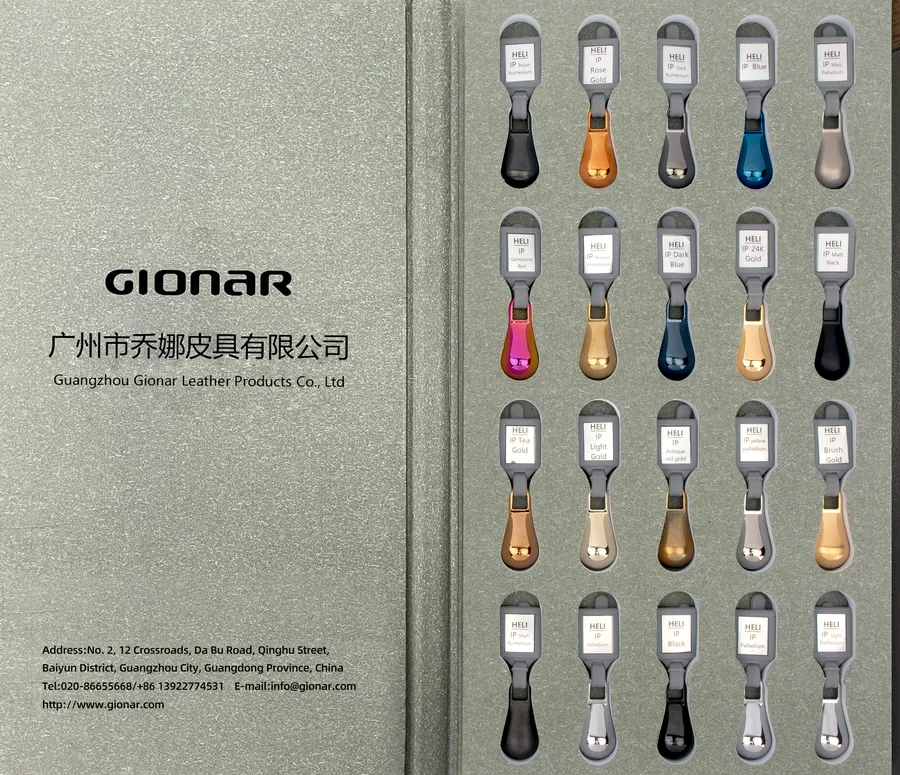
| Finish | Description |
| IP Black (Ion Plating Black) | Deep matte or satin black — the most popular ion-plated finish for contemporary luxury |
| IP Gold | Warm gold tone using titanium nitride; harder and more durable than electroplated gold |
| IP Rose Gold | Copper-tinted gold; resists tarnishing better than electroplated versions |
| IP Gunmetal | Dark charcoal metallic; extremely scratch-resistant |
| Indicator | What to Look For |
| Finish uniformity | Perfectly even color, even in crevices and corners |
| Matte depth | Matte black has a “deep,” non-plastic look |
| Edge wear | If worn, shows gradual fading rather than chipping or flaking |
| Weight | Slightly heavier than spray-coated; similar to well-plated metal |
| Temperature feel | Stays cool to the touch (not warm/plastic-like) |
Even with the ion plating process, to keep its luster, daily maintenance is still necessary:
The bag hardwares (such as locks, chains, logo plates, etc.) of luxury bags are important carriers of their value and aesthetics. From the current process of luxury bag hardware plating, a comprehensive shift towards PVD technology is underway, aiming to balance extreme aesthetics with superior durability. Traditional electroplating is more commonly used for mid-to-low-end products.
Overall, PVD can form extremely durable coatings with excellent wear resistance, color stability, and environmental performance. Choosing PVD-coated hardware means a longer-lasting shine as new, and PVD has become the “gold standard” for modern luxury goods. Ion Plating is an advanced technology within the PVD process.
If you want to establish a luxury bag brand, it is recommended to adopt high-end PVD vacuum electroplating to ensure that the quality, aesthetics, and durability of the bag hardware align with the brand value. If you need to customize bags, please feel free to contact us.


Mobile Website

Inquires Whatsapp