- +86 13922774531
- info@gionar.com

English


English
October 21 , 2026
As the Canton Fair is now in session, this world’s largest trade show stands out for enabling you to connect with a massive pool of suppliers in just a few days, inspect physical samples face-to-face, compare pricing, and capture the latest market trends all in one place.
By contrast, an on-site factory audit allows you to step onto the production floor and verify the level of equipment automation, the number of skilled workers on duty, compliance with standardized procedures across different production stages, and the actual implementation of quality control systems.
Data shows that buyers who conduct on-site factory audits before placing their first order experience a 34% reduction in subsequent quality issues and a 28% decrease in delivery delays. The return on investment is particularly significant for large-volume orders.
So, as a buyer, is it worth attending Canton Fair to shortlist bag manufacturers, or is it better to visit bag factories directly and conduct on-site audits?
The Canton Fair, officially known as the China Import and Export Fair, is China’s largest and one of its most prestigious international trade events. Held in Guangzhou, China, it is widely recognized as “China’s No. 1 Trade Fair.”
The fair connects Chinese manufacturers and suppliers with buyers from around the world, serving as a major platform for international trade and an important barometer of China’s foreign trade performance.
| Item | Detail |
|---|---|
| Full name | China Import and Export Fair (Canton Fair) |
| Founded | 1957 — 70th anniversary in 2026 |
| Frequency | Twice a year — spring session (April–May) and autumn session (October–November) |
| Hosted by | Ministry of Commerce + Guangdong Provincial Government |
| Venue | China Import and Export Fair Complex, Pazhou, Guangzhou |
| Format | Three consecutive phases per session, each about 5 days |
| Scale (140th) | 1.55 million m², 54 specialised zones, 75,000+ booths, 30,000+ exhibitors |
| Buyer reach (140th) | 210,000+ overseas buyers pre-registered from 196 countries |
| Nickname | “China’s No. 1 Exhibition” |
The Canton Fair was first held in the spring of 1957. For nearly seven decades, it has been held twice a year, every spring and autumn, in Guangzhou, China. Originally known as the Chinese Export Commodities Fair, it was renamed the China Import and Export Fair in 2007 to reflect China’s transition toward a more balanced, two-way model of international trade.
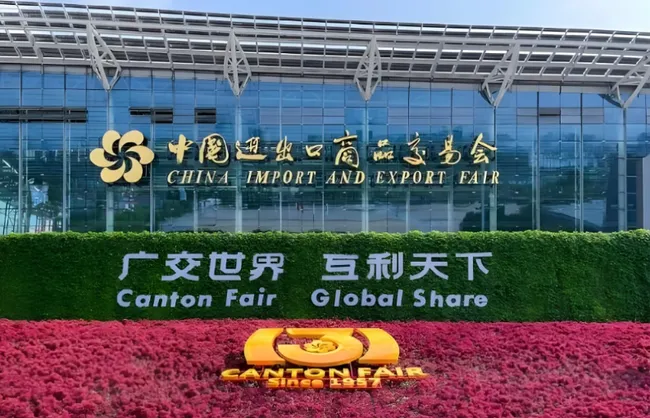
The Canton Fair is divided into three distinct phases, each focusing on different product categories. This structure allows buyers to navigate the extensive range of exhibits efficiently and find suppliers that match their sourcing needs.
| Phase | Theme | Product focus | 140th session dates |
|---|---|---|---|
| Phase 1 | Advanced Manufacturing | Electronics & appliances, lighting, vehicles & parts, machinery, hardware & tools, energy, chemicals, building materials | 15–19 October 2026 |
| Phase 2 | Quality Home | Consumer goods, gifts, home decorations, kitchenware, ceramics | 23–27 October 2026 |
| Phase 3 | Better Life | Textiles & garments, shoes, cases & bags, textile raw materials & fabrics, fashion accessories & fittings, home textiles, stationery, health & recreation, food, International Pavilion | 31 October – 4 November 2026 |
The Canton Fair is more than just a marketplace; it is a vital platform for global trade and economic cooperation. It serves as a key gateway to China’s opening-up policy, connecting international buyers with China’s comprehensive network of suppliers. The fair has established trade relationships with 229 countries and regions.
For anyone involved in international sourcing or trade, the Canton Fair is an essential event to understand and consider attending.
If you are sourcing or arranging manufacturing for a bag brand, the Canton Fair offers an experience that a visit to a single factory simply cannot match:
| Advantage | What it gives you |
|---|---|
| Thousands of suppliers in one place | Compare factories, quotes and MOQs side by side over a few days instead of weeks of travel |
| Full supply chain in one phase | Finished bags + fabrics, zippers, hardware, lining, edge paint materials in the same halls |
| See physical samples | Critical for materials where touch matters — leather, backing, edge finishing, handle construction |
| Meet decision-makers | Often the factory owner or export manager is on the stand, not a sales rep |
| Cross-check pricing | Same category quoted by 50+ vendors gives you a real market benchmark |
| Verify capability | Ask about MOQ, lead time, OEM/ODM, certifications (ISO, REACH, BSCI) face to face |
| Discover new materials | Recycled fabrics, hardware finishes, lining options you wouldn’t find by searching |
| Mode | Detail |
|---|---|
| Metro | Pazhou station — the main access point; follow on-site signage |
| Airport shuttle | Venue ↔ Baiyun Airport; venue pick-up at the junction of Zhanchang Middle Road and Zhanchang South Road |
| Bus | Dedicated line to Liuhua Road direction; extra capacity on routes 137, 229, 239, 262, 304, 461, 582, 762, B7 |
| Autonomous shuttle | First demonstration line: Shangri-La Hotel → Pazhou Metro Exit E → fair bus stop → Modiesha → Pazhou bus stop, roughly every 15 minutes, 11:00–16:00 |
| Taxi / ride-hail | Designated pick-ups on Zhanchang Middle Road, Zhanchang West Road, and Hall C Huizhan South 2nd/3rd Road |
| Parking | ~14,969 spaces around the complex; check availability in advance via the “Guangzhou Parking” mini-programme |
If you’re a buyer considering attending the Canton Fair but aren’t sure whether it’s worth the investment, our answer is a resounding yes! However, the key is to treat it as a strategic supplier-screening tool rather than a place to finalize deals. The fair is unmatched in terms of supplier diversity, hands-on sample evaluation, and market intelligence, but it is not necessarily where you’ll secure your final deal or the lowest price.
The Canton Fair is one of the world’s largest sourcing events, attracting approximately 340,000 overseas buyers and 32,000 exhibitors across 1.55 million square meters of exhibition space. For buyers sourcing products across multiple categories, the ability to compare thousands of suppliers in one location within just a few days is difficult to match through online platforms or individual factory visits.
Online sourcing is useful for preliminary research, but the in-person experience reveals details that digital channels cannot fully convey, including hidden costs, actual production capabilities, and genuine product quality.
You can feel the materials, test the hardware, inspect the stitching, and assess the overall craftsmanship. This is especially important for products whose value depends heavily on tactile qualities, structural integrity, and finishing details.
The fair has evolved from a traditional marketplace into a platform for showcasing emerging trends. At the 2026 fair, 23.2% of all exhibits were new products, while 26% were environmentally friendly or green products.
You can explore innovative bio-based materials firsthand, such as mushroom leather and grape leather for your bag brand, and see cutting-edge manufacturing techniques that may not yet be commercially available.
This makes the fair an efficient way to understand market trends and identify emerging product categories before they become mainstream.
In Chinese business culture, face-to-face communication can help establish trust and move negotiations forward far more quickly than months of email exchanges.
For many serious importers, the travel investment can be recouped through their first container order, while long-term sourcing costs may be reduced by 20%–50% compared with relying exclusively on online sourcing channels.
The fair provides an effective first step in distinguishing genuine manufacturers from trading companies. By asking targeted questions about factory locations, in-house production processes, and monthly production capacity, buyers can quickly identify potential intermediaries that may add markups of 10%–30%.
For serious buyers, the fair is also an ideal opportunity to arrange follow-up visits to manufacturing hubs across the Pearl River Delta, where they can evaluate suppliers in greater depth.
Attending the fair is a significant investment. A typical 7–10-day trip may cost between $2,000 and $4,500 per person.
These expenses can quickly add up, particularly for small businesses and first-time buyers.
The price quoted at a booth is not necessarily the best price available.
Exhibiting can be expensive for manufacturers. A small booth, including decoration and staff travel expenses, may cost anywhere from $10,000 to $50,000. Some suppliers may factor these expenses into their exhibition quotes, which can sometimes include a premium for overseas buyers.
The real negotiations often happen afterward, during an on-site factory visit, when suppliers recognize that you are serious about establishing a long-term business relationship.
A significant proportion of exhibitors—and reportedly as many as 30%–40% in some halls—may be trading companies rather than actual manufacturers.
Without a clear sourcing plan, buyers can easily spend days talking to intermediaries who may be unable to offer genuine factory-direct pricing, extensive customization, or direct control over quality assurance.
Many exhibitors display carefully prepared, high-quality samples. However, the quality of actual workshop production, consistency of quality control, and ability to meet production requirements can only be properly verified through a factory visit.
Some booths also belong to distributors rather than manufacturers, making it even more important to verify the supplier’s actual production capabilities.
You cannot adequately inspect workshop cleanliness, cutting rooms, sewing lines, edge-finishing stations, warehouses, or employee management practices at an exhibition booth.
For major OEM projects, a factory audit remains essential to verify manufacturing capabilities, production standards, and quality control systems before placing an order.
With more than 75,000 booths, the Canton Fair can be physically and mentally exhausting.
Without a carefully planned itinerary and clearly defined product specifications, you may spend days collecting catalogs and receiving expensive quotations, only to return home without establishing any meaningful supplier relationships.
| If you are… | Worth it? |
|---|---|
| Building a shortlist from scratch | ✅ Strongly yes — nothing else gives this breadth per day |
| Comparing material options / price-benchmarking | ✅ Yes — directly useful for your bonded vs. top-grain decision |
| Ready to place a first bulk order | ⚠️ Only as step 1 — the factory floor closes the deal, not the booth |
| Deepening an existing supplier relationship | ❌ Skip it — go straight to their factory on a random Tuesday |
| Expecting to sign at the fair | ❌ No — wrong venue for that |
Attending the Canton Fair is about screening suppliers, not conducting full due diligence. A booth visit lasting just 10–15 minutes is rarely enough to verify a supplier’s actual capabilities. The goal is to quickly eliminate unsuitable candidates, gather essential supplier information, and conduct a more in-depth assessment after the fair.
That said, you can still evaluate and shortlist suppliers effectively during the exhibition itself.
Define what a “qualified supplier” means for your specific product requirements and order volume before attending the fair. Having clear evaluation criteria will help you ask the right questions, compare suppliers objectively, and avoid wasting time on unsuitable candidates.
| Capability Area | What You Need to Know |
|---|---|
| Factory vs. Trading | Are they a direct manufacturer or an intermediary? |
| Production Capacity | Monthly output, number of lines, workers, peak season limits |
| Technical Expertise | Materials, construction, hardware, finishing, R&D |
| Quality Control | Inline QC, final inspection, third-party testing |
| Certifications | ISO 9001, BSCI, SEDEX, LWG, REACH, GRS, etc. |
| Customisation | OEM/ODM, logo, packaging, hardware, sizing |
| MOQ & Lead Time | Minimum order quantity, sample time, production time |
| Communication | English proficiency, responsiveness, technical understanding |
| Pricing | Transparency, cost breakdown, payment terms |
Prepare a one-page RFQ (Request for Quotation) sheet outlining your product specifications, target price, order quantity, and certification requirements. Bring several printed copies to distribute to potential suppliers.
| Question | Why It Matters |
|---|---|
| “Are you a factory or a trading company?” | Direct factories offer better control and pricing. |
| “Where is your factory? Can we visit or do a video tour?” | Verifies real production capability. |
| “How many production lines and workers do you have?” | Indicates capacity and scalability. |
| “What is your monthly output for this product category?” | Checks if they can handle your volume. |
| “What certifications do you hold?” | Confirms compliance and quality systems. |
| “What is your QC process?” | Reveals whether quality is systematic or ad hoc. |
| “What is your MOQ and sample lead time?” | Tests flexibility for new brands. |
| “Which markets do you export to?” | Experience with your target market’s standards. |
| “Can you customise logo, packaging, and hardware?” | Assesses OEM/ODM capability. |
For leather bags, ask the supplier the following questions:
For bags, focus on the following details during your inspection:
| Red Flag | What It Suggests |
|---|---|
| Only catalogues, no physical samples | Likely a trading company or weak factory |
| Staff cannot answer technical questions | No in-house engineering or production knowledge |
| Refuses factory video tour or address | Hiding production reality |
| Prices far below market | Material or labour cutting |
| No certifications or vague claims | Compliance risk |
| Inconsistent quality across samples | Poor QC |
| Pushy sales, no interest in your requirements | Not a long-term partner |
| No MOQ flexibility for new brands | Not suitable for small starts |
Trading companies may provide quotations, but they do not necessarily have direct control over production processes, edge finishing, quality inspections, or production schedules. Use the following checks at the exhibition booth to assess whether a supplier operates its own factory.
Order paid samples from your top three to five suppliers and evaluate them against your specifications. Compare material quality, construction, finishing, functionality, and overall craftsmanship.
Request a live video tour or arrange an in-person visit to inspect the following areas:
Start with a small trial order of 100–300 pieces to evaluate:
Ask the supplier to introduce two or three existing customers in your target market, then contact them directly.
Ask about their experience with product quality, delivery reliability, communication, problem resolution, and the supplier’s ability to maintain consistent standards across repeat orders.
| Capability | Weight | Score (1–5) | Weighted Score |
|---|---|---|---|
| Factory authenticity | 20% | ||
| Production capacity | 15% | ||
| Technical expertise | 15% | ||
| Quality control | 15% | ||
| Certifications | 10% | ||
| Customisation | 10% | ||
| Communication | 5% | ||
| Pricing | 5% | ||
| Lead time & MOQ | 5% | ||
| Total | 100% |
Use this feature to rank suppliers objectively.
Both the Canton Fair and factory visits help buyers assess a supplier’s capabilities, but they serve different purposes and offer different levels of verification.
The Canton Fair is a one-to-many screening method, while an on-site factory visit is a one-to-one verification process. In other words, the fair helps you shortlist potential suppliers, while a factory visit allows you to verify their actual manufacturing capabilities firsthand.
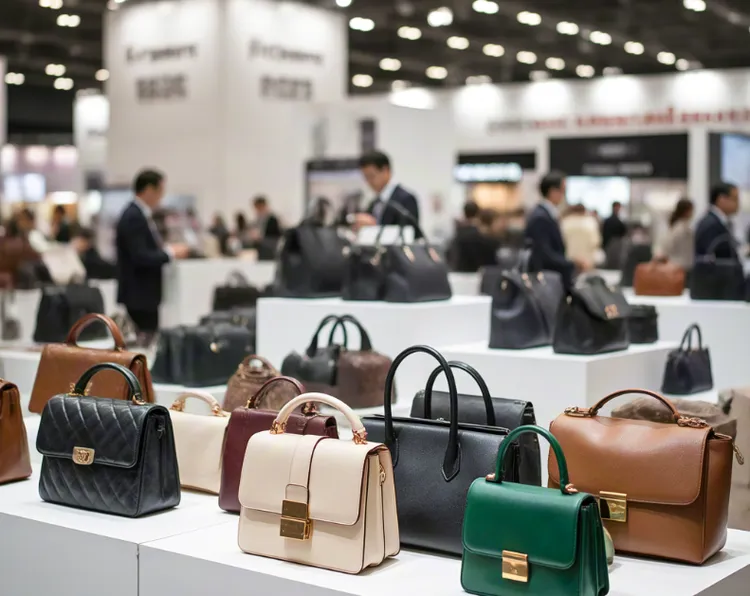
The key distinction is that trade fairs tend to favor strong salespeople, whereas factory audits reveal operational performance. A manufacturer with limited production capabilities but an excellent export sales team may appear highly impressive at its Canton Fair booth in Pazhou. This gap between sales presentation and actual manufacturing capacity can introduce significant bias into sourcing decisions.
| Dimension | Canton Fair | Factory Visit |
|---|---|---|
| Model | One-to-many | One-to-one |
| Primary Purpose / Strength | Broad screening, comparing many suppliers quickly; breadth and price benchmarking | Deep verification of real capability; depth and truth verification |
| Best at Answering | Who exists? What’s the market price? What’s possible? | Is production real? Is quality controlled? Can they scale? |
| Time per Supplier | 10–30 minutes | 2–4 hours (half-day to full-day per factory) |
| Suppliers per Day | 20–50 | 1–2 |
| Cost | Travel to Guangzhou, entry badge, accommodation | Travel to factory city, time, possible interpreter |
| Breadth | Hundreds of suppliers in one place | One supplier at a time |
| Depth / Verification Level | Limited to booth display, samples, conversation; Low–Medium verification | Full view of production, equipment, QC, workforce; High verification |
| What You Can Check | Product range, samples, basic specs, pricing, communication | Real capacity, equipment, QC systems, materials, management, working conditions |
| What You Cannot Check / What It Can’t Show | True factory size, production lines, workforce, subcontracting; delivery reliability, defect handling, batch consistency | Broad market comparison, competitive pricing across many suppliers; market price context, category alternatives |
| Gaming / Misrepresentation Risk | High (trading companies pose as factories; borrowed catalogues; specially made samples) | Lower (but still possible with staged visits, cherry-picked lines, cleaned-up floors) |
| Biased Toward | Strong sales capability | Strong operational capability |
| Reveals Culture? | No | Partially — housekeeping, worker morale, attitude to a problem |
| Best For / Ideal Stage | Shortlisting 5–10 candidates; early sourcing, market research | Confirming 1–3 finalists; before signing contract or placing bulk order |
Don’t treat the Canton Fair as an inferior sourcing tool. It offers unique advantages that a factory visit simply cannot replicate.
| Fair-only advantage | Why it matters |
|---|---|
| Price benchmarking across dozens of suppliers | The same bag quoted by 30 vendors tells you the true market band — one factory quote tells you nothing |
| Category comparison side by side | Compare construction quality, hardware, edge finishing across vendors while the samples are in your hands |
| Materials and component discovery | Fabrics, linings, zippers, hardware and fittings all in the same phase — often cheaper and faster than searching |
| Rapid elimination of non-options | Rule out 80% of candidates in two days |
| Access to factories you’d never find | Smaller specialists who don’t rank in search but do exhibit |
| Meeting the decision-maker | Owners and export managers attend; you may not get them on a cold call |
| Efficient use of a short sourcing trip | If your window in Guangzhou is limited, the fair compresses weeks of meetings into days |
Here are six critical questions that a booth presentation simply cannot answer.
This is arguably the most important question when sourcing bags. A trading company can quote you a price, but it may not be able to resolve stitching defects, control dye lot consistency, or guarantee delivery dates for production it does not directly manage.
On the factory floor, you can see for yourself:
Ask yourself the following questions during your visit:
Compare the number of machines and workers on-site with the figures provided at the exhibition booth.
Remember that sewing station counts alone cannot determine actual output; production efficiency, product complexity, and working hours also matter.
This is particularly important in Guangzhou’s humid climate. Leather, lining materials, and adhesives can deteriorate when exposed to excessive moisture.
Check the following:
A bag factory that fails to control material storage conditions may experience inconsistent edge painting and unstable leather performance, regardless of how well its workers sew. These issues are almost impossible to identify from an exhibition booth alone.
Bring a sample with an obvious defect, such as peeling edge paint or uneven stitching, and observe how the factory responds.
A technically capable manufacturer should be able to identify potential root causes, explain corrective actions, and propose practical solutions.
A supplier that dismisses your concerns or offers only vague reassurances may struggle to handle defects when they arise during actual production.
The key is to evaluate how they solve problems, not just how they sell their products.
A factory’s culture is reflected in the details of its daily operations:
The 5S methodology—Sort, Set in Order, Shine, Standardize, and Sustain—can provide useful indicators of operational discipline.
A well-organized workshop may be better positioned to maintain consistent bag quality, while a disorganized environment can make production variations harder to control.
Ultimately, a factory visit reveals the operational realities behind a supplier’s sales presentation. It allows you to assess not only what a manufacturer promises, but also how its people, processes, materials, and quality systems work together to deliver your order.
| Comparison Item | Canton Fair Booth Evaluation | On-Site Factory Visit |
|---|---|---|
| Core Purpose | Initial screening, compare multiple suppliers quickly, check samples, test technical knowledge, align basic commercial terms | Verify real production capacity, inspect actual workshop, audit QC workflow, confirm equipment and management |
| Environment | Temporary booth setting; only finished samples, sales/merchant team present | Live production workshop: cutting room, skiving station, edge painting line, sewing floor, QC area, warehouse |
| What you can assess | ✅ Visual sample workmanship (edge paint, stitching, hardware) ✅ Product range & customisation ability ✅ Sales team communication skill & English proficiency ✅ Preliminary quote, MOQ, lead time ✅ Certificates (soft copies / brochures) ✅ Quick comparison between multiple bag suppliers in one trip |
✅ Confirm it is a real factory (not trading company) ✅ Check production machines: die cutter, skiver, auto edge painting machine ✅ Observe in-line QC during real production ✅ Check raw material stock, leather storage, sample room ✅ Audit workshop hygiene, worker skill, compliance status ✅ Talk directly with technicians, production manager ✅ Verify claimed monthly output capacity |
| Limitations | ❌ Booth samples are often “show samples” (better than mass production standard) ❌ Cannot see workshop, actual production condition ❌ Sales staff may not fully understand production technical details ❌ Cannot confirm if they outsource cutting / edge painting to sub-contractors ❌ Hard to validate real monthly capacity |
❌ Higher time cost; travel to Guangzhou/Panyu/Huadu ❌ Need to schedule in advance; factory may arrange “show line” ❌ Only shows the workshop on that specific day ❌ Cannot compare many suppliers in a short time like Canton Fair |
| Best suitable scenario | Early sourcing phase: shortlist 3–5 potential suppliers | After Canton Fair, shortlist is ready; before placing formal bulk order |
Yes — but as a screening tool, not a closing venue. The fair is unmatched for supplier diversity, hands-on sample evaluation, and market intelligence: roughly 340,000 overseas buyers and 32,000 exhibitors across 1.55 million square meters. It is strongly worth attending if you are building a shortlist from scratch or benchmarking prices across dozens of vendors. If you are ready to place a first bulk order, treat it as step 1 only — the factory floor closes the deal, not the booth. If you are deepening an existing supplier relationship, skip the fair and go straight to their factory.
You can find genuine manufacturers, but you have to screen for them. A significant proportion of exhibitors — reportedly as many as 30%–40% in some halls — may be trading companies rather than actual manufacturers, and intermediaries can add markups of 10%–30%.
At the booth, ask directly whether they are a factory or a trading company, then verify:
Red flags include avoiding workshop details, being unable to explain processes such as edge painting, or discussing only price.
Budget roughly $2,000–$4,500 per person for a typical 7–10-day trip. Flights run about $600–$1,500 depending on origin and dates, and hotels near the Pazhou complex can double or triple during the fair, with budget options starting at around $80 per night. These costs add up quickly for small businesses and first-time buyers, which is why a pre-planned itinerary and a defined shortlist matter.
Phase 3, themed “Better Life.” For the 140th session it runs 31 October – 4 November 2026 and covers textiles & garments, shoes, cases & bags, textile raw materials & fabrics, fashion accessories & fittings, home textiles, stationery, health & recreation, food, and the International Pavilion. For bag brands this is also the phase where the upstream supply chain — fabrics, zippers, hardware, lining, and edge paint materials — sits in the same halls as finished bags.
Plan on 2–4 hours per factory, or a half-day to a full day if you want to walk the full production flow. Realistically that means auditing 1–2 suppliers per day, compared with 20–50 suppliers per day at the fair at 10–30 minutes each. The trade-off is deliberate: the fair gives breadth, the factory visit gives depth.
Six things, and each one changes how you read a supplier’s sales pitch:
The two approaches to evaluating manufacturers—attending the Canton Fair and conducting on-site factory audits—serve different purposes and complement each other. The Canton Fair is ideal for broad initial screening, while factory visits provide in-depth verification. Neither can fully replace the other, and the best strategy is to combine both.
If your schedule allows, we strongly recommend making time for factory visits. An on-site inspection enables you to assess a supplier’s capabilities in greater depth, including its production equipment, facility size, workforce management, quality control processes, warehousing capacity, and actual production output. Most importantly, it helps you verify whether the manufacturer can consistently deliver orders to the required standards and schedule.
If you’re evaluating and selecting bag manufacturers, you’re always welcome to visit Gionar’s factory. We look forward to showing you our production capabilities and helping you find that we are the right manufacturing partner for your brand.

Previous :
Luxury Bag Manufacturing Quality Standards: An Insider’s Guide to GionarNext :

Mobile Website

Inquires Whatsapp