- +86 13922774531
- info@gionar.com

English


English
May 26 , 2026
Maybe we all have the experience of purchasing and using leather bags. Have you ever wondered how the leather bags you use are made? How do these leather materials transform from animal skins to the materials used for our bags?
The production of leather bag materials has two main mainstream processes: vegetable tanning and chrome tanning. These two methods differ significantly in terms of tanning agents, feel, durability, environmental friendliness, and application.
The essence of tanning leather lies in its transformation. It initially has a hard and stiff texture, with a pleasant earthy fragrance. Its greatest charm lies in its unique “patina” attribute – under the combined effect of light, air, and use, the color gradually oxidizes from light caramel to deep amber, and each use mark becomes a unique personal signature.
Chrome tanning leather’s advantage lies in its stability and versatility. It is inherently extremely soft and plump, has excellent waterproof and heat-resistant properties, and can present extremely bright and uniform colors. It is ready to use out of the box, with consistent performance, and is the ideal canvas for modern designers to achieve complex shapes and rich colors.
This post will explore the definitions, characteristics, and differences between vegetable tanned leather and chrome tanned leather.
Leather tanning is a chemical treatment process used to process the skins of animals, transforming them from unprocessed, perishable materials into stable, durable, flexible and resistant-to-corrosion leather. Without tanning, untreated skinsheets would become dry and rot quickly like wood.
| Raw hide | Tanned leather |
| Putrefies quickly | Resists decay |
| Becomes hard and brittle when dried | Soft and supple |
| Hair attached | Hair removed (or kept for wool-on) |
| Unusable for long-term products | Lasts for decades |
| Property | Raw Hide | Tanned Leather |
| Flexibility | Rigid, brittle when dry | Soft, supple |
| Durability | Rots in days/weeks | Lasts years/decades |
| Heat resistance | Low | High (measured by shrinkage temperature) |
| Water resistance | Poor | Significantly improved |
| Method | Agent | Characteristics |
| Chrome tanning (~80–90% of world production) | Chromium(III) salts | Fast, produces soft, supple leather (e.g., nappa leather). Developed in the 1800s. |
| Vegetable tanning (oldest method, ~5000+ years) | Plant tannins (mimosa, chestnut, oak bark) | Slow process, produces firm, brown leather. Eco-friendly, biodegradable. |
| Aldehyde tanning | Formaldehyde, glutaraldehyde | Used for white, washable leathers (e.g., suede). |
| Oil tanning | Fish oils, animal fats | Produces very soft leather (e.g., chamois/suede). |
| Alum tanning | Aluminum salts (alum) | Produces white, soft leather but poor water/heat resistance. Used historically by Romans (~800 BCE). |
| Synthetic tanning | Synthetic tannins & resins | Modern alternatives, often combined with chrome or vegetable methods. |
The raw skin is cleaned, soaked and treated to remove hair, fat and meat.
The skin will be treated with tanning agents to preserve its quality. There are several common methods:
The leather undergoes dyeing, drying, softening processes, and sometimes is coated or polished to achieve the desired appearance and texture.
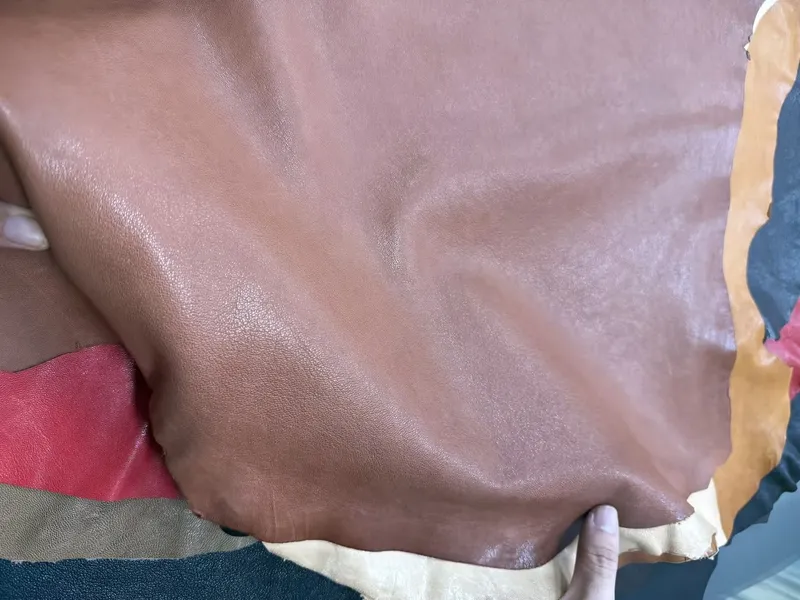
The process of transforming raw animal skins into durable leather is called tanning. Although there are various methods, the core process can be divided into four main stages: the tanning room, the tanning factory, wet treatment, and final treatment.
The entire process from raw leather to finished leather is very lengthy, and for some types of leather, it may even take more than 15 months.
The duration of the entire process varies from a few days to a few weeks, depending on the method used.
The raw skins delivered from the slaughterhouse were covered with blood, fat, hair and meat debris. Before the tanning process began, these raw skins must undergo thorough cleaning.
| Step | What Happens | Why |
| Soaking | Hides are soaked in water (12–48 hrs) | Rehydrates dried/salted hides |
| Liming | Soaked in lime (calcium hydroxide) + sodium sulfide | Removes hair, swells the fibers, opens up collagen structure |
| Fleshing | Mechanical scraping removes flesh/fat from the underside | Thins the hide, removes unwanted material |
| Splitting | Machine splits the hide into layers (grain, corium, flesh) | Allows different layers to be tanned differently |
| Deliming & Bating | Acid bath neutralizes lime; enzymes (pancreatin) are added | Removes residual lime, softens the hide, cleans it |
| Pickling | Soaked in salt + acid (sulfuric/formic acid) to pH ~2.5–3.0 | Prepares the hide to absorb tanning agents; prevents bacterial growth |
Key point: After preparation, you have a clean, swollen, collagen-rich piece of skin ready to accept tanning chemicals.
This is the process of turning raw skin into leather. The method used determines the type of leather.
| Detail | Info |
| Agent | Tannins from tree bark (oak, chestnut, mimosa, quebracho) |
| How it works | Tannin molecules are polyphenols — they form hydrogen bonds with collagen fibers, cross-linking them |
| Process | Hides are stacked in pits or placed in rotating drums filled with increasingly concentrated tannin baths over 4–10 weeks |
| Result | Firm, rigid, brown/tan leather that develops a patina over time |
| Used for | Saddles, belts, wallets, bookbinding, high-end shoes |
Step-by-step process:
| Detail | Info |
| Agent | Chromium(III) sulfate (basic chromium sulfate) |
| How it works | Cr³⁺ ions form coordination bonds with carboxyl groups (-COO⁻) on collagen — much faster and stronger than vegetable tannins |
| Process | Hides are placed in chrome liquor for just 6–24 hours |
| Result | Soft, supple, stretchy, light-colored leather (can be dyed any color) |
| Used for | Shoes, jackets, bags, car seats, gloves |
Step by step:
Why chromium tanning method dominates: Its speed is 10 times that of vegetable tanning method, and it can produce softer leather.
| Method | Agent | Time | Result |
| Aldehyde | Glutaraldehyde, oxazolidine | Hours | White, washable leather (suede, kidskin) |
| Oil tanning | Fish oil, cod liver oil | Days | Ultra-soft (chamois leather) |
| Alum tanning | Aluminum sulfate | Days | White, soft but not very durable |
| Syntan | Synthetic tannins (phenol-formaldehyde resins) | Hours | Often combined with chrome for specific properties |
| Brain tanning | Animal brains (historically) | Days | Very soft but smelly — largely obsolete |
The leather that has undergone tanning treatment remains hard in texture and has a rough surface. However, through further processing, it will be transformed into the form that we actually purchase.
| Step | What Happens | Why |
| Wringing & Sammying | Mechanical squeezing removes excess water | Prepares for fatliquoring |
| Fatliquoring | Soaked in emulsified oils/fats (fish oil, neatsfoot oil, synthetic) | Oils lubricate collagen fibers → makes leather soft & flexible |
| Dyeing | Leather is dyed in drums (acid dyes, metal-complex dyes) | Gives color — chrome leather dyes easily; vegetable leather dyes with difficulty |
| Drying | Staked on frames or through dryer tunnels | Reduces moisture to ~10–14% |
| Setting/Staking | Stretched and dried under tension | Gives uniform thickness and flatness |
| Finishing | Surface coated with polyurethane, acrylics, lacquers, or waxes | Gives shine, scratch resistance, water repellency |
| Buffing/Sanding | Mechanical smoothing | Creates soft nap (suede) or smooth grain |
| Raw Hide Property | After Tanning |
| Perishable | Stable; resists bacterial decay |
| Water-soluble | Water-resistant (degree varies by method) |
| Rigid when dry | Flexible and workable |
| Opaque, raw texture | Colored, finished surface |
The tanning of leather by vegetable involves using natural plant tanning agents (derived from tree bark, leaves, fruits and roots) instead of chemical chromium salts. This is the oldest tanning method in human history, dating back over 5,000 years.
Tannin is a polyphenolic compound (a large organic molecule) found in plants. They bind to the collagen fibers in animal skin through hydrogen bonds and hydrophobic interactions, thereby permanently connecting these fibers and preventing them from rotting, shrinking or decomposing.
| Tannin Source | Tannin Type | Color Produced | Common Names |
| Oak bark | Ellagitannins | Rich brown | European oak |
| Chestnut wood | Ellagitannins | Light brown/tan | Toscano leather |
| Mimosa (acacia) bark | Proanthocyanidins | Pale tan/straw | French calfskin |
| Quebracho wood | Condensed tannins | Reddish brown | South American |
| Sumac leaves | Gallotannins | Yellow/tan | Middle Eastern |
| Myrobalan (Terminalia) | Gallotannins | Dark brown | Indian leather |
| Valonia oak (acorns) | Ellagitannins | Very dark brown | Historical use |
Key point: Different plants produce different combinations of tannin components → which result in different colors, textures and properties.
| Feature | Description |
| Tanning agent | Mimosa, oak, chestnut, quebracho, etc. |
| Process time | Slow – weeks to months |
| Colour | Earthy tones (browns, tans, beige); darkens with age |
| Hand feel | Firm and stiff initially; softens with use |
| Patina | Develops a rich, lustrous patina over time (highly prized) |
| Water resistance | Low – absorbs water easily, leaves permanent spots |
| Moldability | Excellent – can be carved, tooled, or wet-shaped |
| Biodegradable | Yes – natural materials break down |
| Environmental impact | No heavy metals, but high water/energy/land use |
| Product | Why Veg Tan? |
| Saddles & harnesses | Firm, durable, molds to shape, ages beautifully |
| Belts | Stiff initially → molds to waist; develops patina |
| Wallets & cardholders | Ages gorgeously, gets softer with use |
| Bookbinding | Traditional method; acid-free, lasts centuries |
| Shoes (high-end) | Structured, moldable, develops character |
| Tooling leather | Can be carved, stamped, embossed (chrome leather is too soft) |
| Drum heads | Traditional use — tight, responsive |
| Armor (historical) | Medieval knights used veg-tanned leather |
| Luggage & bags | Stiff, structured, long-lasting |
| ✅ Pros | ❌ Cons |
| Fully natural & biodegradable | Slow production (weeks vs. hours) |
| Develops beautiful patina | Stiff when new — long break-in period |
| Can be tooled, carved, molded | Less water-resistant than chrome |
| Eco-friendly (no heavy metals) | More expensive |
| Scent is natural & pleasant | Limited color options (mostly tans/browns) |
| Lasts decades if maintained | Lower shrinkage temperature (less heat resistant) |
| Traditional craftsmanship | Requires more skill to work with |
Vegetable tanned leather is the only type of leather that can be carved (i.e., engraved or stamped with patterns):
| Technique | What It Is |
| Stamping | Metal stamps pressed into leather to create patterns |
| Carving | Knives/swivel knives cut designs into the surface |
| Dyeing | Aniline dyes are absorbed (not coated on top) |
| Molding | Wet leather is molded over forms (e.g., saddle trees) |
| Burnishing | Rubbed with a hard tool to create a glass-like shine |
Chrome-tanned leather cannot be processed – it is too soft, and the chromium content hinders the absorption of dyes.
| Vegetable Tanning | Chrome Tanning | |
| Chemicals | Natural, plant-based | Chromium salts (toxic) |
| Wastewater | Biodegradable, low toxicity | Contains Cr(III) → can oxidize to Cr(VI) (carcinogenic) |
| Energy use | Higher (longer process) | Lower (faster process) |
| End of life | ✅ Compostable / biodegradable | ❌ Persists in landfills |
| Carbon footprint | Lower (if sustainably sourced) | Higher |
| Region | Specialty |
| Tuscany, Italy | The “birthplace” of veg tan — Florentine leather (Santa Croce district) |
| France | Hermès, Chanel, Louis Vuitton all use veg tan for some products |
| Spain | Loewe, Carmina — Spanish veg tan is world-renowned |
| England | J&FJ Baker, Sedgwick — traditional English bridle leather |
| USA | Hermann Oak (Missouri) — the largest veg tannery in North America |
| India | Jaipur, Kanpur — large-scale veg tan production |
| Japan | Kyoto, Kobe — artisanal veg tan, known for precision |
| Clue | What to Look For |
| Color | Natural tan, honey, light brown — never jet black or bright colors |
| Smell | Earthy, woody, natural (not chemical) |
| Edge | Raw edge is fibrous & light-colored (not blue/gray like chrome) |
| Back side | Rough, suede-like, fibrous (chrome is smooth & blue-gray) |
| Stiffness | Firm/rigid when new |
| Price | Usually more expensive |
| Labels | “Vegetable tanned,” “Veg tan,” “Plant tanned,” “Full-grain veg tan” |
Chrome-tanned leather is a type of leather that is tanned using chromium (III) salts (mainly basic chromic sulfate) instead of plant-based tanning agents. It is currently the most widely used type of leather globally, accounting for approximately 80% to 90% of the total global leather production. This type of leather was invented in the middle of the 19th century and has greatly transformed the leather industry, making the production process faster, more cost-effective, and more stable.
| Feature | Description |
| Tanning agent | Chromium salts (chemical) |
| Process time | Fast – about 1 day |
| Colour | Can be any colour; dyed uniformly and brightly |
| Hand feel | Very soft, supple, and flexible – no break-in period |
| Patina | Does not develop a significant patina; may fade or crack over time |
| Water resistance | Moderate (often treated with water-resistant finishes) |
| Moldability | Poor – not suitable for tooling or carving |
| Biodegradability | Slow – chromium hinders natural decomposition |
| Environmental concern | Risk of chromium waste; if mismanaged, can oxidise to toxic Cr(VI) |
| Detail | Info |
| Tanning agent | Chromium(III) sulfate — Cr³⁺ ions (molecular weight: 52 Da — tiny!) |
| How it works | Cr³⁺ ions form coordination bonds with carboxyl groups (-COO⁻) on collagen fibers |
| Key difference from veg tan | Chrome ions are ~100x smaller than tannin molecules, so they penetrate collagen much faster |
| Shrinkage temperature (Ts) | 100–120°C (higher than veg tan’s 85–100°C) |
| Bond type | Coordination bonds (Cr³⁺ ↔ -COO⁻) — very stable |
Why so rapid: The weight of tannin molecules ranges from 500 to 3000 daltons, and it takes several weeks for them to diffuse into the dense collagen. While Cr³⁺ and calcium³⁺ ions have a weight of only 52 daltons (52 Da) – they flood the animal skin within hours rather than weeks.
| Era | Development |
| Pre-1858 | Only vegetable tanning and alum tanning existed |
| 1858 | Chrome tanning invented — scientists sought faster alternatives to veg tan |
| 1880s–1900s | Rapid industrial adoption; tanneries switched en masse |
| Mid-1900s | Chrome tanning became the dominant method worldwide |
| 2000s–present | Growing environmental concerns; “waterless chrome tanning” and Cr(VI) reduction efforts |
| 2026 | Still ~85–90% of global production; eco-alternatives gaining ground |
| Step | Process | Duration |
| 1. Soaking | Hides rehydrated in water | 12–24 hrs |
| 2. Liming | Lime + sodium sulfide removes hair | 12–24 hrs |
| 3. Fleshing & Splitting | Fat/flesh removed; hide split | 1–2 hrs |
| 4. Deliming & Bating | Acid neutralizes lime; enzymes soften | 6–12 hrs |
| 5. Pickling | Salt + acid bath (pH ~2.5–3.0) | 6–12 hrs |
| 6. CHROME TANNING | Hides soaked in chromium(III) sulfate baths | 6–24 hours |
| 7. Fatliquoring | Oils added for softness | 1–2 hrs |
| 8. Dyeing, Drying, Finishing | Standard finishing | 2–3 days |
| Product | Why Chrome Tan? |
| Shoes | Soft, flexible, water-resistant, takes any color |
| Leather jackets | Supple, lightweight, affordable |
| Handbags & purses | Dyeable, consistent finish, cheap |
| Gloves | Ultra-soft, stretchy (chrome-tanned kidskin) |
| Furniture | Durable, easy to clean |
| Car seats | Wear-resistant, consistent |
| Motorcycle seats | Weather-resistant, tough |
| Luggage | Lightweight, water-resistant |
| Sports balls(football, basketball) | Tear-resistant, uniform |
| Belts (budget) | Soft from day one, affordable |
| Type | Toxicity | Used In |
| Chromium(III) — Cr³⁺ | ✅ Low toxicity; doesn’t cause allergic reactions in most people | Chrome tanning process |
| Chromium(VI) — Cr⁶⁺ | ❌ Carcinogenic; can form if Cr³⁺ oxidizes improperly | Contaminant in poorly managed wastewater |
| ✅ Pros | ❌ Cons |
| Soft & supple from day one | No patina development — looks the same forever |
| Highly water-resistant | Not biodegradable |
| Takes any color beautifully | Toxic wastewater if not managed |
| Very fast production (hours vs. weeks) | Can’t be tooled/carved/stamped |
| Higher tensile strength (tear-resistant) | Often coated with acrylics to hide imperfections → can crack/peel over time |
| Cheap & widely available | Perceived as “lower quality” by artisans |
| Consistent & uniform | Chromium persists in landfills |
| Lightweight | Some people experience chromium allergies (rare) |
| Clue | What to Look For |
| Color | Any color — bright, uniform, consistent |
| Smell | Slight chemical smell (not earthy/woody) |
| Edge (raw) | Blue-gray (this is the “wet blue” color) |
| Back side | Smooth, blue-gray, almost suede-like |
| Feel | Soft immediately — no break-in needed |
| Price | Usually cheaper |
| Label | “Chrome tanned,” “Chrome leather,” “Chrome-tanned” |
| Region | Specialty |
| Tuscany, Italy | High-end chrome-tanned fashion leather (Gucci, Prada, Bottega Veneta) |
| France | Hermès, Chanel, Louis Vuitton — use chrome for bags/jackets |
| Spain | Loewe, Carmina — chrome + veg combos |
| India | Kanpur, Ambur — largest chrome tanning hub in Asia |
| China | Guangzhou — massive chrome tanning industry |
| Brazil | Largest chrome leather exporter in the world |
| Turkey | Major chrome tanning center for European fashion |
Vegetable tanned leather and chrome tanned leather are the two fundamental elements of the leather industry. In simple terms, vegetable tanning is “the art of time”, while chrome tanning is “the efficiency of industry”. For luxury bags, the choice of leather material determines their character, usage experience, and collectible value.
If you seek a sense of uniqueness and vitality, vegetable-tanned leather is the top choice. It acts like a canvas, recording every touch, sun exposure, and the marks of time, gradually oxidizing from light caramel color to deep amber color (known as “aging”). Hermès values it because each bag will eventually become unique to its owner, a one-of-a-kind piece. However, the cost is patience (it feels hard to the touch) and the need for meticulous care (it requires special attention).
If you seek consistent beauty and practicality, chrome-tanned leather is the driving force behind it. It enables LV’s Monogram and Chanel’s diamond patterns to remain unchanged for decades without warping or fading, and be resistant to rain. It is a product of the industrial age, with balanced performance, but lacks the “aging” charm and is controversial in terms of environmental protection due to the presence of chromium salts.
| Feature | Vegetable-Tanned | Chrome-Tanned |
| Tanning agent | Natural plant tannins (bark, leaves, fruits) | Chromium salts (basic chromium sulfate) |
| Process time | Weeks to months (slow) | ~1 day (fast) |
| Colour | Earth tones (browns, tans, beige); darkens with age | Any colour – bright, uniform, dyed through |
| Initial softness | Firm, stiff, needs break-in | Very soft, supple – no break-in |
| Patina | Develops rich, dark, lustrous patina over time | No patina – may fade or crack |
| Water resistance | Low – absorbs water; leaves permanent spots | Moderate – often treated for water resistance |
| Moldability / tooling | Excellent – can be carved, embossed, wet-shaped | Poor – does not hold tooling well |
| Durability | Very high – becomes tougher with age | High – but softer, so scratches/wear faster |
| Biodegradability | High – breaks down naturally | Slow – chromium hinders decomposition |
| Environmental concern | High water/energy/land use; no heavy metals | Risk of chromium waste; can oxidise to toxic Cr(VI) |
| Cost | Generally more expensive | Usually cheaper (mass-produced) |
| Typical uses | Belts, soles, watch straps, tooled leather, high-end bags, craft projects | Bags, jackets, upholstery, car interiors, most everyday leather goods |
| Factor | Vegetable-Tanned | Chrome-Tanned |
| Toxicity | No heavy metals; biodegradable waste | Risk of chromium contamination if poorly managed |
| Water pollution | Organic waste (biodegradable) | Heavy metal pollution risk in unregulated regions |
| Solid waste | Shavings biodegrade naturally | Chromium-laden trimmings persist like plastic |
| End-of-life | Decomposes in ~50 years | Persists for centuries in landfills |
| Carbon footprint | ~14.8 kg CO₂ eq per hide | ~17.2 kg CO₂ eq per hide |
| Energy use | Higher during tanning (long drum times) | Lower per hide during processing |
| Feature | Vegetable-Tanned | Chrome-Tanned |
| Initial feel | Firm, stiff; requires break-in | Soft and pliable from day one |
| Color range | Earthy tones (tan, brown, cognac); limited | Wide spectrum; bright and consistent colors possible |
| Patina | Excellent — darkens and enriches uniquely with age | Minimal — tends to look the same over time |
| Water resistance | Moderate — can stain or stiffen if soaked | High — naturally repels water |
| Durability | Higher tensile/tear strength; ages gracefully | Softer; may crack or peel with heavy long-term use |
| Tooling/carving | Excellent — holds stamped designs crisply | Poor — too soft to hold detailed impressions |
| Scent | Natural woody, earthy aroma | Chemical or neutral |
| You Want… | Choose | Why |
| Boots that last 30 years | Vegetable Tanned | Durability + patina |
| A bag that’s soft from day one | Chrome Tanned | Instant softness |
| Any color you can imagine | Chrome Tanned | Unlimited dyeability |
| Tooling, carving, stamping | Vegetable Tanned | Only veg tan can be tooled |
| Water-resistant jacket/gloves | Chrome Tanned | Superior water resistance |
| A wallet that tells your story | Vegetable Tanned | Unique patina over time |
| Best value for money | Chrome Tanned | Cheaper, more versatile |
| Eco-friendly / sustainable | Vegetable Tanned | Biodegradable, natural |
| Car seats / furniture | Chrome Tanned | Heat + wear resistant |
| Saddles & harnesses | Vegetable Tanned | Firm, moldable, lasts decades |
| Criteria | Winner |
| Longevity | Vegetable Tanned |
| Comfort (day 1) | Chrome Tanned |
| Beauty over time | Vegetable Tanned |
| Versatility | Chrome Tanned |
| Eco-friendliness | Vegetable Tanned |
| Affordability | Chrome Tanned |
| Craftsmanship | Vegetable Tanned |
| Low maintenance | Chrome Tanned |
These two methods of tanning leather each have their own advantages and the products they produce are also different. Vegetable-tanned leather is used for belts, shoe soles, watch straps, horse gear, hand-carved leather goods, knife sheaths, and high-end leather bag linings. Chrome-tanned leather dominates the mass consumer market: handbags, clothing, car interiors, sofas, soft upholstery, and most everyday leather goods.
Vegetable-tanned leather excels in its environmental attributes and unique texture, making it suitable for leather goods production that emphasizes quality and retro style; chrome-tanned leather, on the other hand, is known for its efficiency and practicality, meeting the demands of industrial mass production.
Of course, it is worth noting that the tanning method of leather directly affects its performance, appearance and lifespan.
If you are engaged in the bag business and are considering which type of leather material to use through which manufacturing process? The answer to this question needs to be determined based on your own brand positioning. If you want to seek more professional advice, please feel free to contact us.


Mobile Website

Inquires Whatsapp