- +86 (0) 20-86655668
- info@gionar.com

English


English
July 14 , 2026
Grape Leather is a sustainable and innovative material made from wine by-products (grape skins, seeds, and pomace), and it belongs to plant-based vegan leather.
The core advantage of Grape Leather lies in its sustainability and circular economy value. It not only effectively solves the problem of agricultural waste disposal, but also perfectly aligns with the concept of circular economy. Compared to traditional animal leather, it significantly reduces reliance on animal resources, has a more environmentally friendly production process, and reduces carbon emissions and pollution.
Grape Leather has waterproof, wear-resistant, and flexible properties, and is widely used in shoes, bags, and accessories.
This post will explore the definition and manufacturing process of Grape Leather, as well as its durability, breathability, and biodegradability.
Grape Leather is an innovative and sustainable plant-based vegan leather made from the waste products generated during wine production (such as grape skins, seeds and stems). It is an environmentally friendly solution that upgrades agricultural waste into high-performance materials. The most well-known producer is the Italian company Vegea, which was founded in 2018.
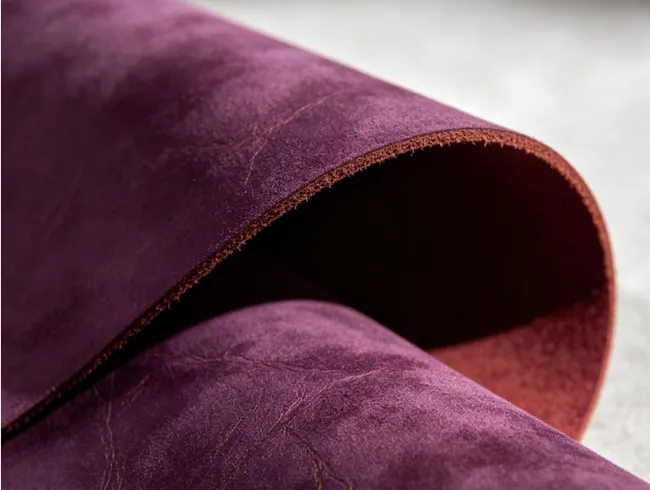
The raw material for grape leather comes from the by-products of the wine industry – grape pomace. Every year, hundreds of millions of tons of such waste are produced globally, and the grape leather technology converts these wastes into high-value materials.
| Feature | Description |
| Sustainable and eco-friendly | Made from agricultural waste; low-pollution production; bio-based content can reach up to 84%. |
| Performance close to genuine leather | Soft and smooth hand feel; excellent strength and elasticity; thickness, finish, and texture can all be customised. |
| Durable and easy to care for | Good durability and water resistance; easy to maintain. |
| Vegan and cruelty-free | Contains no animal ingredients; no animal harm in the production process. |
| Feature | Detail |
| Eco-friendly | 100% recyclable & biodegradable (decomposes in ~6 months) |
| Water savings | Uses ~80% less water than traditional animal leather |
| Carbon footprint | Only 1/5 the carbon emissions of animal leather |
| Waste reduction | ~4 kg of grape waste → 1 sqm of grape leather |
| Vegan & cruelty-free | Fully plant-based, no animal products |
| Performance | Soft like suede, 2x more abrasion-resistant than regular vegan leather |
Shoes – Gucci has launched a series of sports shoes made of grape leather.
Bags and handbags – Stella McCartney has developed handbags made of grape leather.
Boxing gloves
Automobile interiors – Tesla is said to have tested using grape leather for interior materials.
Furniture and fashion accessories
More than 30 luxury brands have begun to use this material.
| Dimension | Grape leather | Apple leather (Frutta) | Banana (Bananatex®) | Coffee leather |
| Waste source | Wine pomace (skins/seeds) | Apple juice pomace | Abacá banana stem fiber | Spent coffee grounds |
| Backing/structure | rPET non-woven + PU | rPET + PU | Fabric + more natural-fiber composite | rPET/cotton + PU |
| Hand feel | Soft, slightly nappy, fine-grained | Delicate, smooth | Canvas-like (Bananatex is stiffer) | Papery, granular |
| Durability | Medium (same tier as apple) | Medium | Medium-high (Bananatex strongest) | Medium |
| “Biodegradable” trap | Same as coffee: PU system = not biodegradable | Same | Better if bio-resin used | Same |
| Material | Source | Durability | Sustainability |
| Grape leather | Wine industry waste | Moderate; improving | Good; circular economy model |
| Coffee leather | Spent coffee grounds | Moderate | Good |
| Piñatex | Pineapple leaf fibers | Moderate | Good |
| Apple leather | Apple industry waste | Moderate | Good |
| Mushroom leather (Mylo) | Mycelium | Moderate-Good | Good |
| Traditional PU/PVC | Petroleum | Moderate | Poor |
Grape leather is made from the grape waste produced during the wine-making process. It is mainly produced in two ways: industrialized production and small-scale home production. The former represents a mature business model that upgrades and reuses wine-making waste, while the latter is more inclined towards an exploratory approach for fun.
The core task of this stage is to collect and process the wine waste to extract the effective components.
This is the key step in converting grape waste into leather materials.
| Step | What Happens | Details |
| Collect Raw Material | Gather grape waste from wineries | Skins, seeds, stems, pulp (marc) — all the leftovers after pressing |
| Grind into Paste | Mill everything into a fine slurry/paste | The grape solids are ground until you can’t see any original shape — it becomes a smooth paste |
| Add Binders & Color | Mix with plant-based oils + water-based polyurethane | This creates a plant-based composite. Color can be adjusted at this stage by changing the paste color |
| Coat on Textile Scaffold | Spread the paste onto a fabric base | The fabric acts as a skeleton/scaffold — just like synthetic leather manufacturing |
| Dry & Cure | Let it dry naturally or in controlled conditions | Results in a soft, suede-like material with leather-like texture |
| Finish | Surface treatment, embossing, etc. | Final product ready for cutting & sewing |
| Challenge | Solution Approach |
| Consistency | Winery waste varies by grape variety, season, and region; blending and standardization help |
| Durability | Balancing bio-content with necessary synthetic binders for performance |
| Scalability | Limited by seasonal wine production and geographic concentration of wineries |
| Cost | Small-batch production and R&D expenses keep prices higher than conventional materials |
If you want to give it a try yourself, you can refer to the following simplified steps. However, it is more of a proof-of-concept, and the final product will have a difference in performance and durability compared to industrial products.
Yes, the durability is excellent. Bags made of grape leather can generally be used for 5 to 8 years, and their performance is sufficient for daily use. However, compared to traditional animal leather, there is still a certain gap in long-term durability.
The third-party test data can more objectively reflect its performance:
| Property | Rating | Details |
| Abrasion Resistance | ⭐⭐⭐⭐⭐ | 2× more abrasion-resistant than regular vegan leather (PI/PU leather) |
| Tensile Strength | ⭐⭐⭐⭐⭐ | Rated 5/5 for structural strength |
| Tear Resistance | ⭐⭐⭐⭐ | Good, though slightly less than full-grain cowhide |
| Water Resistance | ⭐⭐⭐⭐ | Can be enhanced with protective coatings (water-based PU) |
| Flexibility / Softness | ⭐⭐⭐⭐⭐ | Feels almost identical to real leather — soft like suede |
| Longevity | ⭐⭐⭐⭐ | Stable properties, resists cracking better than most vegan leathers |
| Factor | Impact |
| Binder composition | Higher synthetic binder content (bio-PU) improves durability but reduces biodegradability |
| Coating quality | Protective top layers significantly extend lifespan |
| Material thickness | Thicker sheets resist tearing better |
| Manufacturing precision | Consistent density and even coating prevent weak points |
| Process | What It Does for Durability |
| Enzymatic tanning | Removes pectin & cellulose, leaving only strong fiber structures |
| Natural tanning agents | Increases softness AND durability simultaneously |
| Plant-based oils + water-based PU binder | Creates a flexible yet tough composite — like a natural resin matrix holding grape fibers together |
| Protective topcoat (optional) | Boosts water resistance & scratch resistance to near-animal-leather levels |
| Material | Abrasion Resistance | Water Resistance | Lifespan (avg use) |
| Full-grain cowhide | ★★★★★ | ★★★★★ | 10–20 years |
| Cactus leather (Desserto) | ★★★☆☆ | ★★★☆☆ | 3–5 years |
| Apple leather (Frumat) | ★★★☆☆ | ★★☆☆☆ | 2–4 years |
| Grape leather (Vegea) | ★★★★☆ | ★★★★☆ | 5–8 years |
| Regular PU vegan leather | ★★☆☆☆ | ★★☆☆☆ | 1–3 years |
| Material | Durability | Best Use |
| Grape leather | Moderate | Fashion accessories, light footwear, upholstery |
| Coffee leather | Moderate | Similar applications |
| Piñatex | Moderate | Bags, shoes, small goods |
| Mushroom leather (Mylo) | Moderate-Good | Improving rapidly |
| High-quality animal leather | Excellent | Heavy-duty, long-term use |
| Synthetic PU/PVC | Moderate-Good | Consistent but less sustainable |
| Application | Durability Verdict |
| Handbags (e.g., Strathberry) | ✅ Excellent — holds shape, resists scratches |
| Shoes (e.g., Gucci sneaker collabs) | ✅ Great — 2× abrasion resistance vs. regular vegan leather |
| Car interiors (Tesla tested it) | ✅ Very good — stable under temperature changes |
| Boxing gloves | ✅ Perfect — needs high abrasion resistance |
| Furniture | ✅ Good — resists wear from daily use |
| Weakness | Explanation |
| Not fully waterproof | Without a topcoat, prolonged water exposure can damage it (but a protective coating fixes this) |
| UV yellowing | Like all plant-based leathers, it can yellow over time under direct sunlight — though less than PU vegan leather |
| Sharp objects | Can be punctured more easily than thick cowhide (same as most vegan leathers) |
Yes. Grape leather is biodegradable. It is worth noting that grape leather can sometimes completely biodegrade, but often it does not. The answer to whether grape leather is biodegradable or not is: it depends on its specific composition.
Many commercial grape leather products add a water-based polyurethane (PU) coating to enhance their durability. Although this coating is more environmentally friendly than traditional solvent-based PU, it is still a type of plastic and will prevent the product from complete biodegradation.
| Type | Biodegradable? | Time to Decompose |
| Vegea / Pangaia (with PUD binder) | ❌ Not fully | Partial — takes years |
| Oddbird / Wineleather (100% natural) | ✅ Yes, 100% | ~6 months ✅ |
| Ingredient | Problem |
| Grape waste (skins, seeds, stems) | ✅ Biodegradable |
| Plant-based oils | ✅ Biodegradable |
| Water-based PUD (polyurethane) | ❌ Not biodegradable |
| Component | Issue |
| Bio-based polyurethane (bio-PU) | Commonly used for durability and water resistance; degrades very slowly or not at all |
| Synthetic coatings | Protective finishes often contain petroleum-derived compounds |
| Dyes and additives | Chemical colorants and stabilizers may resist decomposition |
| Formulation | Biodegradability | Typical Use |
| 100% bio-based (grape + natural binders only) | Biodegradable / compostable | Rare; niche or experimental products |
| Grape + mixed bio/synthetic binders | Partially biodegradable (organic component only) | Most current commercial products |
| Grape + conventional synthetic binders | Not biodegradable | Lower-end or mass-market items |
These terms are often confused:
Bio–based materials refer to those that are partially or mainly made from renewable biological sources, such as grape waste.
Biodegradability means that under appropriate conditions, microorganisms can break down the material into natural substances within a reasonable time.
A material can be bio-based, but it may not be biodegradable. For example, grape leather containing polyurethane may be partially made from grapes, but due to the presence of its synthetic components, it will still remain in the environment.
Yes, grape leather is generally regarded as a material with good breathability.
| Type | Air Permeability | Water Vapor Permeability | Feel |
| Natural binder (Oddbird, Wineleather) | ⭐⭐⭐⭐ Good | ⭐⭐⭐⭐ Good | Suede-like, breathes well |
| PUD binder (Vegea, Pangaia, Gucci) | ⭐⭐⭐ Moderate | ⭐⭐⭐ Moderate | Smooth, less breathable than suede |
| Regular PU vegan leather | ⭐⭐ Poor | ⭐⭐ Poor | Plastic-like, traps sweat |
| Full-grain cowhide | ⭐⭐⭐⭐⭐ Excellent | ⭐⭐⭐⭐⭐ Excellent | Naturally porous |
| Pigskin | ⭐⭐⭐⭐⭐+ Best | ⭐⭐⭐⭐⭐+ Best | Hair follicle pores = super breathable |
The breathability of grape leather mainly stems from its material composition and the specific design for its intended use:
| Material | Liquid Water | Air | Water Vapor |
| Animal leather | Moderate resistance | High | High |
| Grape leather (typical) | High resistance | Low–Moderate | Moderate |
| PU synthetic leather | High resistance | Low | Low–Moderate |
| Cotton fabric | Permeable | High | High |
Yes. Manufacturers can alter the permeability in the following ways:
These changes usually require trade-offs. Increasing permeability can enhance comfort, but it may also reduce waterproof performance or durability.
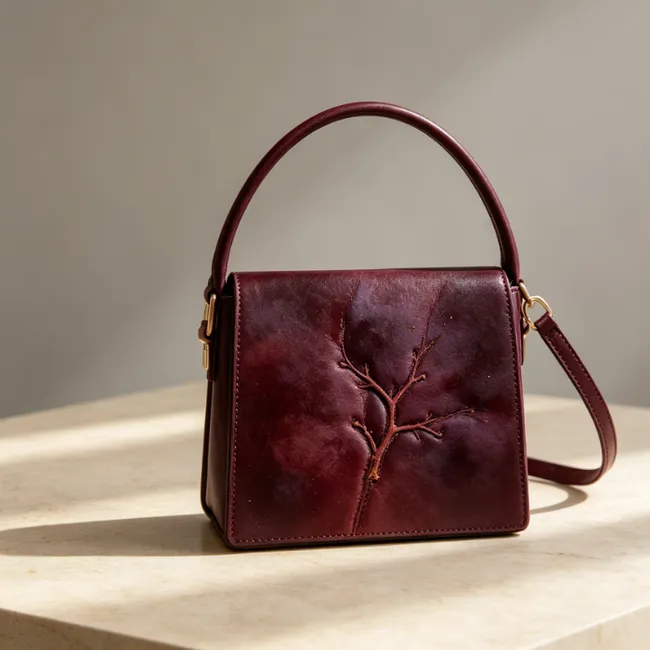
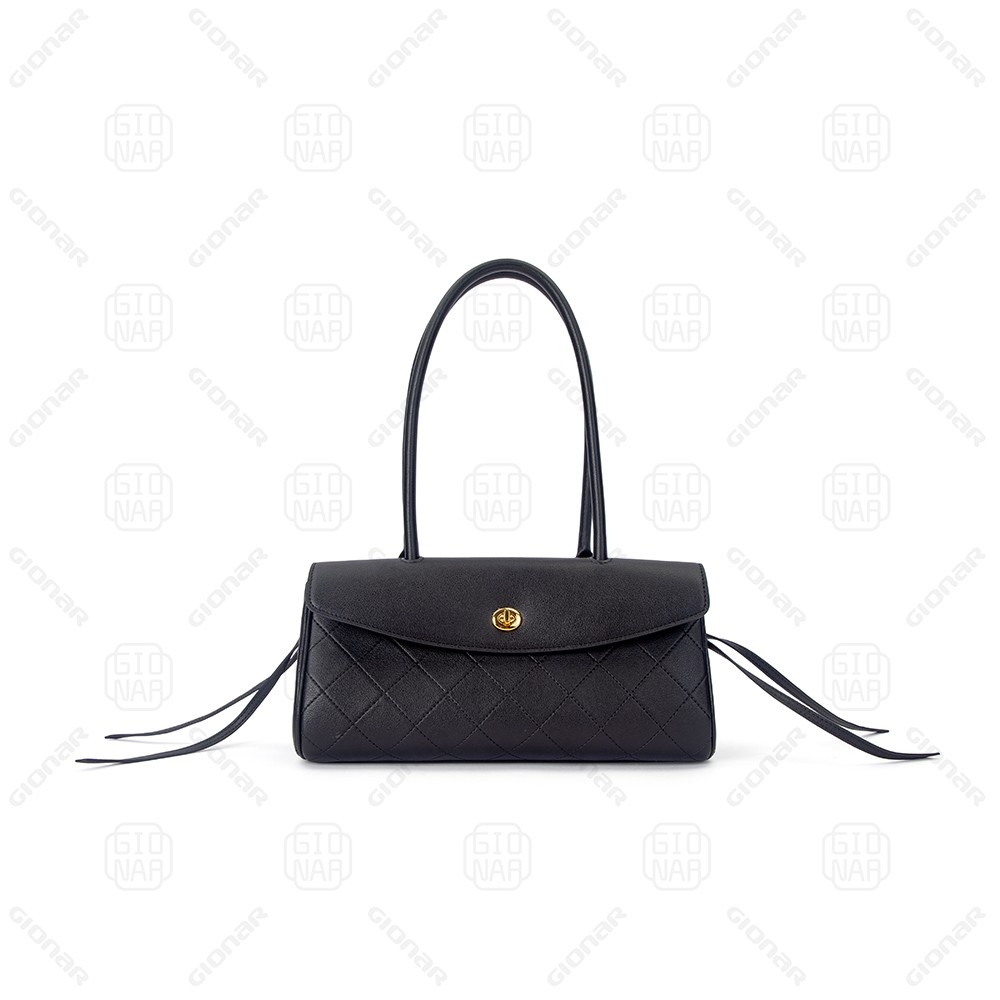
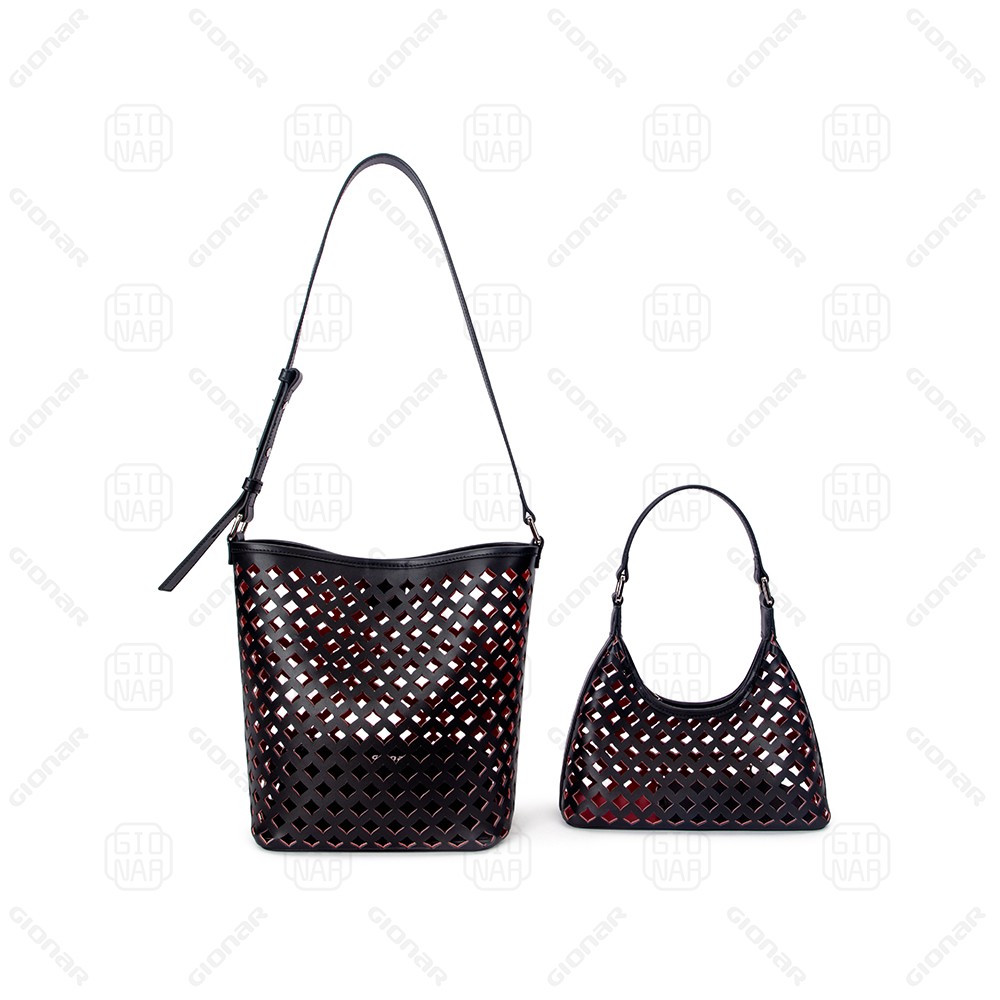
Yes. Grape Leather is a high-performance and innovative eco-friendly material suitable for making bags, especially appealing to consumers who pursue sustainable fashion and veganism.
It has already achieved a very close resemblance to traditional leather in terms of touch, appearance and daily durability, and has been adopted by well-known brands such as Stella McCartney and Bentley.
However, the long-term durability of Grape Leather still falls short of top-quality animal leather, and most products are not 100% biodegradable.
Most products on the market are not 100% made of grape, and usually contain synthetic components such as polyurethane (PU) to enhance durability and flexibility.
| Dimension | ✅ Pros | ❌ Cons / Considerations |
| Eco-Friendliness | – Uses wine industry waste (grape skins, seeds, stems) – Production uses no heavy metals or toxic solvents – Carbon footprint 90–95% lower than traditional leather |
– Most products contain 20–45% water-based polyurethane (PU) – not 100% biodegradable – Some use recycled polyester backing |
| Feel & Appearance | – Soft, smooth hand feel – very close to traditional leather – Smooth surface, excellent colour expression |
– Texture may vary depending on the backing material |
| Durability | – Water-, stain-, and scratch-resistant – Good flexibility – withstands >100,000 flexes – Excellent abrasion resistance (dry: >50,000 cycles) |
– Tensile strength (3–10 MPa) is on the lower end of natural leather’s range – Long-term durability data is limited – Lacks natural oils – may be more prone to cracking over time |
| Care & Maintenance | – Easy to clean – wipe gently with warm soapy water – Do not wash; dry-clean recommended |
– Avoid certain dry-cleaning solvents such as trichloroethylene |
| Market Adoption | – Already used by Stella McCartney, Calvin Klein, Bentley, and others – Suitable for handbags, footwear, interiors, and more |
– Large-scale production and long-term performance are still evolving |
| Price | No clear data available | No clear data available |
| Performance Dimension | Grape Leather Performance | Compared to Traditional Animal Leather |
| Abrasion Resistance | ✅ High abrasion resistance | ⚠️ Prone to scratching; requires regular maintenance |
| Water Resistance | ✅ Naturally hydrophobic; splash-resistant without coating | ❌ Requires chemical waterproofing agents |
| Flexibility | ✅ Highly elastic; bends without cracking | ✅ Good, but hardens over time |
| Tear Strength | ✅ Excellent (according to official data) | ✅ Extremely high (natural interwoven fibre structure) |
| Tensile Strength | ⚠️ 3–10 MPa (on the lower end of natural leather‘s range) | ✅ High (>245 N) |
| Heat Resistance | ✅ Good; suitable for everyday environments | ✅ Good, but may shrink under high heat |
| UV Resistance | ✅ Some premium products have UV-resistant properties | ❌ Long-term sun exposure causes fading and cracking |
| Workability / Sewability | ✅ Can be sewn with household sewing machines; edges do not fray | ❌ Requires industrial equipment; prone to edge cracking |
| Cleaning & Maintenance | ✅ Wipe with soapy water; stain-resistant | ❌ Requires specialised conditioning oils; prone to staining |
| Weight | ✅ Lightweight (natural fibre structure) | ⚠️ Heavier and denser |
| Odour | ✅ Mild plant/grape scent; no chemical smell | ⚠️ Natural leather smell; may retain chemical residues after tanning |
| Allergy Risk | ✅ No sensitising chemical residues | ❌ Chrome tanning agents may cause dermatitis |
| Production Energy Consumption | ✅ Significantly lower than traditional leather (90–95% carbon reduction) | ❌ High (livestock farming + tanning) |
| Life-Cycle Carbon Footprint | ✅ Significantly lower than traditional leather | ❌ High (methane emissions + tanning) |
| Material | Bag Suitability | Why |
| Bananatex | Commuter tote OK (5+ yr) | Abacá + latex + cotton; strongest flex/wet |
| Apple (AppleSkin) | Light daily / crossbody (3–5 yr) | Pomace + PU + rPET; very similar to grape, apple processes easier (less acid) |
| Grape (VEGEA) | Fashion / SLG / occasion (2–4 yr) | Pomace + extra pH step needed; narrative = “wine country” edge over apple |
| **Kombucha (com | Clutch / cardholder only | Decor-grade; not a real bag material |
| Mylo | Clutch / small bag (2–4 yr, paused) | Softest hand, wet weak |
| Style | Suitability |
| Tote bags | Light to medium loads; high visibility for the material |
| Crossbody and shoulder bags | Benefit from lightweight quality |
| Clutches and wallets | Low-stress use; texture shines |
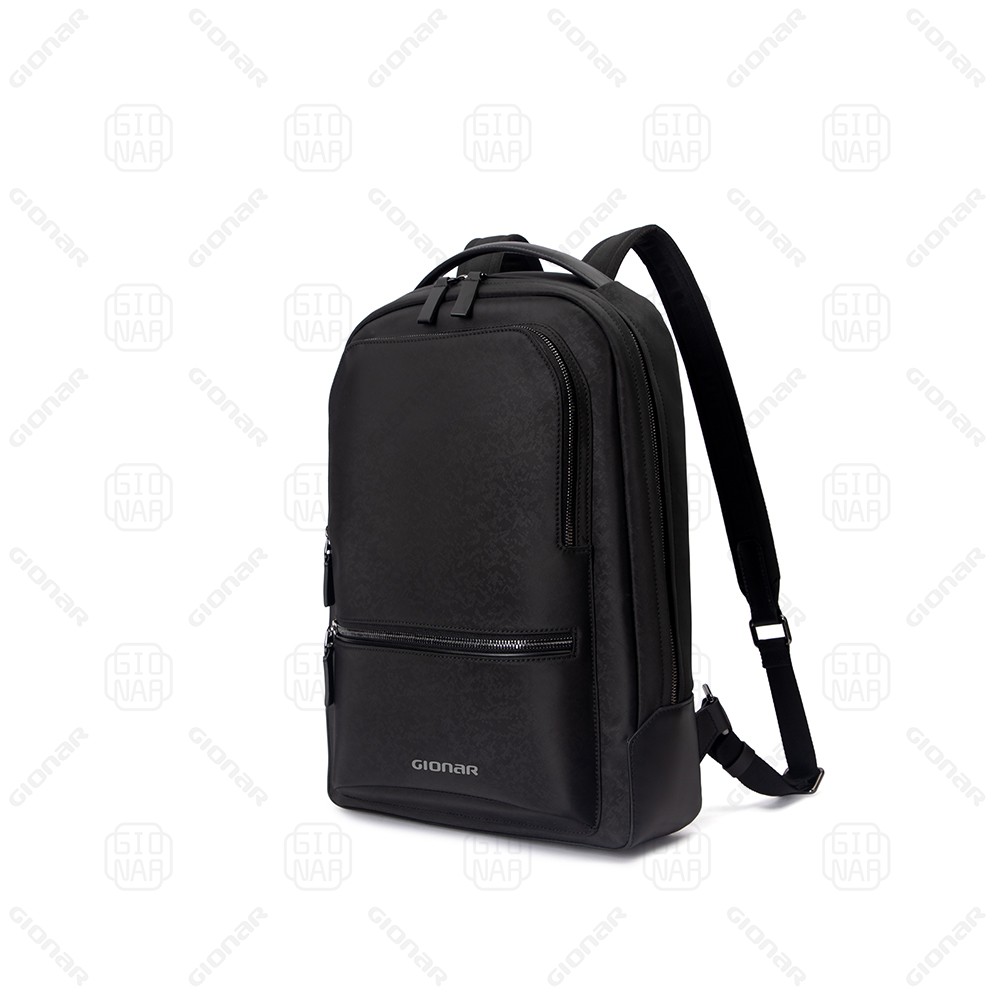
| Backpacks (light duty) | Daily commuting, not heavy gear |
| Laptop sleeves and organizers | Structured protection |
Luxury Brand: Stella McCartney launched a handbag made of grape leather, whose price is similar to that of traditional leather products, and it is favored by consumers who value environmental protection.
Sustainable Brand: Vegea provides customized grape leather materials for fashion brands (including bag manufacturers), promoting the application of circular economy technology materials.
Specialty Brand: Some independent designers use grape leather to make limited edition handbags, highlighting their environmental concepts and unique craftsmanship.
Other Representative Brands:
Nicole Zizi Studio (USA): Launched grape leather handbags and wallets
COG Store (Italy): Focuses on grape leather shoes and cross-body bags, emphasizing “local raw materials + local production”
Design Advantages: Fine texture, natural color (deep red, wine brown, black), highly replicates the texture of genuine leather, suitable for high-end niche markets.
Limitations: Not yet in the supply chain of luxury brands such as Hermès and Gucci, limited production capacity, and prices higher than ordinary PU leather.
Be sure to use pH-stable fruit residue (Supplier issue #1 – VEGEA provides this material, while many other brands do not)
Choose the VEGEA brand or brands that collaborate with it (such as H&M Conscious, some contemporary brands from the EU) → more reliable
Randomly purchasing “grape leather” products from Amazon or Alibaba → they are likely to have low fruit residue content and a thin surface layer → the usable period is approximately 12–18 months, after which the edges are prone to cracking.
Check points: fruit residue content, inner lining material, surface coating – the same three issues as for all plant-based materials.
Grape leather is a high-quality sustainable material that strikes a balance between environmental friendliness and performance. It provides a strong alternative to traditional leather for the fashion industry.
The durability of grape leather is comparable to that of ordinary PU synthetic leather. It can withstand 1-20,000 wear tests. By treating it with natural waxes or nano-coatings, its waterproof and stain-resistant properties can be enhanced.
Grape leather is suitable for daily fashion bags, brands that pursue the concept of environmental veganism, or those that are experimenting with innovative materials. It is particularly suitable for making fashion small bags/late-night bags, but not for heavy-duty totes for daily commuting.
However, grape leather still has shortcomings such as reliance on petrochemical-based adhesives and susceptibility to cracking when bent for a long time. In the future, it needs to be further improved in terms of sustainability and durability through technological optimization.
If you are running your own bag business and want to produce a bulk of bags, please feel free to contact us to discuss cooperation.



Mobile Website

Inquires Whatsapp