- +86 13922774531
- info@gionar.com

English


English
June 4 , 2025
PVC (polyvinyl chloride) leather is an alternative material for genuine leather products and is an artificial synthetic material. Generally, PVC leather consists of two layers. The first layer is polyvinyl chloride, and the second layer is the backing fabric. What are the similarities and differences between PVC leather and PU leather?
This article will explore the characteristics of PVC leather and the similarities and differences between PVC leather and PU leather.
PVC leather (also known as polyvinyl chloride leather or ethylene leather) is a synthetic, plastic-based material that mimics the appearance and feel of genuine leather. It is to apply polyvinyl chloride (PVC) and plasticizers on a polyester or cotton fabric base, and then imprint a texture similar to leather. Due to its low cost, good durability and versatility, it is widely used as a substitute for genuine leather.
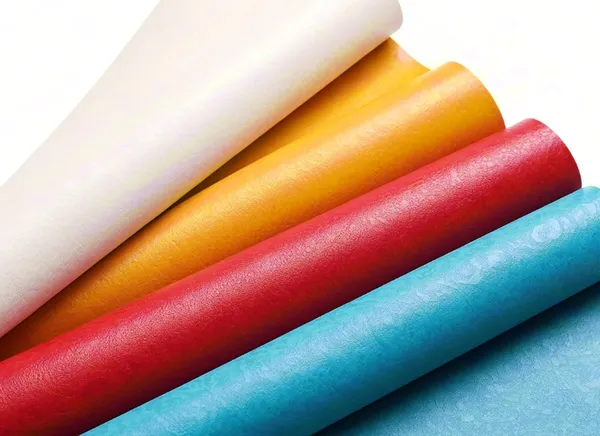
Appearance: Perfect, uniform texture.
Feel: Like plastic, it feels very cold (genuine leather feels very warm).
Smell: Chemical or plastic smell (genuine leather has a natural musk smell).
| Feature | PVC Leather | Genuine Leather |
| Material | Plastic (PVC-coated fabric) | Animal hide (e.g., cow, lamb) |
| Durability | 1–5 years | 10+ years (with care) |
| Breathability | Poor | High |
| Eco-Friendliness | Non-biodegradable, polluting | Biodegradable (if vegetable-tanned) |
| Price | $–$$ | $$–$$$$$ |
Economical: PVC leather is usually more affordable and cheaper than genuine leather, and it is an alternative to genuine leather.
Moral considerations: As PVC leather is synthetic and does not involve the use of animal leather, it appeals to those who prefer vegetarian products.
Waterproof: Resistant to stains and moisture (easy to wipe clean), as moisture does not penetrate the material, it is more moisture-proof than genuine leather.
Customizable appearance: No natural defects, can be made in various thicknesses, colors, textures, finishes or prints.
Low maintenance: Unlike genuine leather, it doesn’t require much care. It can be easily cleaned with just a damp cloth.
Customizable: Various colors, textures and finishes can be produced.
Durability: PVC leather has a high degree of wear resistance, abrasion resistance and tear resistance, making it suitable for high-flow applications.
Short lifespan: Although durable, the lifespan of PVC leather may not be as long as that of genuine leather, especially when it is frequently used or exposed to sunlight.
Non-breathable: The breathability of PVC leather is inferior to that of genuine leather. It absorbs heat and sweat, which can cause discomfort in hot or humid conditions.
Environmental impact: Made from petroleum, PVC is difficult to recycle, non-biodegradable, and sheds microplastics. It usually contains phthalates, which are harmful to the environment and pose potential risks to human health.
Plastic feel: It is less flexible than PU leather or genuine leather, appears harder and has lower softness (without patina).
|
Pros of PVC leather |
Cons of PVC leather |
| 100% waterproof – Ideal for rain gear, upholstery. | Toxic chemicals – Contains phthalates, dioxins (health/environment risks). |
| Cheap – Most affordable faux leather option. | Non-breathable – Traps heat/sweat (uncomfortable for wearables). |
| Easy to clean – Wipe with damp cloth. | Low durability – Cracks/peels in 2–5 years. |
| Vegan – No animal products used. | Plastic feel – Stiff and artificial compared to real leather. |
| Uniform appearance – No natural flaws. | Non-biodegradable – Pollutes ecosystems as microplastics. |
Both PU leather and PVC leather are artificial and not derived from animal skins. PU leather is 100% PU leather and also a kind of non-environmentally friendly artificial leather. PU leather and PVC leather are two common types of synthetic (artificial) leather, which differ in material composition, physical properties, production costs, manufacturing processes, environmental impacts and applications.
| Aspect | PU Leather | PVC Leather |
| Base | Typically polyurethane | Polyvinyl chloride (PVC) |
| Fabric backing | Usually cotton or polyester | Polyester, often tightly woven |
| Coating | Polyurethane (a flexible plastic) | PVC plastic + plasticizers |
| Texture | Softer, more flexible | Stiffer, less natural feel |
| Breathability | More breathable (lets air through) | Less breathable, traps heat |
| Closer to real leather? | Yes, More leather-like | No, more plastic-like feel |
| Durability | Good, but may peel over time | More durable and abrasion-resistant |
| Water resistance | Water-resistant | Highly water-resistant |
| Maintenance | Easy to clean | Also easy to clean, more stain-resistant |
| Environmental impact | Less toxic production (but still plastic-based) | Worse for environment due to dioxins and phthalates |
| Off-gassing | Lower | Higher – may release VOCs (volatile organic compounds) |
| Price | Slightly more expensive | Usually cheaper |
| Softer and more flexible | Yes | No |
| More breathable | Yes | No |
| More durable | Moderate | Yes |
| More eco-friendly | Relatively | No |
| Cheaper option | Slightly more | Yes |
| Best Uses | Fashion items, furniture, book covers | Car interiors, bags, belts, outdoor furniture |
Which is better? It depends on the purpose for which you purchase the leather. Genuine leather is always the best, but it is expensive. You can also check various factors to distinguish PU leather from PVC leather.
For wearable devices, you can choose washable PU leather, which has a soft touch. PVC leather material is an ideal choice for furniture because it is durable, torsion-resistant and can withstand extreme weather conditions.
Yes, PVC leather will eventually peel off because over time, the coating may become brittle, leading to peeling or flaking, especially with frequent use or poor maintenance. However, you can slow down this process through proper care. If you want more durable artificial leather, choose eco-friendly alternatives (cactus skin, mushroom skin).
PVC coating is a rigid plastic. Over time, due to heat, friction or low temperatures, or exposure to sunlight, it becomes brittle, leading to cracks and peeling.
Cheap PVC leather usually does not bond well to the fabric base (polyester/cotton) and is prone to separate from the plastic top layer.
PVC contains softening chemicals (phthalates), which will evaporate over time, making the material hard and prone to peeling.
Although the maintenance cost is low, dirt accumulation or irritating cleaning chemicals can cause the surface to deteriorate.
Repeated bending will weaken the top layer, especially for low-grade PVC.
Extreme temperatures or high humidity can affect the stability of PVC leather, making it more prone to peeling.
Frequent use or friction on rough surfaces can wear out the PVC coating, causing it to peel off.
Low-end PVC: begins to peel off within 1-2 years (for example, fast fashion bags, cheap car seats).
High-end PVC: With care, it can last for 3 to 5 years (thicker coating, better backing).
Please avoid direct sunlight (which can cause cracking) and low temperatures (which can make PVC brittle).
Wipe with a damp cloth – Do not use irritating chemicals that can decompose plastic (alcohol, bleach).
Use silicon-based hair conditioner to maintain surface flexibility.
Don’t fill the bag with things and don’t rub the rough surface either.
It can usually be used for 2 to 5 years, and high-quality PVC leather can last up to 6 years or even longer. The service life of PVC leather depends on its quality, usage and care.
Poor-quality PVC (for example, fast fashion bags, cheap furniture) : 1-3 years
Due to the thin coating and weak fabric backing, it is prone to peeling/cracking.
Mid-range PVC (such as car seats and budget interiors) : 3-5 years
Thicker PVC layers last longer, but eventually they will harden and fall off.
High-end PVC (rare, with reinforced backing) : 5-8 years
It is used in commercial environments (such as hospital furniture) with minimal wear and tear.
| Quality Grade | Lifespan | Key Characteristics | Best For |
| Low-Quality (Budget) | 1 – 3 years | Thin coating, cracks quickly, strong plastic smell | Cheap accessories, disposable items |
| Mid-Range (Standard) | 3 – 5 years | Moderate thickness, minimal peeling, slight odor | Furniture covers, low-use shoes |
| High-Quality (Premium) | 5 – 8 years | Thick coating, reinforced backing, less toxic additives | Car interiors, handbags |
| Industrial-Grade | 8+ years | UV-resistant, heavy-duty stitching, phthalate-free | Marine upholstery, outdoor gear |
Frequent use: Items used daily may show signs of aging (cracking, fading) within 3 to 5 years, as frequent use can rub against surfaces (such as shoes and bags) and wear down plastic coatings.
Sunlight/Heat: Prolonged exposure to ultraviolet rays and extreme high temperatures can accelerate aging and shorten lifespan to 3-5 years, as ultraviolet rays and high temperatures can cause cracking (common in car interiors).
Cold weather: It makes PVC brittle, accelerates cracking and peeling, and leads to cracks.
Moisture: Although PVC is waterproof, prolonged exposure to moisture may damage its durability. Trapped moisture can cause the adhesive between PVC and the fabric base to loosen.
Avoid direct sunlight: You can use UV protection spray, which may extend the service life to 10 to 15 years.
Gentle cleaning: Clean regularly with a mild method (avoid using irritating chemicals), and wipe with a damp cloth when cleaning. Avoid using alcohol or abrasive cleaners.
Occasional situation: Silicone-based hair conditioner can reduce hardness.
Proper storage: Keep the items in a cool and dry place (avoid using plastic LIDS as they absorb moisture).
PVC leather used in daily life is safe. In common consumer goods such as furniture, bags and clothing, PVC leather is relatively safe. However, depending on its ingredients and usage methods, it may still have potential health and environmental problems.
Phthalates: There may be some phthalates in cheaper PVC leather, which may affect human health.
Plastic smell: New PVC leather may release a strong plastic smell, which may cause headaches or nausea in confined Spaces.
Plastic microbeads: During use, when worn or washed, tiny plastic particles will fall off, polluting water and the food chain.
PVC leather has strong durability and is of medium durability. It has advantages such as wear resistance and water resistance, and can usually be used for 2 to 5 years.
PVC leather is not genuine leather but a synthetic leather made of polyvinyl chloride resin, which belongs to artificial synthetic materials and is not extracted from animal skins like genuine leather.
Yes, PVC leather is usually regarded as a vegetarian. Vegan leather refers to leather substitutes that do not contain any animal-derived components. PVC leather does not contain any animal components, so it is vegan leather.
Yes, due to the chemicals used in the production process of PVC leather and the possible emission of harmful waste gas during daily use, PVC leather may be toxic.

Mobile Website

Inquires Whatsapp