- +86 13922774531
- info@gionar.com

English


English
July 7 , 2026
The high price of Hermès Birkin is mainly attributed to multiple factors such as craftsmanship, materials, scarcity, brand value, and market demand.
Regarding the price, the official starting price in 2026 is approximately $13,500 (Birkin 25), and the price of classic models in the second-hand market has a premium of over 150%. Rare models (such as those made of Himalayan crocodile leather) can fetch auction prices of several hundred thousand dollars. In 2025, the original bag of Jane Birkin was sold for $1,010,000, setting a record for the world’s most expensive handbag.
If you are considering purchasing a Birkin bag but are worried about its high price, then let’s take a look together: Why is it so expensive?
This article will explore why the price of the Birkin bag is so high and what the reasons are.
To understand the price of a Birkin bag, one needs to understand the complex pricing system that is composed of factors such as size, leather quality, rarity, and purchasing channels.
This legendary handbag, which was born in 1984, started at approximately $2,000 and has since become a frequent subject of valuation at auction houses. Its price changes are themselves a history of the luxury goods industry.
| Size | Material (Togo leather) | US Retail Price | Euro Retail Price |
| Birkin 25 | Togo calfskin | $13,500 | €9,600 |
| Birkin 30 | Togo calfskin | $14,900 | €10,600 |
| Birkin 35 | Togo calfskin | $16,300 | €11,600 |
| Birkin 40 | Togo calfskin | $20,300 | N/A |
| Model & Size | Secondary Market Reference Price (2026) |
| Birkin 25 (Togo, neutral colour) | $25,000 – $35,000 |
| Birkin 30 (Togo, neutral colour) | $25,000 – $30,000 |
| Birkin 35/40 (Togo) | Typically below $25,000 |
| Secondary market benchmark | Sotheby’s 2025 average price for Birkin 30: $22,300 |
| Type | Price Range |
| Crocodile/Alligator | $75,000–115,000 |
| Shiny Porosus Croc Birkin 25 | ~$66,400 |
| Himalaya Birkin 30 (diamonds) | $450,000 |
| Metallic Birkin 30 | $55,000–66,000 |
| Jane Birkin’s original 1985 Birkin | $10.1 million (sold at Sotheby’s, July 2025) |
Collector’s individual items focus on historical prototypes and rare materials as their core selling points, breaking the conventional norms and becoming the focus of the global luxury auction market, possessing both artistic and investment attributes:
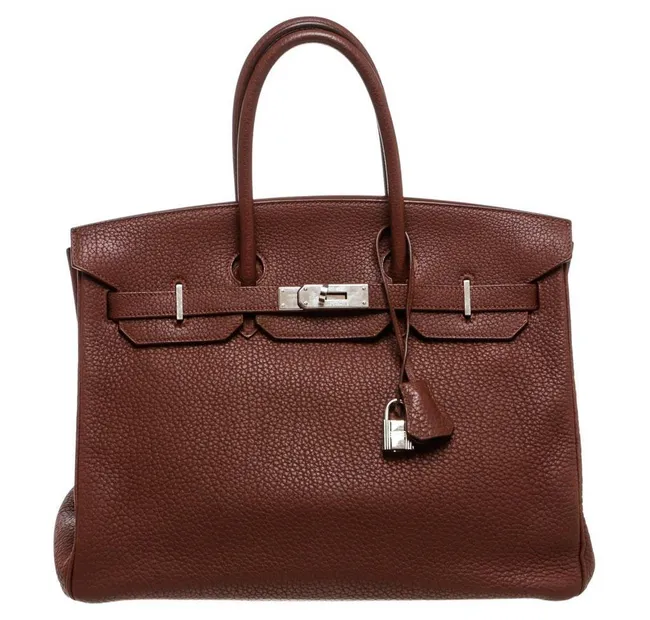
The reason why the Birkin bag is so special is that it combines top-notch craftsmanship, deliberate scarcity, strong financial attributes, and an almost mythical legendary story. Its value has long transcended the realm of practical accessories.
The birth of the Birkin bag was the result of a fortuitous inspiration collision. In 1984, on a flight from Paris to London, British-French singer Jane Birkin complained to the Hermès CEO Jean-Louis Dumas that she couldn’t find a large and stylish handbag to hold all her mother-related items. Dumas immediately sketched a design on the vomit bag on the plane, and thus a legendary design was born. This bag was eventually named “Birkin” and has since become a symbol of elegance and practicality.
The value of each Birkin bag is first reflected in its unparalleled craftsmanship.
For the Birkin bag, having money doesn’t necessarily guarantee purchase.
This internal-to-external scarcity is not a simple marketing strategy; it is the brand’s ultimate commitment to “rarity makes something valuable”.
The reason why Birkin bags can become the “hard currency” in the investment world lies in their ability to preserve and increase value.
At the auction house, the price of the Birkin bag keeps breaking people’s imagination, firmly establishing its dominant position.
The Birkin bag has become a unique symbol in popular culture. It is not merely a fashion item; rather, through the endorsements of numerous celebrities and classic scenes in films and TV shows, it has established its status as a cultural icon.
It has appeared multiple times in the plot of the classic American TV series “Sex and the City”. After the rise of social media, it has accumulated over 550 million exposures on Instagram, becoming the ultimate symbol of identity. Victoria Beckham, Kim Kardashian, and other celebrities are all its devoted followers. In recent years, it has also broken gender boundaries. Male celebrities such as Drake and Pharrell Williams have also regarded it as an important fashion item, further expanding its cultural influence.
The reason why the Hermès Birkin bag is so expensive lies in a complex system composed of four pillars: unparalleled craftsmanship, deliberate scarcity, astonishing investment value, and unshakable cultural symbolism. From the source to the consumer, every step contributes to its high price.
| Dimension | Birkin (Hermès) | Dior (Lady Dior / Saddle) | Gucci (Dionysus / GG Marmont) |
| Year of birth | 1984 | 1995 (Lady Dior) / 1999 (Saddle) | 2015 (Dionysus) / 2016 (GG Marmont) |
| Design inspiration | Jane Birkin‘s need for a practical large bag on an airplane | Inspired by the iconic “Cannage” seat pattern; Saddle bag inspired by horse saddles | Inspired by the Greek god Dionysus; GG Marmont inspired by 1970s brand logo |
| Production method | Single artisan from start to finish, 18-48 hours | Workshop collaboration; extensive hand-stitching (e.g., 18,700 stitches for Cannage) | Primarily industrial mass production with some hand-crafted details; GG Marmont mostly industrial quilting |
| Leather quality standard | Extremely strict – flawed hides discarded; only 10-20% of top-grade leather used | High standard but not as strict as Hermès; allows slight grain unevenness; strong quality control | General industrial standard – accepts common leather imperfections; GG Supreme is coated canvas |
| Main materials | Togo, Epsom, Clemence, crocodile, etc. – top-tier leathers | Lambskin, calfskin, Oblique canvas; signature Cannage quilting; limited editions use exotics | GG Supreme canvas, leather, suede, python, etc.; signature double-G hardware |
| Size range | 20, 25, 30, 35, 40cm, etc. | Mini, small, medium, large – varies by model (e.g., Lady Dior comes in mini, small, medium) | Super mini, mini, small, medium, large – varies (e.g., Dionysus has mini, small, medium) |
| Approx. weight | Heavy – Birkin 30 approx. 0.9-1.0kg, varies by leather & size | Medium – Lady Dior medium approx. 0.65kg, Dior Caro medium approx. 0.65kg | Light – Jackie Notte mini approx. 0.35kg; Dionysus small approx. 0.7kg |
| Capacity & practicality | Neat interior, suitable for daily use; Birkin 30 “all-rounder” – fits an iPad | Daily practical – fits phone, wallet; larger sizes offer good capacity (e.g., Dior Toujours large) | Daily practical – fits phone, wallet; larger totes offer good capacity (e.g., Gucci Beatrix large tote) |
| Recognisability | Extremely high: rolled handles, front flap, turn-lock, no logo | Extremely high: Cannage pattern, D.I.O.R. charms, CD logo, Oblique print | Extremely high: double-G hardware, GG Supreme print, bamboo handle, horsebit |
| How to obtain | Extremely difficult – not openly sold; invitation only + pre-spend + years of waiting | Moderate-high – popular models require pre-order or pre-spend; standard models openly sold | Moderate – popular models may need appointment or queuing; standard models openly sold online/in-store |
| Maintenance difficulty | High – delicate leathers need professional care | Moderate-high – lambskin delicate; calfskin more durable; light colours prone to staining | Moderate – GG Supreme canvas is durable; standard leather needs moisture/stain protection |
| Value retention (secondary market) | Extremely strong – average premium +150%; popular colours can exceed +200% | Moderate-high – classic models (Lady Dior, Saddle) retain value; resale ~40-60% of retail | Moderate – popular models (1955, Marmont) retain value; resale ~50-70% of retail; overall ~65% |
| Main purchase channels | Hermès boutiques (requires pre-spend), secondary market | Dior boutiques / website (pre-order available), secondary market | Gucci boutiques / website (pre-order available), secondary market |
When Birkin bags first came into existence in 1984, their starting price was approximately $2,000. This figure was already considered expensive at that time, but in today’s perspective, it seems quite “affordable”.
Over the following decades, Birkin bags gradually became a global luxury phenomenon, and their prices have continued to rise. However, their high prices were not achieved overnight. The reason for their expensive status is the result of multiple factors accumulating and working together over several decades, rather than being caused by a single “price increase event”. It is a long process from “expensive handbags” evolving into “top investment items” and “cultural symbols”.
When the Birkin was launched (in 1984), it was already a new member of Hermès’s top leather goods line: large size, full leather, all artisanal work → The retail price was set (back then, it was roughly equivalent to $5k–$8k+ in today’s purchasing power), but it was still more of a product rather than a fetish object.
At that time: One could buy it if one was wealthy (at least within the Parisian/department store system there was no such ironclad supply wall as there is now), and the second-hand market didn’t have the current premium pricing mechanism.
These three events occurred simultaneously, pushing Birkin from a “luxury bag” to a “luxury that you can’t afford”:
Hermès Hardened the Quota/Waitlist System
Supply was deliberately pushed below demand → “desiring but not being able to obtain” became the sales mechanism.
“Sex and the City” (SATC, since 1998) wrote it into the DNA of popular culture
The line “It’s not a bag, it’s Birkin” welded “owning it” and “class code” together.
Resale platforms/auction ecosystem began to give it traceable secondary prices (Sotheby’s/Artcurial, etc.), making it the first to be regarded as a value preservation code rather than a mere consumer product.
At this point, the price of Birkin began to deviate from the logic of “working hours + leather material”, entering the “access right pricing” model.
After the financial crisis, the logic of luxury goods completely shifted to “scarcity > growth”. Hermès became even stricter: the stocking threshold became more explicit, and popular colors became harder to obtain.
The secondary market (Fashionphile / Vestiaire / Auction Houses) turned the Birkin into a highly liquid financial asset: neutral colors in B25/B30 often have a 1.5x – 2.5x retail price.
The Himalaya/Diamond models crossed the $200k → $300k → $500k threshold, and in doing so, raised the “ceiling imagination” of all Birkins.
| Key Year | Event | Price | Source |
| 1984 | Birkin bag launched, first available | ~$2,000 USD | Authoritative financial article |
| 1994 | Jane Birkin auctions her prototype for charity | (undisclosed) | Historical auction record |
| 2019 | Birkin 25 (Togo) retail price | $9,850 USD | Retailer blog |
| 2022 | Himalaya crocodile Birkin (diamond) auction | $450,000 USD | CNN auction report |
| 2023 | Birkin 25 (Togo) retail price | $10,880 USD | Luxury price guide |
| 2024 | Birkin 25 (Togo) retail price | $11,400 USD | Retailer blog |
| July 2025 | Jane Birkin‘s 1984 prototype auction | $10,100,000 USD | Sotheby’s, AFP, RFI |
| 2026 | Birkin 25 (Togo) retail price | $13,500 USD | Luxury e-commerce guide |
At that time, the Birkin bag was no longer just “a good bag”, but had become the bag itself. Celebrities turned it into an aspirational goal. The resale price immediately exceeded the retail price, and has remained above the retail price ever since.
After remaining stable for six consecutive years (2015–2021), Hermès began to experience a significant increase:
From $2,000 to the current “unbelievable” price, the story behind it is a complex one woven by multiple forces:
The Hermès Birkin bag, known as the “King of Handbags”, is an alternative asset that many people invest in. It is a “hard currency” that combines aesthetic appeal and value preservation. However, most people should primarily view the Birkin bag as a luxury purchase rather than a guaranteed investment.
The Birkin bag is indeed an eye-catching investment item, but it is by no means a risk-free guarantee. To fully understand its investment value, one needs to examine the historical data that supports its myth and the current real-world challenges.
The popular B25/B30 models (especially neutral colors like Etoupe, Gold, Noir, etc., PHW/GHW) are indeed quite common in the secondary market ≈ 1.3x – 2.5x the retail price (depending on the year/ accessories/ condition).
It “drops less and rises more” compared to most handbags, so the media likes to say “better than stocks” (but be cautious of sample selection bias).
The scarcity mechanism (quota system) prevents it from being overly abundant → theoretically, the supply and demand are more controllable.
Historically, the Birkin bag has delivered remarkable returns for early investors.
The return on investment for Birkin bags is not uniform. It heavily depends on the following variables:
| Tier | Example | Resale vs. Retail | Verdict |
| God Tier | Himalaya Birkin, Faubourg Birkin, Original Birkin | 300-1,000%+ over retail | Auction-only. The white Faubourg Birkin sold for HK4.3M(550K) in June 2026 – a world record. Jane Birkin’s original 1985 bag fetched €8.58M (~$9.2M) in July 2025. |
| Blue Chip | Birkin 25/30 in Noir, Gold, Etoupe with gold/palladium hardware | 70-85% of retail resale (95% new, full set) | The “golden color” (black, elephant grey, gold brown). 2026 resale prices up 10-12% YoY. |
| Solid | Birkin Sellier, Kelly 28, Constance 19 | 60-75% of retail | Good liquidity, steady demand. |
| Speculative | Seasonal colors, exotic leathers (non-Himalaya), large sizes (40+) | 40-60% of retail | Can go either way. A mismatched color can sit for years. |
| Avoid | Non-classic colors, limited-edition collaborations you don’t love | Unpredictable |
| Hidden Cost | Impact |
| Pei Huo | In Guangzhou, you spend 1.5–2× the bag’s price on other Hermès items before you’re offered one. A 13,500Birkin25actuallycostsyou∗∗35K–$50K+ total**. |
| Maintenance | Professional care every 12–18 months: ¥5,000–¥15,000 (700–2,000) per session. You need climate-controlled storage. |
| Liquidity | Selling takes weeks to months. No stock-market-style instant exit. |
| Authentication risk | Fakes are rampant. One wrong stitch and you lose everything. |
| Opportunity cost | That $50K tied up in a bag could’ve been in index funds with zero maintenance. |
The investment returns are not linearly increasing. The potential risks mainly include:
| Risk Dimension | Practical Consideration |
| Hidden purchase cost | Most people‘s actual cost = retail price + pre-spend (often 1:1 to 1:2.5 or higher). Any “market premium” must first cover this hidden tax before real profit exists. |
| Condition sensitivity | Corner scuffs, cracked edges, dry leather, hardware scratches/wear, lining stains, missing accessories (clochette, lock, dustbag, box, receipt) all significantly reduce resale value. The “investment” is essentially the art of preservation. |
| Limited liquidity | Fast sale usually means selling at a discount to a reseller. To get top price, auctions or consignment are needed, but commissions run 10%–30%+, and sale timing is uncertain. |
| Brand rule changes | Popularity of sizes/leathers/hardware rotates (e.g., B25 hot, B35 cooling). Pre-spend policies and purchase thresholds can change at any time, affecting future liquidity and premium. |
| Economic cycles & market sentiment | The luxury secondary market can cool during downturns. In the past year, handbags as an asset class fell 0.2%, and the average premium dropped from a peak of 2.2x retail to 1.4x. Prices do not always go up. |
| Carrying costs | Long-term ownership requires professional maintenance (cleaning, humidity control, UV protection, conditioning) – not cheap. Also, capital is tied up with no interest or dividend return. |
| Counterfeit & authentication risk | High prices attract high-quality fakes. Ordinary buyers cannot easily tell. Authentication services cost extra; buying a fake can mean a total loss. |
| Competition from alternatives | Classic models from other luxury brands (Chanel, Dior, Gucci) have seen sharp price increases recently, potentially diverting buyers and collectors and reducing the relative scarcity premium of the Birkin. |
| Tax & compliance risk | Resale profits may be subject to capital gains tax (up to 28% for collectibles in the US). Cross-border transactions may incur import duties, VAT, and other costs. |
| Emotional & speculative bubble | Some buyers chase the “investment” hype rather than genuine appreciation. When speculative frenzy fades, the short-term surge in demand may retreat, leading to price corrections. |
The economics of luxury handbags is essentially a sophisticated business about scarcity, status symbols, and assetization. Whether it’s the top-notch scarce items like the Birkin bag, or the popular practical models like the Bogg Bag, they all follow similar economic principles.
Luxury handbags are a typical example of Veblen goods – demand increases as prices rise, because the high price itself is the core attraction. Hermès has taken this model to the extreme:
This scarcity is not a limitation of production capacity, but a carefully designed supply constraint, aiming to maintain brand premium and the long-term prosperity of the secondary market.
When the supply in the primary market is restricted, a highly liquid secondary market (auction houses, consignment platforms, private transactions) naturally emerges. From an economic perspective:
The economic value of luxury bags is ultimately built on the uncopyable brand barriers:
Not all luxury handbags follow the Veblen model. The practical bestsellers represented by Bogg Bag have taken a different path:
The core of this model is high-frequency interaction and community stickiness, rather than pure scarcity.
The investment craze in luxury handbags is not without risks:
| Economic Principle | How Luxury Bags Apply It |
| Pricing | Veblen goods: higher price = higher demand |
| Supply | Artisanal bottleneck, not scalable |
| Scarcity | Manufactured via waitlists and prespend |
| Value | Appreciates over time, not depreciates |
| Market | Dual structure: primary (retail) + secondary (auction) |
| Intangibles | Cultural mythology as a competitive moat |
The Hermès Birkin bag is priced highly due to multiple factors such as craftsmanship, materials, scarcity, brand value, and investment attributes.
The Hermès Birkin bag is crafted by experienced artisans in France, taking 18 to 40 hours to complete each piece. The special sewing techniques cannot be replaced by machines, and the labor cost is high. The brand selects top-quality cowhide and rare crocodile, ostrich, and other skins, along with exquisite hardware, making the raw material cost far higher than that of ordinary bags.
The combination of multiple values makes the price of the Hermès Birkin bag much higher than its actual production cost, becoming a benchmark for high-end luxury goods in the industry.
Therefore, the Birkin bag has a significant influence in the fashion world and the collection market. Many celebrities, collectors, and high-net-worth individuals regard it as a symbol of status and taste.
If you want to create your own luxury bag brand, please feel free to contact us at any time to customize your own high-quality premium bags.


Mobile Website

Inquires Whatsapp