- +86 13922774531
- info@gionar.com

English


English
April 8 , 2026
Over the past decade, the global fashion industry has undergone continuous reforms, ranging from design innovation, cost reduction, to the relocation of product production sites. All these demonstrate the strategic decisions of various fashion bag brands.
Many emerging brands have chosen to manufacture their bags in China. This is not only due to cost-cutting considerations, but also reflects that China has developed into the world’s most mature bag manufacturing ecosystem, integrating speed, quality, flexibility, innovation, and brand-friendly partnerships. These advantages are almost impossible to replicate elsewhere.
This article will explore the historical evolution of China’s bag manufacturing industry, its current manufacturing capabilities, and the reasons why emerging fashion brands have chosen to place their manufacturing centers in China.
The journey of China becoming the world’s bag manufacturing hub was not achieved overnight. It began in the 1980s and 1990s when China opened its doors to foreign investment and became a center for low-cost manufacturing. Initially, factories operated under the OEM (Original Equipment Manufacturer) model: they produced bags based on designs provided by international brands, with little say in the design or materials. The focus was on low labor costs, scale, and basic quality.
By the early 21st century, China had established an indisputable leading position in leather goods and textile manufacturing. Regions such as Guangdong – especially Guangzhou, Dongguan, and Shenzhen – became the locations for thousands of factories, tanneries, hardware suppliers, and logistics companies. This concentration created what economists call a “cluster”: a dense network of specialized companies that collaborate and compete with each other, driving efficiency and innovation.
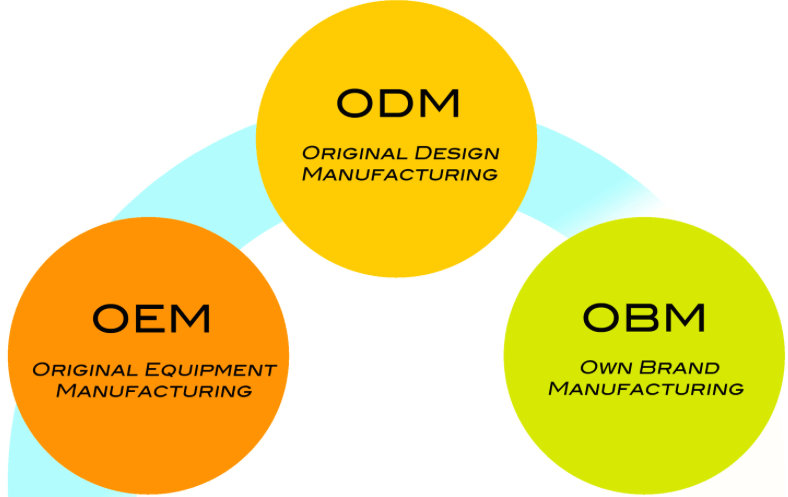
As Chinese manufacturers accumulated experience in producing for global luxury and mid-range market brands, they began to build their own design and R&D capabilities. This marked the shift from OEM to ODM (Original Design Manufacturing). Factories started providing in-house design services, material procurement, and prototype production. They became partners rather than just suppliers.
In recent years, some manufacturers have taken a further step towards OBM (Original Brand Manufacturing), launching their own brands. This evolution has enabled Chinese factories to be more attuned to the needs of emerging brands – they understand the importance of design, brand, and storytelling.
The 2010s witnessed the vigorous growth of direct-to-consumer and independent fashion brands worldwide. With the help of platforms such as Shopify, Instagram, and crowdfunding websites, entrepreneurs can launch a brand with minimal start-up capital. However, they face a key challenge: finding a manufacturing partner that can produce small batches, offer flexible terms, and deliver high-quality products at reasonable prices.
The traditional manufacturing centers in Europe and North America often have high costs and are inflexible, with high minimum order quantities. In contrast, Chinese manufacturers have the scale to offer flexibility. Many manufacturers have already worked with small brands and understand the need for low minimum orders, rapid turnover, and transparent communication.
The most important factor behind China’s success is its industrial clusters. The most famous leather goods industrial cluster is located in Shiling Town, Huadu District, Guangzhou, and is often referred to as “China’s Leather Goods Capital”.
| Feature | Shiling Town | Typical European Cluster |
| Number of Enterprises | Over 13,000 bag manufacturers, 63,000+ related businesses | Few hundred |
| Supply Chain Density | Tanneries, hardware, zippers, lining, printing, logistics all within a few kilometers | More dispersed |
| Speed | Sample in 72 hours, delivery in 7 days | Weeks to months |
| Flexibility | Can switch production lines for small batches quickly | Often rigid, high MOQs |
This density makes it possible to conduct rapid prototyping, rapid order changes and seamless procurement. If designers need specific buckles or leather colors, they can find them within a short driving distance. If the production scale needs to be expanded or reduced, since all components can be obtained locally, the factory can adjust immediately.
For emerging brands, the speed of going to market can be a matter of life and death. The bag supply chain in China is designed for speed.
This efficiency is not just about speed; it also reduces inventory risks. Brands can use small batches to test new styles and only re-order best-selling items. This “on-demand” model is a game-changer for cash-strapped startups.
China offers unparalleled material diversity for bag manufacturing. From traditional leather to cutting-edge sustainable alternatives, everything is available.
| Material Type | Examples | Where Sourced |
| Traditional Leathers | Full-grain cowhide, lamb leather, goatskin | Domestic tanneries in Guangdong, Hebei, Zhejiang |
| Synthetic Leathers | PU, PVC, recycled PU | Chemical and textile clusters |
| Technical Fabrics | Nylon, Cordura, Dyneema, Kevlar | Specialized mills (some imported, but many with local manufacturing) |
| Sustainable Materials | Fish leather (salmon, tilapia), coconut leather (Malai-style), cactus leather, apple leather, recycled PET | Local innovators and partnerships with global sustainable material suppliers |
For emerging brands that aim to achieve differentiation through unique materials, China offers access to channels and expertise. Factories usually have established long-term relationships with sustainable material suppliers, making it easier to incorporate these materials into their product lines.
Despite the increasing level of automation, the production of luggage still requires a large amount of manual skills. China has a vast pool of skilled workers who are proficient in:
Many factories have internal training programs to ensure consistency. Additionally, the workforce is experienced and capable of handling complex orders – they can replicate the quality standards of luxury brands because many workers have been doing this for years.
As mentioned earlier, Chinese manufacturers have gone beyond merely fulfilling orders. They now provide significant design support, which is invaluable for emerging brands that may lack an internal product development team.
For a small brand, this means they can leverage the expertise of a factory that has manufactured thousands of bags for global customers. It’s like having a dedicated R&D partner without incurring indirect costs.
For emerging brands, cost control is often the primary challenge in transforming prototypes into marketable products. China’s ability to balance cost and quality makes it the preferred destination for large-scale production.
Although the average hourly wage in China’s manufacturing sector has risen from $0.5 in 2000 to over $6 today, it is still significantly lower than that in developed countries such as the United States (25 dollars per hour) or Germany (30 dollars per hour). This gap is further narrowed through the following means:
| Cost Component | China Structure | Alternative Location Comparison |
| Labor (direct) | $500–$800/month skilled worker | Lower in Vietnam ($300–$500), but 20–30% lower productivity in complex tasks |
| Labor (indirect/supervisory) | Thin management layers, experienced self-managing teams | Thicker supervision required in less experienced workforces |
| Materials | Cluster proximity eliminates transport, import duties, currency risk | 10–25% cost premium for imported materials in Vietnam, India |
| Components | 90%+ domestic sourcing, competitive pricing | 40–70% import dependency in emerging alternatives |
| Tooling/die-making | $200–$500 for complex bag patterns; 24–48 hour turnaround | $800–$2,000 in Europe; 1–2 weeks |
| Quality failure/rework | 2–3% defect rates in experienced factories | 5–15% in less mature operations, with higher correction costs |
| Logistics to Western markets | Mature freight networks, competitive pricing | Developing infrastructure, higher costs, longer transit |
| Compliance/audit | Established systems, amortized across large production volumes | New investments, higher per-unit compliance costs |
China’s huge production scale enables brands to reduce costs through bulk purchasing and standardized processes. When an American small brand orders 5,000 bags, the unit cost can be 30% lower than that of domestic production. The reasons include:
Chinese governments have long attracted foreign investment through policies such as tax incentives, land lease subsidies, and export rebates. Although these policies have been gradually adjusted, emerging brands still benefit from:
The American travel brand Away is renowned for its hard-shell luggage. Despite being controversial due to “outsourcing production”, it still maintains cooperation with a factory in Guangdong, China. Through this collaboration, Away’s production costs are 40% lower than those in the United States, enabling its flagship luggage to be priced at $225, competing with luxury brand Rimowa.
Historically, the minimum order quantity for luggage factories was often as high as several thousand pieces – typically 3,000 to 5,000 pieces for each style. This was a major obstacle for emerging brands. Nowadays, many Chinese factories have adapted to serving the start-up market, with minimum order quantities as low as:
| Customization Level | Typical MOQ |
| Material and structure changes | 50 – 100 pieces |
| Fully custom design | 100 – 300 pieces (for leather) |
This flexibility enables the brand to launch products with minimal risk, test the market, and expand its scale as demand grows.
Many Chinese manufacturers are willing to collaborate with emerging brands and offer payment terms that ease cash flow. The standard arrangements include:
Although not universal, this willingness to negotiate is a significant advantage over manufacturers that require full advance payment.
For fashion brands, seasonality is crucial. A bag that is two months late may completely miss the sales window. The manufacturing ecosystem in China was born for speed:
This speed enables brands to frequently launch new collections, respond to trends, and maintain inventory efficiency.
| Production Stage | China Timeline | European Comparison |
| Sample development | 3-15days | 30-60 days |
| First bulk production (500–2,000 units) | 45 days | half of year or a year |
| Reorder/replenishment | 35–40 days | half of year |
| Design change implementation | 24-48 hours | 1 month-2month |
For brands considering manufacturing in China, quality is a common concern. However, leading factories have well-established quality control systems:
Brands can also appoint their own quality control personnel to supervise production and ensure their standards are met.
A persistent misconception is that manufacturing in China poses risks to intellectual property. Although intellectual property theft has been a problem in the past, the current reality is more nuanced. Large, established factories that collaborate with global brands have complex systems in place to protect client designs:
Furthermore, China has strengthened its intellectual property laws and enforcement in recent years, recognizing that protecting designs is crucial for maintaining its manufacturing competitiveness.
The manufacturing landscape in China is not uniform. Different regions specialize in producing different types of bags, allowing brands to find suitable partners based on their specific needs.

| Stage | Typical China Relationship | Diversification Status |
| Launch (Year 0–1) | 100% China manufacturing | No diversification attempted |
| Growth (Year 1–3) | 80–95% China, 5–20% testing Vietnam/India for specific products | Experimental, not strategic |
| Scale (Year 3–5) | 70–85% China, 15–30% diversified | Selective diversification for tariff optimization or category-specific needs |
| Maturity (Year 5+) | 60–75% China, 25–40% diversified | Strategic diversification, but China remains core for complex products |
As consumers and brands place greater emphasis on sustainability, China’s bag manufacturing industry has adapted to this trend. It now plays a key role in the production and development of eco-friendly innovative materials.
China has become the center for developing and scaling up sustainable bag materials.
Leading factories are investing in renewable energy and cleaner production methods. Some facilities use solar energy, closed-loop water systems and energy-efficient machinery. This is in line with the sustainable development goals of many emerging brands.
To meet global standards, many Chinese manufacturers have obtained the following certifications:
These certifications assure brands that their products are manufactured in an ethical and sustainable manner.
Although China offers significant advantages, cross-timezone, cross-language, and cross-cultural work requires careful management. Here are some common challenges and corresponding strategies.
Challenge: Due to language barriers and cultural differences in communication styles, misunderstandings may occur.
Solution:
Challenge: Ensure that the first batch of goods is consistent with the sample, and that subsequent batches maintain the same quality.
Solution:
Challenge: Fear of designs being copied or leaked.
Solution:
Challenges: Handling international transportation, customs procedures and delivery times.
Solution:
Challenge: Ensure that the factory’s practices are in line with your brand values.
Solution:
For emerging brands, responding quickly to market changes and managing cash flow efficiently are crucial. China, especially the industrial cluster centered around Shiling Town, Huadu District, Guangzhou, has achieved this to the highest degree. It is known as the “Capital of Leather Goods in China”, with over 13,000 luggage and leather goods manufacturing enterprises and 63,000 related individual businesses, forming the most complete industrial ecosystem in the world.
Incredible response speed: Thanks to the highly centralized supply chain, from design development to finished products, here a sample can be produced within 72 hours and goods can be dispatched within 7 days. This means that brands can test market reactions almost in real time and quickly adjust production plans based on feedback.
Unparalleled flexibility: The complete industrial chain enables factories to easily obtain any necessary accessories and materials without long waiting periods. Even small and medium-sized factories can quickly coordinate the upstream and downstream after receiving an order and start a new production line. This flexibility allows brands to carry out flexible production in small batches and multiple batches, significantly reducing inventory pressure and financial risks.
In the past, Chinese factories were often labeled as “subcontracting manufacturers”. However, after decades of manufacturing for top global brands, this situation has undergone a fundamental change.
The advantages of Chinese manufacturing are not merely “cheap labor”, but a comprehensive cost advantage based on a complete ecosystem.
| Advantage Dimension | Specific Performance | Value for Emerging Brands |
| Extreme Supply Chain Efficiency | Industrial clusters like Shiling Town in Guangzhou bring together tens of thousands of enterprises and a complete upstream and downstream supply chain. | Samples in 72 hours, delivery in 7 days; supports small-batch quick reorders, greatly reducing inventory risk. |
| Mature and Complete Industry Ecosystem | Highly concentrated ecosystem covering raw materials, accessories, hardware, design pattern-making, and manufacturing. | Enables one-stop sourcing and production without the need for cross-regional coordination, significantly shortening time-to-market. |
| Upgraded Capabilities from OEM to ODM | Factories have accumulated extensive experience manufacturing for global brands, with mature craftsmanship, advanced equipment, and technical expertise. | Not only contract manufacturing but also design and development support, helping brands realize their design visions and even co-develop new products. |
| Perfect Balance of Cost and Quality | Integrated cost advantages formed by labor, materials, and production efficiency—not merely “low price.” | Maintains high quality while protecting brand profit margins, making products competitive in the market. |
| Strong Original Design Capabilities | More factories are developing their own brands and original design IP (e.g., “Henney Bear”). | Moving beyond simple “make according to drawing” to co-create designs and integrate cultural elements with brands. |
| Flexible and Friendly Partnership Models | Support small-batch customization, respect brand intellectual property, and build strategic partnerships. | Lowers the entry barrier for new brands, offers flexible cooperation, and acts as the brand’s “second R&D center.” |
As the industry evolves, China is positioning itself as a leader in the following areas:
Although Chinese manufacturing has many advantages, the stereotype of “low quality” still persists.
In fact, China can produce a wide range of products from low-end to high-end. Product quality mainly depends on the requirements of the brand, the choice of materials, and the investment in costs, rather than the location of production.
Many factories, when they have the necessary conditions, can definitely produce high-end products.
For emerging brands, the key lies in clearly defining standards and choosing the right partners.
For emerging fashion bag brands, choosing to manufacture bags in China is not a compromise, but a strategic advantage. China offers a unique ecosystem. Successful emerging brands are those that view their manufacturing partners as collaborators rather than suppliers.
In China, ideas turn into prototypes, prototypes turn into products, and products become the foundation of the brand. And these brands may one day manufacture globally.
If you are thinking of creating your own luxury bag brand and want to verify whether your product will be popular in the market, please feel free to contact Gionar to discuss the details.
Previous :
All about Santa Croce Leather Market in Florence, ItalyNext :

Mobile Website

Inquires Whatsapp