- +86 13922774531
- info@gionar.com

English


English
March 31 , 2026
The Canton Fair was established in 1957 and is held annually in Guangzhou. It is the largest and most comprehensive international trade event in China, featuring a wide range of products.
The Canton Fair is not only a one-stop platform for global buyers to connect with China’s high-quality supply chain, but also a barometer for observing the trend of China’s manufacturing industry upgrading.
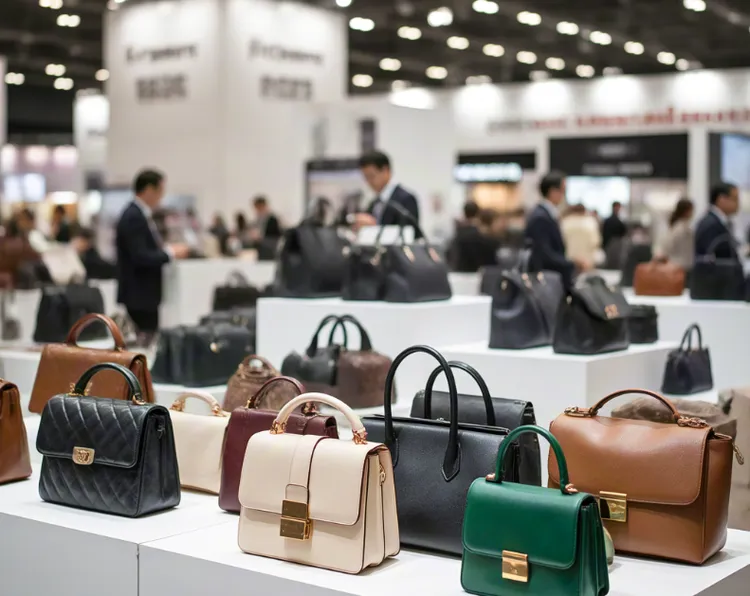
For bag brands, participating in the Canton Fair allows direct contact with thousands of leather product manufacturers, enabling them to understand the latest materials and design trends. It is an excellent opportunity to expand the supply chain and grasp market dynamics.
This article will explore how to find suitable bag manufacturers during the Canton Fair in 2026? How to precisely target your desired suppliers?
The exhibitors attending the Canton Fair may be traders or manufacturers. So, for buyers, how can they determine whether the exhibitors they are dealing with are bag manufacturers or leather goods trading companies?
Why is it so important to distinguish between traders and manufacturers? Because this judgment directly affects your purchase price, quality control, customization capabilities, and long-term supply chain reliability. Seek out the right suppliers that suit you, and quickly and accurately identify your target suppliers.
For buyers of packaged goods participating in the Canton Fair, whether you are an experienced international buyer or a first-time exhibitor, distinguishing between traders and manufacturers is not just a “detail check”, but a “strategic decision” that directly affects your purchasing results. Here are the core reasons why this distinction is crucial:
The Canton Fair attracts thousands of exhibitors related to bags, including large and medium-sized manufacturers from Guangzhou, Dongguan, Baigou, Wenzhou, and other major packaging production clusters in China, as well as numerous small and medium-sized traders. Although some traders may present themselves as “manufacturers” to attract buyers, their inherent limitations (lack of production capacity, limited technical expertise) will eventually be exposed during the cooperation process. Therefore, it is crucial for buyers to have a scientific identification method so that they can avoid wasting time and resources and find the most suitable suppliers.
| Aspect | Manufacturer (Factory) | Trader (Trading Company) |
| Price | Lower (no middleman margin) | Higher (adds 10–30% markup) |
| Quality Control | Direct in house control | Relies on suppliers; less visibility |
| Customization | Full capability (materials, patterns, molds) | Limited; depends on what factories can do |
| Communication | Technical expertise on production | Broad product knowledge but less depth |
| Lead Time | Predictable (controls schedule) | Variable (depends on factory availability) |
| Minimum Order Quantity | Higher (typically 100–500 pieces per style) | Lower (can aggregate orders; 10–50 pieces possible) |
The key point is: Direct cooperation with the manufacturer can offer you more favorable prices, stronger quality control, and help you establish a more stable long-term partnership, thereby promoting the continuous development of your business.
| Type | What they really do | Typical strengths | Typical risks |
| Manufacturer | Produces bags in its own facility | Better control, customization, stable quality, clearer production capacity | Higher MOQ, less flexibility on very small orders |
| Trader | Buys from factories and resells | Wider product range, faster response, lower MOQ, easier communication | Less direct control over production, possible price markups |
| Agent / intermediary | Connects buyer and factory, may not hold inventory | Can help with sourcing and coordination | Less transparency, unclear responsibility if problems happen |
| Aspect | Bag Trader | Bag Manufacturer |
| Booth Design | Simple, focused on product display | Elaborate, showcasing production capabilities |
| Product Range | Limited, focused on popular styles | Wide, including custom-made samples |
| Branding | Minimal or no branding | Prominent branding, including logos and packaging |
Importance of Certification:
| Certification Type | Bag Trader | Bag Manufacturer |
| ISO 9001 | Unlikely | Likely |
| Product Testing Reports | Limited or none | Comprehensive |
| Safety Certifications (e.g., CE, RoHS) | May not have | Typically have |
Advice to buyers:
| Service Aspect | Bag Trader | Bag Manufacturer |
| Product Warranty | Limited or none | Typically offered |
| Repair Services | May not have | Available |
| Technical Assistance | Limited | Comprehensive |
| Distinction Dimensions | Bag Trader (Intermediary) | Bag Manufacturer (Genuine Factory) |
| Product Range | Wide and mixed: Offers various types of bags (leather, canvas, nylon, luggage) and even unrelated products (e.g., shoes, accessories). Styles are inconsistent, with no clear professional focus. | Narrow and specialized: Focuses on 1-2 types of bags (e.g., only leather handbags, outdoor nylon backpacks, or luggage). Styles are consistent with the factory’s production strengths. |
| On-Site Sample Quality | Uneven quality: Samples from different styles have inconsistent stitching, hardware quality, and material textures. Some samples may be sourced from multiple factories. | Consistent quality: All samples have uniform stitching density, consistent hardware standards, and the same material texture. Internal labeling and packaging are standardized. |
| Technical Knowledge | Vague and unprofessional: Cannot answer detailed technical questions about production processes (e.g., cutting layout, stitch density, material shrinkage). Often responds with “I need to check with the supplier.” | Professional and detailed: Can clearly explain production processes, material characteristics, quality control standards, and technical details. Can provide professional suggestions for product optimization. |
| MOQ & Flexibility | Messy and unstable: MOQ quotes are inconsistent, and prices fluctuate randomly. Easily promises extremely low MOQs (e.g., 10-50 pieces) without logical support. | Clear and reasonable: Has a standard MOQ (usually 300-1000 pieces for bags) and can support small trial orders within a reasonable range. Understands the cost logic of small-batch production. |
| Customization (OEM/ODM) | Limited capability: No in-house sampling team; needs to outsource sample development to third parties. Long lead times (10-15 days) and high sample fees. Cannot provide detailed customization solutions. | Strong capability: Has in-house pattern makers and sampling teams. Can complete sample development in 3-7 days with reasonable sample fees. Can provide customized solutions for logos, materials, colors, and structures. |
| Pricing Logic | Floating and non-transparent: Prices are inconsistent, with no clear cost breakdown. Initial quotes are often low to attract buyers, but prices increase significantly during formal negotiations. | Stable and transparent: Provides clear cost breakdowns (material + labor + hardware + processing fees). Bulk discounts follow a reasonable gradient (e.g., 5% discount for 5000 pieces, 10% discount for 10000 pieces). |
| Lead Time | Unclear and unreliable: Cannot provide a detailed production timeline. Only gives a general estimate (e.g., “30-45 days”) and cannot explain the production rhythm (cutting, sewing, QC). | Clear and reliable: Provides a detailed production timeline, including sample approval, material preparation, cutting, sewing, QC, and packaging. Knows the daily/weekly production capacity and can commit to specific delivery dates. |
| Documentation & Certifications | Only provides a trade license. Cannot provide factory audit reports (BSCI, Sedex, ISO), production line photos, or export records. Certifications are often vague or forged. | Can provide complete documents: Business license (with “manufacturing” scope), factory audit reports (BSCI, Sedex, ISO), production line videos/photos, export records, and material safety reports. |
| Factory Visit Attitude | Avoids or refuses: Makes excuses (e.g., “factory is remote,” “confidentiality reasons”) to avoid arranging factory visits. Cannot provide a specific factory address. | Welcomes and facilitates: Takes the initiative to invite buyers to visit the factory. Provides a detailed factory address (usually in an industrial zone) and arranges on-site tours of production lines and warehouses. |
| After-Sales Support | Weak and passive: Cannot resolve quality issues independently; needs to coordinate with third-party factories. Response times are slow, and solutions are unclear. | Strong and proactive: Has a dedicated after-sales team to handle quality issues. Can provide timely solutions (e.g., rework, replacement) and compensate for losses caused by factory errors. |
| Booth Display | Focuses on marketing: Booth is beautifully decorated but lacks production-related displays (e.g., material samples, production tools). Staff wear formal business attire and focus on sales pitches. | Focuses on production strength: Booth displays include material samples, production process photos/videos, hardware samples, and quality control tools. Staff may include technical personnel familiar with production. |
| Cooperation Stability | Unstable: May switch cooperative factories frequently, leading to inconsistencies in product quality and delivery timelines. Long-term cooperation is difficult. | Stable: Has fixed production lines and supply chains. Prioritizes long-term partnerships and can provide stable support during peak seasons or market changes. |
Distinguishing between large bag manufacturing factories and small ones is crucial for purchasing companies that are looking for reliable manufacturers. This is because the size of the factory directly affects factors such as price, flexibility, communication efficiency, quality control capabilities, and risks.
For the buyers at the Canton Fair, whether you are a large retail chain, an emerging brand, a small wholesale merchant, or a buyer who is attending the Canton Fair for the first time, the size of the luggage factory you choose will have a profound impact on your purchasing experience and business development. Here are the core reasons why distinguishing between large and small luggage factories is crucial for protecting your own interests:
Large factories have a higher minimum order quantity (MOQ) and strong production capacity, making them suitable for buyers with large order requirements; while small factories have a lower MOQ and flexible production arrangements, making them ideal for small-batch order or trial order buyers. Choosing a factory that does not match your own order quantity will either result in inventory backlog pressure due to the factory’s high MOQ or incur high unit costs due to the small factory’s size.
Large factories benefit from economies of scale – through bulk purchasing of raw materials, automated production, and specialized division of labor to reduce unit costs, usually providing more competitive prices for large-batch orders. Small factories have limited procurement capabilities and mainly rely on manual production, with higher unit costs, but they may offer more flexible pricing for small-batch orders and will not charge additional fees for small-batch production as much as large factories do.
Small factories have simple production processes and fewer management levels, making them more flexible in handling customized orders (OEM/ODM), such as small-batch logo printing, material adjustments, or design modifications. Large factories have standardized production lines and strict process control, making them more suitable for large-scale customized orders, but they are less flexible in handling small-batch, personalized customization requirements.
Large factories have a mature quality control (QC) system, professional quality inspection teams, and advanced testing equipment, ensuring the consistency of product quality in large-batch production. Small factories rely on manual operations and limited quality inspection resources, with potential minor fluctuations in product quality when handling large-batch orders. However, some small factories with skilled artisans can provide high-quality products in small-batch orders, even surpassing the quality level of some large factories.
Large factories have sufficient production capacity and stable supply chains, able to meet the tight delivery deadlines for large-batch orders; small factories have limited production capacity and supply chain stability, and may experience delays when handling large-batch orders, but their simple production processes make the delivery speed of small-batch orders faster.
Large factories can provide stable supply, priority production capacity during peak seasons, and professional technical support, suitable for buyers seeking long-term, large-scale cooperation; small factories offer more personalized services and flexible cooperation terms, suitable for buyers with variable demands or long-term small-batch cooperation.
At the Canton Fair, large and small luggage factories are located in different exhibition areas:
Understanding the characteristics of various factories can help you efficiently screen suppliers at the exhibition and avoid wasting time on factories that do not meet your needs.
| Aspect | Large Factory | Small Factory | Impact on Buyer |
| Minimum Order Quantity | High (500–3,000+ pieces) | Low (50–500 pieces) | Affects initial investment and risk |
| Unit Price | Lower at scale | Higher at small scale | Affects profit margins |
| Quality Consistency | Highly standardized | Varies by batch | Affects brand reputation |
| Customization Flexibility | Requires high MOQ | Highly flexible | Affects ability to create unique products |
| Lead Time | Predictable, often longer | Faster for small orders | Affects time-to-market |
| Communication | Structured, formal | Direct, personal | Affects problem-solving speed |
| Certifications | ISO, BSCI, etc. | Fewer | Affects market access |
| After-Sales Service | Formal warranty | Relationship-based | Affects long-term peace of mind |
500 – 2000+ workers
Factory area: 10,000 – 50,000+ square meters
Multiple production lines
Automatic cutting machines, computerized sewing machines
Special quality inspection department
Holding international certifications
Often serving major brands, department stores or high-volume orders
20 – 200 workers
Factory area: 500 – 5,000 square meters
1 – 3 production lines
Manual cutting and sewing; limited automation
Quality inspection is usually handled by the foreman or the owner
Few certifications
Often serve small brands, start-ups, or specific niche orders
| Certification | Large Factory | Small Factory | Why It Matters |
| ISO 9001 | Very common | Less common | Quality management credibility |
| BSCI / Sedex | Common; often audited | Sometimes | Social compliance for European buyers |
| OEKO-TEX | Common for textile bags | Less common | Textile safety certification |
| ISO 14001 | Some large factories have | Rare | Environmental management |
| Customs-AEO | Large exporters often have | Rare | Faster customs clearance |

| Observation | Large Factory Indicator | Small Factory Indicator |
| Booth size | Large, multiple sections, well-designed | Smaller, simpler setup |
| Staff number | 5–10+ salespeople; may include technical staff | 1–3 staff; often the owner |
| Product display | Wide range, many styles, organized by collection | Focused selection; fewer samples |
| Promotional materials | Professional brochures, videos, brand books | Simple catalogs, business cards |
| Response to technical questions | Detailed, may defer to technical team | Owner can answer directly |
| Factory visit offer | May offer scheduled tours with shuttle | Often welcomes immediate visits |
| MOQ discussion | States clear MOQ (500–1000+) | May say “we are flexible” |
| Certifications displayed | ISO, BSCI certificates visible | Few or no certificates displayed |
The minimum order quantity is usually the primary factor determining whether a factory is suitable for your business.
Large factories need to efficiently utilize their production lines. Setting up a production line for a new style requires time, manpower, and material preparation.
Typical Minimum Order Quantity: 500 – 3000+ pieces per style and color
Reason: The start-up cost of the production line is high, and a sufficient quantity is needed to spread the cost.
Impact on You:
Small factories can quickly switch styles. The owners usually are willing to cooperate with start-up brands and accept trial orders.
Typical minimum order quantity: 50-500 pieces per style
Reasons: Small production line scale; Low start-up cost; Flexibility is its competitive advantage
Impact on you:
Quality consistency is crucial for building a trustworthy brand. Inconsistent quality can lead to returns, negative reviews, and customer loss.
Large factories have a formal quality control system:
Result: There is a high degree of consistency between batches. If you order 10,000 pieces, the first and last items are almost identical.
Small factories rely more on the skills of individual workers and the attention of the owner:
Result: The quality of small batches may be excellent, but there may be differences between different orders. A factory that can produce 200 high-quality products may not be able to maintain the same quality when producing 2000 products.
| Indicator | Large Bag Factories | Small Bag Factories |
| Quality Control System | Complete, full-process quality inspection | Incomplete, relying on experience inspection |
| Product Pass Rate | 98% or above | 85%-90% |
| R&D Team | Dedicated R&D team, professional talents | No dedicated R&D team, relying on imitation |
| R&D Investment | High annual R&D investment | Limited R&D investment |
| Innovation Capability | Strong, able to launch new products quickly | Weak, mainly imitation |
| Customization Service | Can provide deep customized services | Can only provide simple style adjustments |
Large luggage factories benefit from economies of scale and can offer lower unit prices for large orders. However, they may also have higher indirect costs, such as rent for large production facilities, wages for a large workforce, and marketing expenses. These costs may be reflected in their pricing, especially for small orders.
Advantages for the Purchaser:
The indirect costs of small luggage factories may be lower because they operate on a smaller scale and have smaller facilities and staff. However, due to the lower production volume and lower resource utilization efficiency, their unit production costs may be higher. Therefore, their prices may be relatively higher, especially for small batch orders.
Advantages for buyers:
The delivery period of large luggage factories is usually longer, especially for large-volume orders. This is because they need to arrange production, allocate resources, and manage a large number of orders simultaneously. However, they may have more efficient logistics and transportation capabilities, which helps ensure that products can be delivered promptly once they are ready.
Advantages for buyers:
The delivery period of small luggage factories may be shorter, especially for small batches or custom orders. They can more flexibly adjust their production plans to meet the urgent demands of buyers. However, their logistics and transportation capabilities may be relatively limited, which may result in longer delivery times or higher freight costs for international orders.
Advantages for buyers:
| Indicator | Large Bag Factories | Small Bag Factories |
| Service Team | Professional sales, customer service, and after-sales teams | Simple sales, no dedicated customer service and after-sales |
| Service Content | One-stop services including consultation, sample making, order tracking, logistics, and after-sales | Basic product introduction and order confirmation |
| Sample Making Cycle | Short, 7-15 days | Long, 15-30 days |
| Order Progress Feedback | Real-time feedback | Need to actively inquire |
| After-Sales Service | Complete, quality assurance, return and exchange | Limited, easy to delay or refuse |
| Raw Material Supply Risk | Multiple suppliers, strong risk resistance | Few suppliers, high risk |
| Production Risk | Backup plans, strong risk handling capability | No backup plans, high delivery risk |
| Cooperation Risk | Standardized contracts, clear dispute resolution mechanism | Non-standardized contracts, high dispute risk |
| Criteria | Large Factory | Small Factory | Impact on Your Business |
| Workers | 500–2,000+ | 20–200 | Affects capacity and scale |
| Monthly Capacity | 50,000–200,000+ | 500–10,000 | Determines if they can handle your growth |
| MOQ | 500–3,000+ pieces | 50–500 pieces | Affects initial investment and risk |
| Unit Price | Lower at scale | Higher at small scale | Affects profit margins |
| Quality Consistency | Very high | Good, varies by batch | Affects brand reputation |
| Customization | High MOQ required | Highly flexible | Affects product uniqueness |
| Lead Time | 30–45 days (large orders) | 15–30 days (small orders) | Affects time-to-market |
| Certifications | ISO, BSCI, etc. | Fewer, basic | Affects market access |
| Communication | Structured, formal | Direct, personal | Affects problem-solving speed |
| After-Sales | Formal warranty | Relationship-based | Affects long-term peace of mind |
| Best For | High volume, established brands | Startups, test orders, niche designs | Matches your business stage |
The Gionar factory is located in the core area of the high-end leather manufacturing industry – Baiyun District. With 20 years of industry experience, it is a reliable choice for quality-oriented buyers.

Guangzhou Gionar Leather Products Ltd. has been deeply involved in the leather product manufacturing industry for 20 years. It possesses a mature production line, a strict QC quality inspection system, and a stable supply chain. It can handle custom orders, large-scale production, and OEM contract orders.
Seeing is believing. Only by visiting our factory in person can you truly understand the truth: We are an original factory, not a trading company; a professional factory, not a small workshop; dedicated to high-quality luxury craftsmanship, not low-quality outsourcing. Check our qualifications, production workshop, equipment facilities, quality inspection process, and sample room to verify the real production capacity and quality control capabilities.
Prioritize choosing established factories: Factories like ours with a long operating history have stable supply chains, complete quality inspection systems, and guaranteed after-sales services, which can avoid risks such as delivery delays and quality issues that new factories are prone to.
During the Canton Fair period (April 30th – May 3rd), we offer exclusive and personalized services to buyers:
We provide one-on-one full-process follow-up services, eliminating the need for intermediaries, to ensure efficient and worry-free cooperation. The Canton Fair is not only a business opportunity but also a starting point for building trust. We look forward to meeting global buyers in Guangzhou, exploring cooperation opportunities, and achieving mutual benefits!
The Canton Fair is not only an important platform for Chinese enterprises to explore the international market, but also a crucial bridge for international trade cooperation. It has effectively promoted trade and friendly exchanges between China and countries around the world.
If you are planning to come to Guangzhou, China to attend the Canton Fair and want to purchase a large quantity of bags, or are looking for reliable bag manufacturers for cooperation, then please contact Gionar and visit our factory to discuss cooperation.
Previous :
Choose Multi-Product Mindset & Expand a Bag Product LineNext :

Mobile Website

Inquires Whatsapp