- +86 13922774531
- info@gionar.com

English


English
December 6 , 2025
What we are talking about is not the bag factory establishing its own brand, but becoming a strategic partner that provides integrated marketing services for client brands.
In today’s highly competitive business environment, bag factories are no longer merely manufacturers of functional carriers but have developed into strategic partners of bag brands, capable of making significant contributions to the brand building of their clients. How can luggage factories help brands do a good job in marketing?
GIONAR, a bag manufacturer located in Guangzhou, China, has been dedicated to providing customers with high-quality products since 2006. We have studied the influence of various brands and market demands, and provide services for brands in an efficient and effective way.
This post will explore how luggage factories can seamlessly integrate brand marketing into our production processes, thereby enhancing the overall brand experience of clients.
Over the past two decades, the global bag industry has undergone profound changes. Once mainly regarded as part of mass production – factories focused on manufacturing a large number of handbags for well-known brands – today’s handbag factories are evolving into strategic partners, helping to shape the identity of the brands they serve.
This change is driven by several forces: the rise of e-commerce, the globalization of supply chains, the growing influence of social media, and the shift in consumer values. Customers are now not only pursuing functional bags, but also products that can express their personality, morality and lifestyle choices. Therefore, in a saturated market, brands are under pressure to differentiate themselves. In this market, merely relying on quality and price is no longer sufficient to stand out.
In this environment, luggage factories have discovered new opportunities. In addition to manufacturing, they can also provide creative design input, assist in marketing content, and even guide clients in brand development. The idea that factories are merely production centers is outdated. On the contrary, bag factories are transforming into value creators, offering expertise ranging from material innovation to brand narrative.
For many luggage factories, especially those operating as OEM (Original Equipment Manufacturer) or ODM (Original Design Manufacturer), this evolution requires a fundamental shift in their way of thinking. Forward-thinking manufacturers no longer view brand marketing as the responsibility of their customers, but realize that marketing integration can strengthen long-term partnerships, attract higher-value customers, and enhance their global reputation.
Integrating brand marketing into manufacturing does not mean that factories must become advertising agencies. On the contrary, this means leveraging their profound understanding of product design, materials and consumption trends to help brands communicate effectively. Factories that understand marketing can not only produce high-quality bags, but also create products that have stories, purposes, and can establish emotional connections with consumers.
To understand how luggage factories integrate brand marketing, it is first necessary to understand the three main business models traditionally used in manufacturing: OEM, ODM and OBM.
For decades, the global handbag industry has relied heavily on OEM and ODM models, especially in manufacturing centers such as China, Vietnam, Bangladesh and India. These regions are renowned for their cost efficiency, scalability and technical skills. However, as competition intensifies and global supply chains become more transparent, customers are now demanding more than just low prices; they are seeking innovation, flexibility and marketing support.
In traditional manufacturing, success is defined by three indicators, which are usually summarized as CQD: cost, quality and delivery.
The factory optimized their operations to produce high-quality bags at the lowest possible cost and deliver them on time.
Although these factors remain indispensable, they are no longer sufficient to ensure growth. Modern customers hope to gain added value – insights into market trends, assistance in design innovation, and even advice on consumer preferences.
A factory that only focuses on cost-effectiveness is at risk of being replaced by hundreds of competitors. In contrast, factories that help clients strengthen their brand stories can establish partnerships that last for years or even decades.
Under the traditional model, factories and brands usually operate in different fields. Designers or marketers may send specifications, and the factory only needs to implement them. This “transaction” approach sometimes leads to misunderstandings or product mismatches because the factory does not fully grasp the brand’s intentions.
For example:
These inconsistencies have weakened the credibility of the brand. Their emergence is because the factories have not fully participated in the marketing dialogue. The more a factory knows about the brand’s value and marketing goals, the less such deviations will occur.
The pressure on the OEM model is increasing. Labor costs in major manufacturing countries have risen, global logistics have become more complex, and customers’ expectations for flexibility have also increased sharply. Meanwhile, technology enables brands to easily change suppliers or compare prices online.
As a result, the profit margins of pure contract manufacturing factories have shrunk significantly. Some even closed down due to price wars. The only sustainable way forward is value differentiation. Factories enhance the industrial chain by providing creative and marketing-related services, making it an indispensable partner rather than a replaceable supplier.
Globalization, digitalization and consumer empowerment have changed the dynamics of every product industry. Those factories that only focus on large-scale production may be left behind.
Consumers – including brands and end consumers – now want:
These demands cannot be met solely by manufacturing. They need to be integrated among production, design and marketing.
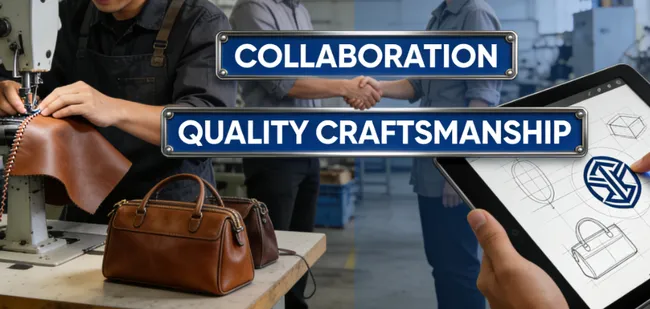
In the current global luggage market where competition has evolved from “product comparison” to “brand contest”, the traditional single model of “producing according to drawings and delivering on time” of contract manufacturers is no longer able to meet the deep-seated demands of brand owners. GIONAR is well aware that the core demand of brands when choosing factories is to find partners that can empower the entire chain from the production end to the marketing end. We break through the industry pain point of the “disconnection between manufacturing and marketing”, deeply integrating brand marketing thinking into the entire production process. Every detail of the craftsmanship becomes a communication asset for the brand, and every cooperation helps the brand achieve a market breakthrough.
GIONAR’s cooperation is never about passively taking orders. Instead, it is about being in sync with the brand during the early communication stage, ensuring that the production plan precisely matches the brand’s marketing strategy.
For brands that emphasize “durable and light luxury”, we will proactively remind you of the characteristic of cowhide material that it is prone to color fading due to sweat in summer, and recommend Togo leather, which is more suitable for commuting scenarios. This not only ensures the product’s reputation but also provides support for the brand’s “durable” positioning.
If a brand focuses on the “environmental protection concept”, it will give priority to recommending recycled fiber fabrics and simultaneously provide carbon footprint certified materials to assist in brand marketing and communication.
When the brand pursues “integrated design aesthetics”, we use the same material cotton fabric for the bottom of the bag and the four walls in one piece molding, which not only enhances structural stability but also creates a unique selling point of “seamless craftsmanship”.
In terms of the stitching details, it is customized according to the brand’s VI system – the small lady’s bag adopts the same color stitching to highlight the simple tone, while the large lady’s bag and the men’s bag retain the signature orange stitching to enhance the brand’s visual recognition.
Predict market trends in advance, proactively remind brands to avoid colliding with best-selling products, and assist in applying for design patents, allowing brands to focus on creating differentiated perceptions without worrying about infringement risks during marketing and promotion.
GIONAR firmly believes that the production process and technological standards of the factory themselves are the most persuasive marketing content. We offer “process visualization” support to brands, making professional production details the ammunition for brand communication
In response to the wear resistance of Togo leather, provide “5,000 friction test videos + four-season usage scenario explanations”. For the one-piece molding process of cotton fabric, organize the “Structural Stability Report”, marking quantitative data such as “30% increase in load-bearing capacity”, to facilitate the brand’s direct application on the detail page and product manual.
Shoot high-definition production behind-the-scenes footage, close-ups of stitching details, fabric texture videos and other materials, and adapt them to the brand’s “craftsmanship” themed content dissemination on platforms such as Xiaohongshu and Douyin. Create 3D virtual product demonstrations to allow consumers to directly experience the craftsmanship details and enhance marketing conversion efficiency.
Provide material descriptions and process analysis documents in Chinese, English and other languages to meet the brand’s global layout needs and assist in its marketing and promotion in overseas markets.
GIONAR offers brands not only products but also full-chain marketing support covering “production – dissemination – conversion”, making it worry-free and effortless for brands.
Provide cost-benefit analysis reports for the brand’s purchasing team, output compatibility test documents for the technical team, offer case materials and selling point extraction plans for the marketing team, adapt to the communication needs of different decision-making roles, and accelerate the advancement of cooperation.
Assist brands in integrating production-related materials into the email marketing system, automatically push process analysis white papers to potential customers, and send new product process upgrade previews to existing customers, enhancing customer stickiness and repurchase rate.
Support brands in inviting customers to visit production workshops (or provide virtual factory tour videos) as the core part of offline salons and dealer conferences; At the same time, we provide brand design suggestions for display boards highlighting craftsmanship that are suitable for exhibitions, helping brands stand out in events such as the Canton Fair and the International Luggage Exhibition.
In the highly homogenized luggage market, GIONAR helps brands build core competitive barriers with “original craftsmanship + customized services”
In response to brand demands, connect with exclusive fabric suppliers (such as Xiangtai 6112 Calf Grain Microfiber) to create the concept of “brand-customized fabrics”, making the supply chain advantage the core highlight of brand differentiated marketing.
Based on the brand’s specific requirements, develop exclusive craftsmanship details (such as hidden storage pockets and customized lining patterns), enabling the product to break away from homogeneous competition and become the brand’s “exclusive memory point”.
Collaborate with brands to serialize cooperation cases, presenting the entire cooperation process from initial demand communication, process customization to market feedback. Enhance brand persuasiveness with real data (such as “sales exceeding 10,000 within 3 months of launch”), and help them expand more channel cooperation.
GIONAR never builds its own brand because we focus on creating brands for our clients. Our core value is to ensure that brands do not have to choose between “high-quality products” and “effective marketing” – on the production side, we guarantee product quality with 20 years of technological accumulation. On the marketing side, we empower the entire chain to make brand communication more efficient.
While other factories are still talking about “workmanship”, GIONAR has already been co-creating “marketing-level products” with brands. Choose GIONAR, and what you get is not only a batch of high-quality bags, but also a marketing partner who can understand the brand’s needs and help break through the market. Let’s work together to ensure that every product has its own dissemination power and that every collaboration achieves continuous growth in brand value.
The bag factory is no longer merely a manufacturer but has developed into a strategic partner of bag brands. As a Gionar company with over 20 years of manufacturing experience, we respect the product design and style of our clients, and are dedicated to providing quality products and services. We never copy the styles of brands or our clients.
If you are looking for a reliable bag manufacturer and expect assistance in brand marketing and promotion, please feel free to contact Gionar. We will provide you with professional services and high-quality products.


Mobile Website

Inquires Whatsapp