Carbon fiber is a high-performance material composed of fine filaments mainly made of carbon atoms (with a carbon content exceeding 90%). It is renowned for its excellent strength-to-weight ratio — its strength is five to ten times that of steel, while its density is only one quarter of that of steel.
Carbon fiber is usually combined with resin to form carbon fiber composite materials (Carbon Fiber Reinforced Polymer, CFRP). Its most notable features are light weight, high strength, and excellent rigidity, with an extremely high strength-to-weight ratio. It is therefore widely used in aerospace, automobiles, wind power generation, sports equipment, medical devices, fashionable bags, and high-end consumer products.
The application of carbon fiber in fashionable bags is also becoming increasingly widespread — in backpack manufacturing, carbon fiber is most suitable for structural components such as back panels, frames, and hard shells, where its rigidity and lightweight properties provide excellent support. This guide covers what carbon fiber is, how it is made, how it compares to other materials, how long it lasts, and whether it is the right material for making bags.
What Is Carbon Fiber Material?
Carbon fiber is a special type of fiber composed of carbon atoms, with a diameter of only a few micrometers — thinner than a hair strand. It is hailed as the “King of New Materials” and the “Black Gold,” and its carbon content is typically above 90%.
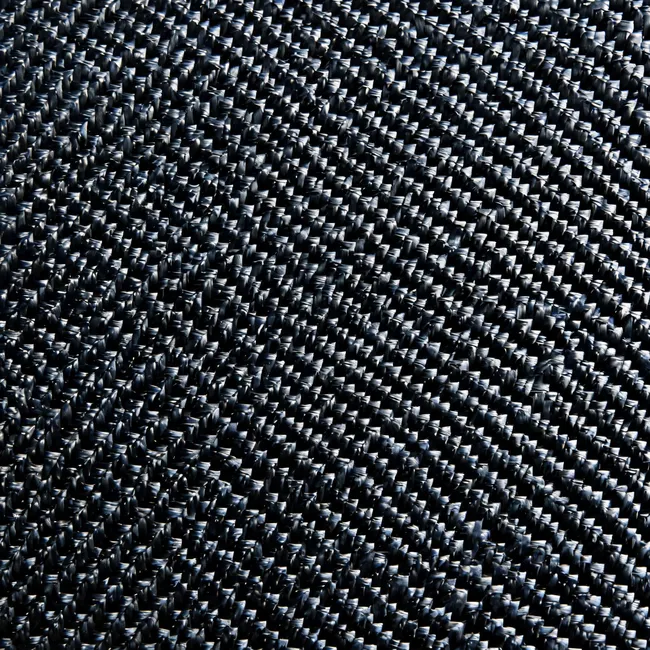
The core of carbon fiber’s performance stems from its internal carbon atoms’ hexagonal layered structure similar to graphite. This gives it a series of powerful characteristics:
- Light as a feather, stronger than steel — its density is only one quarter of that of steel, but its tensile strength is 7 to 10 times that of steel. Under the same weight, its strength far exceeds that of most metals.
- Stable performance — it has excellent fatigue resistance and corrosion resistance, can resist corrosion from acids, alkalis and salt fog, and will not rust.
- High temperature resistance — in an oxygen-free environment, it can withstand temperatures above 3000°C.
- Multifunctionality — it has good electrical conductivity and thermal conductivity, a small thermal expansion coefficient, and can quickly absorb vibration energy, providing an excellent shock absorption effect.
Professional tip: From a bag-manufacturing perspective, carbon fiber is not a drop-in replacement for fabric. It belongs in the “skeleton” of a pack — back panels, frames, and hard shells — where its rigidity and lightness deliver real value. As a main fabric for flexible bags, it is brittle and impractical.
Key Properties and Material Comparison
Key Properties of Carbon Fiber
| Property |
Typical Value |
Significance |
| Density |
1.5–1.6 g/cm³ |
~60% lighter than steel (7.8), ~40% lighter than aluminum (2.7) |
| Tensile strength |
3,000–7,000 MPa |
5–10× stronger than steel by weight |
| Tensile modulus |
200–600 GPa |
Extremely stiff (high-modulus variants approach diamond) |
| Thermal stability |
Stable to 400–500°C (oxidative environment) |
High-temperature performance |
| Corrosion resistance |
Excellent |
Does not rust or degrade in most chemicals |
| Fatigue resistance |
Superior to metals |
Maintains strength over millions of load cycles |
| Thermal expansion |
Near zero (or negative) |
Dimensionally stable under temperature swings |
| Electrical conductivity |
Good (along fiber) |
Can be used for heating elements, EMI shielding |
| X-ray transparency |
Transparent |
Used in medical imaging components |
Carbon Fiber vs. Other Materials
| Material |
Weight |
Strength |
Cost |
Typical Use |
| Carbon Fiber |
Very light |
Excellent |
High |
Premium luggage, aerospace |
| Aluminum |
Medium |
High |
Medium–High |
Suitcases, industrial products |
| Polycarbonate |
Light |
Good |
Medium |
Hard-shell luggage |
| ABS Plastic |
Light |
Moderate |
Low |
Budget luggage |
| Leather |
Medium |
Good |
Medium–High |
Luxury handbags and briefcases |
How Is Carbon Fiber Material Made?
The manufacturing of carbon fiber is an extremely precise and complex process with very high technical barriers. In simple terms, it involves a series of high-temperature heat treatments that transform organic fibers (raw filaments) into microcrystalline graphite structural materials with a carbon content of over 90%. Currently, more than 90% of commercial carbon fibers worldwide are made from polyacrylonitrile (PAN), and their production process goes through the following steps:
Step 1: Polymerization — From Monomers to “Spinning Coating”
This process involves polymerizing chemical raw materials (mainly acrylonitrile monomers) into long-chain PAN polymers. The polymerized PAN is a viscous liquid, similar to a “spinning coating,” and is the raw material for manufacturing carbon fiber filaments.
Step 2: Spinning — From “Coating” to “Filament”
- Main process — the wet spinning method: the polymer solution is extruded through a microporous spinneret into a chemical solidification bath. The number of micropores on the spinneret determines the filament specifications — for example, 12K represents a filament with 12,000 individual filaments.
- Advanced process — the “dry spinning-wet winding” process adds an air layer between the spinneret and the solidification bath, enabling the production of more uniform and stronger raw filaments.
- Post-treatment — the newly produced fibers undergo water washing, stretching, and oil application to make them finer and align the molecular chains along the fiber axis.
Step 3: Stabilization — Making the Fibers “Fire-Resistant”
Objective: heat the raw filaments in air at 200–300°C to convert the molecular chains into a heat-resistant trapezoidal structure, preventing the fibers from melting or burning during subsequent high-temperature carbonization.
Long process: this is the most time-consuming step in the entire process, typically taking 50–90 minutes. At this point, the fiber color changes from white to golden yellow.
Step 4: Carbonization & Graphitization — “Refining” the Structure at High Temperatures
- Carbonization — in an inert gas (such as nitrogen) environment, heat the fibers to 1000–1700°C. This removes non-carbon elements such as hydrogen and oxygen, allowing the carbon atoms to rearrange and form an initial graphite crystal structure. The fiber turns dark brown or black.
- Graphitization — if higher modulus carbon fibers are required, continue treatment at a temperature above 2000°C, allowing the carbon atoms to arrange more orderly and further enhancing their elastic modulus.
Step 5: Surface Treatment — Preparing for Composites
The surface of carbonized fibers is very smooth and has weak adhesion to resin and other base materials. Through oxidation, coating, etc., micro-roughness or active chemical groups can be formed on the fiber surface, thereby enhancing the adhesion to the base material.
Step 6: Sizing & Winding — Protection and Finished Product
- Function — a thin layer of sizing agent (protective layer) is applied to protect the fibers from being worn and frayed during subsequent processing.
- Finished product — the treated fibers are eventually wound into tubes, becoming raw materials for manufacturing various carbon fiber composite materials.
Professional tip: The spinneret specification is the fastest way to gauge a fiber’s grade. Small-tow fibers (1K–24K) are “aerospace-grade” with superior performance and higher cost; large-tow fibers (24K+) are “industrial-grade,” lower in cost and used for automotive and wind energy. When quoting a bag frame, always specify tow size — it drives both performance and price.
Types of Carbon Fiber Material
There are various classification methods for carbon fibers, and they can be categorized based on multiple factors:
Overview of the Three Core Classification Dimensions
| Classification Dimension |
Main Categories |
Key Characteristics |
Typical Applications |
| By Precursor |
PAN-based |
Balanced performance, high strength; accounts for over 90% of global production |
Aerospace, automotive, wind energy, sports equipment |
| Pitch-based |
Ultra-high modulus, excellent thermal/electrical conductivity; brittle and low toughness |
High-thermal-conductivity devices, satellite heat sinks, precision instruments |
| Rayon-based |
Excellent ablation resistance and thermal insulation; lowest mechanical strength |
Spacecraft heat shields, missile nose cones, fire-resistant clothing |
| By Mechanical Properties |
High-Strength (T-Series) |
Emphasizes tensile strength; higher numbers = higher strength |
Structural components requiring strength, e.g., aircraft fuselages |
| High-Modulus (M-Series) |
Emphasizes tensile modulus (stiffness); higher numbers = higher modulus |
Components requiring rigidity, e.g., spacecraft structures |
| Standard / Intermediate / High Modulus |
Standard: 230–265 GPa; Intermediate: 270–315 GPa; High: >315 GPa |
Different applications depending on stiffness requirements |
| By Tow Size |
Small Tow (1K–24K) |
Superior performance, high cost; known as “aerospace-grade” |
Aerospace, defense, high-end sports equipment |
| Large Tow (24K+) |
Lower performance, lower cost; known as “industrial-grade” |
Automotive, wind turbine blades, general industrial use |
By Raw Material Classification: “Genes” That Determine Performance
This is the most fundamental classification method, as the raw materials (precursors) determine the “genes” of carbon fibers.
- PAN-based carbon fibers — full name polyacrylonitrile-based carbon fibers. Currently the most technologically mature with the largest output (over 90% of mainstream products). Made from acrylonitrile, they have very balanced comprehensive performance, especially superior tensile strength, and are therefore used in the widest range of applications.
- Asphalt-based carbon fibers — made from petroleum or coal asphalt. Their most prominent advantage is extremely high modulus (stiffness) and excellent thermal and electrical conductivity. However, they have poor toughness and brittleness, and are not suitable for main load-bearing structural components. They are mostly used in high-thermal-conductivity heat dissipation devices, precision instruments, and other special scenarios.
- Viscose-based carbon fibers — the oldest category, made from viscose fibers. Its biggest highlight is excellent ablative and heat insulation performance, performing exceptionally well in extreme high-temperature environments such as spacecraft return capsules. However, its mechanical strength is the lowest among the three categories, the process is difficult and costly, and it is mainly used in specialized fireproof materials and aerospace heat insulation layers.
None of the three raw materials has absolute superiority or inferiority. The core of selection is to match the specific application environment.
By Mechanical Performance Classification: “Indicators” for Measuring Capabilities
- General and high-performance types — a rough classification: the general type has a strength of approximately 1000 MPa and a modulus of approximately 100 GPa; the high-performance type has higher strength (>2000 MPa) or a higher modulus (>300 GPa).
- Toray classification method (industry reference) — the industry often refers to the model numbers of Japan’s Toray. “T” represents Tensile (strength), and “M” represents Modulus.
- T series (high-strength type) — the larger the number, the higher the strength. For example, T300 (the most widely used basic model), T800, T1000, etc.
- M series (high-modulus type) — the larger the number, the higher the modulus. For example, M40, M60, etc.
- Modulus classification — standard modulus (230–265 GPa), medium modulus (270–315 GPa), and high modulus (>315 GPa).
Carbon Fiber in Bags and Luggage
Given the bag manufacturing context, it is necessary to explain how carbon fiber enters the bag field. Luxury bag manufacturers may use several forms of carbon fiber:
- Structural shell — Rimowa Original Carbon (discontinued but iconic), Teguard luggage: a woven carbon fiber outer layer achieves an ultra-light and scratch-resistant hard shell design.
- Hardware decoration — carbon fiber pattern handles, brand logos, and zipper heads on high-end backpacks and handbags.
- True CFRP components — high-end camera bags (such as Peak Design, WANDRD) use thin CFRP sheets as partitions, providing rigidity with no weight increase; Pelican luggage offers a carbon fiber reinforced version.
- Watch straps, jewelry boxes — decorative carbon fiber panels.
- Cost reality — true CFRP materials are expensive (about $20–200 per kilogram of raw material, plus complex layup and curing processes). The price of a true carbon fiber bag shell can reach $1,500–5,000. Most “carbon fiber bags” on the market are actually printed or impregnated with carbon fiber patterns on PU or polycarbonate, rather than true CFRP materials — a key distinction serious buyers need to understand.
Carbon Fiber Used in Bags and Luggage
| Material |
Description |
Typical Application |
| Carbon fiber composite |
Real carbon fiber with epoxy resin |
Premium hard-shell luggage |
| Carbon fiber fabric |
Woven carbon fiber cloth |
Reinforced panels and decorative accents |
| Forged carbon fiber |
Compressed chopped fibers in resin |
Luxury accessories and specialty products |
| Carbon fiber veneer |
Thin decorative surface |
Wallets, briefcases, phone cases |
| Carbon fiber-pattern PU or polycarbonate |
Printed or embossed texture |
Fashion bags and mid-range luggage |
Is Carbon Fiber a Sustainable Material?
Is carbon fiber sustainable? The answer is not a simple “yes” or “no”, but rather a complex “it depends.” It is itself a material with contradictory superior properties, but at a high production cost. Carbon fiber has some sustainable advantages in terms of lifespan, but its production and post-consumption environmental impacts are significant.
The “Sin” of Production: Energy-Intensive and High Carbon Emissions
- High energy consumption and high carbon emissions — the production of 1 kilogram of carbon fiber generates 13.0 to 34.1 kilograms of carbon dioxide equivalent. Among them, the energy consumption during the production process contributes 59% of the greenhouse gas emissions.
- Dependence on fossil fuels — over 90% of carbon fiber raw materials are polyacrylonitrile (PAN), a petroleum-based product.
- Difficulties in waste disposal — carbon fiber is often combined with non-recyclable thermosetting resins to form composite materials (CFRP), and its waste degrades extremely slowly in the natural environment. It is estimated that by 2050, the annual waste of CFRP in the world will exceed 500,000 tons.
The “Compensation” of Usage: Long-Term Benefits from Lightweighting
- Remarkable lightweighting effect — in specific applications, carbon fiber can reduce weight by 97% compared to steel, and reduce volume by 87%.
- Reduction of environmental impact throughout the life cycle — although production emits high carbon, the energy-saving effect brought by lightweighting can “compensate” during the product’s usage. For example, in aircraft component applications, carbon fiber composite materials can reduce the environmental impact throughout the life cycle by approximately 70%. In concrete reinforcement, even though its unit-mass carbon emissions are higher, the overall climate impact can still be reduced by 70% with the lightweight advantage.
Hope for the Circular Economy: Breakthroughs in Recycling Technology
- Great potential for recycling — compared to producing virgin carbon fiber, recycled carbon fiber (rCF) can reduce the global warming potential by 70–90%, requiring less than 10% of the energy for production.
- Clear technical path — main recycling technologies include pyrolysis, chemical depolymerization, and microwave-assisted methods. For example, the latest low-temperature chemical depolymerization technology can recover fibers at 110°C and retain approximately 90% of their original mechanical properties.
- Market value exists — recycled carbon fiber (rCF) already has commercial value in secondary applications such as non-structural components.
Future Direction: Greener Raw Materials and Processes
- Bio-based raw materials — using lignin, a plant-based biopolymer, to replace 50% of the petroleum-based PAN can reduce carbon emissions by 16.3%.
- Innovative production processes — adopting new technologies such as microwave carbonization can reduce energy demand for the production of lignin-based carbon fiber by 66.8% and environmental impact by 69.5%.
- Recyclable resins — developing new resins that can be extracted from biomass and recycled for reuse is one of the fundamental solutions to the problem of composite material recycling.
How It Compares to Other Materials
| Material |
Production Footprint |
Recyclability |
Durability |
Weight |
| Steel |
High |
Excellent |
Excellent |
Heavy |
| Aluminum |
High (especially primary production) |
Excellent |
Excellent |
Medium |
| Carbon fiber |
Very high |
Limited |
Excellent |
Very light |
| Wood |
Low (if sustainably sourced) |
Good |
Moderate |
Light |
Sustainability Verdict by Application
| Use Case |
Net Sustainability |
Reasoning |
| ✅ Aerospace primary structures |
Net Positive |
20–30× lifecycle CO₂ payback; 25+ year lifespan |
| ✅ Wind turbine blades |
Strongly Positive |
Enables renewable energy generation; fast payback |
| ✅ Hydrogen pressure vessels |
Positive |
System-level enabler for clean energy transition |
| ✅ Automotive (mass-market, high-volume) |
Conditional |
Positive IF thermoplastic CFRP + recycled fiber + end-of-life recovery |
| ⚠️ Premium sports equipment |
Neutral-to-Negative |
Lightweighting benefit exists but product lifespan shorter; recycling infrastructure lacking |
| ❌ Consumer electronics cases |
Negative |
Minimal lightweighting benefit; rarely recycled; cosmetic use dominates |
| ❌ Decorative “carbon fiber look” products |
Strongly Negative |
Usually printed patterns on plastic — marketing, not sustainability |
| ❌ Single-use or short-lifespan CFRP products |
Negative |
Carbon debt never repaid; ends in landfill |
Is Carbon Fiber a Composite Material?
Carbon fiber itself is not a composite material; rather, it is a high-performance fiber material. However, when combined with a matrix material (such as resin), the resulting carbon fiber reinforced composite material (CFRP) is the true composite material.
Material Attribute Analysis
- Carbon fiber — as a single material, it is a fiber composed of carbon atoms. Its characteristics include high strength, light weight, and high temperature resistance, but it is brittle and difficult to withstand bending or impact when used alone. Therefore, it is rarely used alone.
- Composite material — a new material formed by the macroscopic combination of two or more materials with different physical or chemical properties. Its goal is to achieve superior performance not available in a single material through complementing each other’s strengths.
Why Is “Bare Carbon Fiber” Not a Composite Material?
According to the material science standard definition, a composite material must consist of two or more components with different physical and chemical properties, including a continuous matrix phase + dispersed reinforcing phase, with distinct interfaces.
The essence of carbon fiber is: it is an inorganic fiber formed by carbonization of organic fibers (viscose-based, asphalt-based, polyacrylonitrile-based) under high-temperature conditions, with a carbon content higher than 90% — a single-component high-performance fiber without a matrix or a second phase, thus not meeting the definition of a composite material.
Why Is “Carbon Fiber” Regarded as a Composite Material in Daily Language?
Because pure carbon fiber is almost never used alone in engineering — loose carbon fiber filament bundles cannot be formed without matrix adhesion, are not corrosion-resistant, and disintegrate under stress. It must be embedded in a matrix to become a structural material. So when we say “carbon fiber components,” “carbon fiber plates,” or “carbon fiber luggage cases,” we are actually referring to “carbon fiber composite materials” (Carbon Fiber Reinforced Polymer, CFRP) — a material composed of carbon fiber as the reinforcing body and polymer (epoxy resin, bisphenol A polyimide, etc.) as the matrix.
Types of Carbon Fiber Composites
Carbon fiber composite materials are classified based on the type of matrix material used:
- Carbon fiber reinforced polymer (CFRP) — the most common type, where carbon fibers are embedded in polymer resin. CFRP is widely used in aerospace, automotive, sports equipment, and construction fields. Carbon fiber provides strength and stiffness, like a sturdy framework; the polymer matrix (usually epoxy resin) fixes the fibers together, transmits loads, and protects the fibers from external environmental damage.
- Carbon fiber reinforced metal (CFRM) — carbon fibers embedded in a metal matrix (such as aluminum, titanium). CFRM has excellent heat conductivity and is often used in heat sinks and aerospace components.
- Carbon fiber reinforced ceramic (CFRC) — carbon fibers embedded in a ceramic matrix (such as silicon carbide). CFRC has high-temperature resistance and is suitable for rocket nozzles and industrial furnaces.
How Long Does Carbon Fiber Material Last?
Carbon fiber materials are highly durable, but their lifespan is not a fixed value. It depends on whether it is a composite material, the application scenario, environmental conditions, and the type of load. The chemical properties of carbon fiber itself are stable and theoretically can be used indefinitely; however, in practical applications, its lifespan is dominated by the resin matrix and the structural design.
Key Factors Affecting Lifespan
- Hygrothermal environment — the biggest “lifespan killer.” High temperature and high humidity accelerate the infiltration of moisture into the resin, causing it to plasticize, micro-crack, and even detach from the fibers. For example, a study predicted that the lifespan of a certain type of CFRP in a specific hygrothermal environment is approximately 30 years.
- UV radiation — long-term direct sunlight exposure causes resin aging and degradation, resulting in poor adhesion between the surface fibers and the resin, and a decline in mechanical properties.
- Mechanical fatigue and impact — although carbon fiber has better fatigue resistance than metals, repeated loads or sudden impacts (such as drops) are still important causes of its failure.
- Manufacturing and design quality — material selection and curing process directly determine its initial quality and ability to resist environmental aging.
Key Factors Affecting CFRP Lifespan
| Factor |
Mechanism |
Impact on Lifespan |
| UV exposure |
Degrades epoxy surface, causing chalking and discoloration |
Outdoor unprotected: 10–15 years surface degradation |
| Moisture/water immersion |
Resin absorbs water, hydrolyzes, weakens fiber-matrix interface |
Marine environment: lifespan reduced 30–50% |
| Temperature cycling |
Thermal expansion mismatch creates micro-stresses; CFRP CTE near zero but resin differs |
Extreme temperature cycling accelerates aging |
| Mechanical fatigue |
Repeated loading leads to micro-crack growth and delamination |
Fatigue life typically 1/3–1/2 of static strength |
| Impact damage |
Hard-object impact creates hidden internal damage (BVID) |
One severe impact can render the entire part unusable |
| Chemical exposure |
Solvents, strong bases attack epoxy network |
Significantly shortens lifespan |
| Manufacturing quality |
Void content, fiber alignment, degree of cure |
Poor-quality parts may last only 1/3 as long as high-quality ones |
The Core Mechanism of Lifespan Attenuation
- Carbon fiber itself — undergoes almost no chemical degradation; it is resistant to acids and alkalis, can withstand high temperatures, and is corrosion-resistant. It does not age naturally over time.
- Resin matrix (the decisive factor) — ultraviolet (UV) causes the epoxy resin to yellow and become brittle; humid and hot environments trigger hydrolysis reactions, reducing interface bonding strength; cyclic loading induces microcracks, which gradually expand into delamination and detachment.
- Interface delamination — the failure of adhesion between the fiber and the resin is the main failure mode, and it is not the fracture of the fiber.
- Impact damage — low-speed impact (such as a tool falling) can cause internal delamination, invisible to the naked eye but significantly reducing the load-bearing capacity.
Technological Breakthroughs to Extend Service Life
- Self-repairing CFRP — Daijin’s new thermosetting composite material launched in 2026 can automatically repair microcracks after being heated at 80–120°C, extending the service life by more than 30%.
- Thermoplastic matrix (such as PEEK, PPS) — can be melted and remolded, supporting multiple recycling and reformation, enhancing the value of the material throughout its life cycle.
- Intelligent monitoring system — in the aviation and wind power fields, embedded optical fiber sensors monitor strain and temperature in real time, enabling life prediction and preventive maintenance.
Lifespan Reference by Application
| Application |
Typical Expected Lifespan |
Key Notes |
| Aerospace / High-End Industrial |
30 to 60+ years |
One of the most thoroughly researched areas. Carbon fiber composites have a proven long-service track record in controlled environments. |
| Automotive / General Engineering |
15 to 40 years |
Depends on material grade, applied loads, and environmental exposure. This is the typical lifespan range for conventional FRP composites. |
| Sports Equipment (e.g., Bicycles) |
5 years to “lifetime” |
Heavily influenced by usage intensity, maintenance, and accidental damage. High-performance racing frames may be replaced after 2–3 years due to performance degradation; frames used by amateur riders can last 10 years or more. |
| Future Technology (Self-Healing Materials) |
125 years to centuries |
An emerging technology. Through self-repairing mechanisms, it promises to extend the lifespan of existing composites by an order of magnitude. |
Comparison to Other Materials
| Material |
Typical Lifespan |
Failure Characteristic |
| Carbon fiber composite |
15–50+ years |
Sudden, catastrophic if damaged; otherwise very durable |
| Steel |
30–100+ years |
Gradual corrosion; visible warning signs |
| Aluminum |
20–50+ years |
Corrosion, fatigue cracking |
| Fiberglass |
10–30 years |
More flexible; less stiff; similar UV/moisture issues |
| Wood |
10–50+ years |
Rot, insect damage, warping |
Practical Suggestions for Extending the Lifespan of CFRP
- UV protection — outdoor CFRP components must be coated with paint containing UV absorbers (polyurethane paint is the best choice).
- Avoid impact — CFRP is resistant to compression but not to impact. Hard objects hitting it is the number one killer.
- Control the environment — avoid prolonged exposure to sunlight, immersion in seawater, and contact with strong solvents.
- Regular inspection — high-end CFRP products (such as $5,000+ luggage, racing bicycles) are recommended for professional testing every 2–3 years.
- Proper storage — dry, cool, and avoid long-term bearing deformation.
Warning: CFRP is compression-resistant but impact-vulnerable. A hard-object impact (even a tool dropping on a case) can create hidden internal delamination — invisible to the naked eye but capable of cutting the part’s load-bearing capacity dramatically. Always verify with a drop test before production, and never rely on visual inspection alone.
Is Carbon Fiber Material Good for Making Bags?
Yes, carbon fiber can be used to make bags, but it depends on the specific purpose of the bag. Carbon fiber materials are not suitable for directly making conventional flexible bags, but they can be used as high-performance structural reinforcement layers or frameworks, applied to specific parts of high-end luggage to achieve a balance between lightweight and high strength.
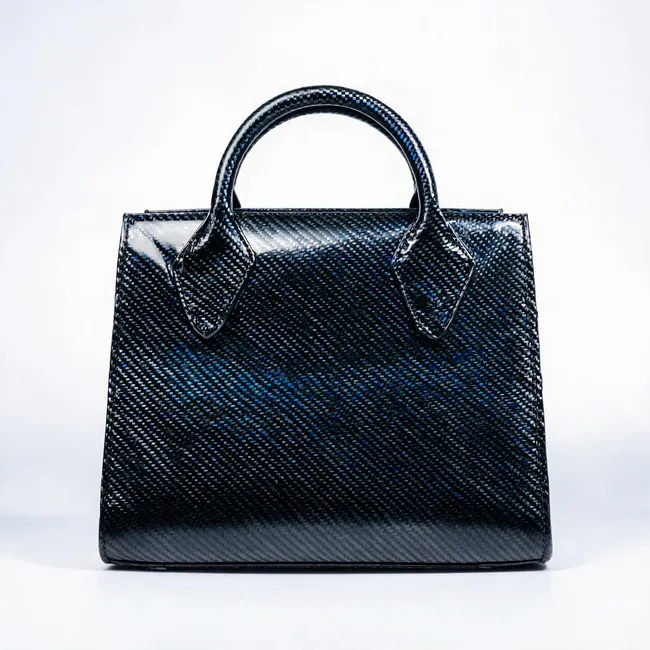
In simple terms, it is very suitable for creating the “skeleton” of backpacks to pursue ultimate lightness and performance, but it is rarely used as the main fabric of the bag. It is particularly suitable for manufacturing structured luggage, hard-shell bags, high-end wallets, and fashionable items that seek lightness, strength, and an upscale appearance.
Common Applications of Carbon Fiber in Bags
It should first be clear that what we often refer to as “carbon fiber bags” mostly means the use of carbon fiber composite materials in the key structures of the bag, rather than the entire bag being made of carbon fiber. It usually appears in the following parts:
- Back support system (back panel/structure) — the most core and valuable application of carbon fiber in backpacks. It serves as the “skeleton” of the bag, providing strong support while maintaining extremely light weight.
- Bag body shell — on some high-end luggage or protective backpacks, carbon fiber is used as the shell material, providing excellent shock resistance and protection.
- Frame/structure — some large technical backpacks use carbon fiber rods or frames to build the entire bag’s frame, balancing lightness and strength.
Advantages of Using Carbon Fiber in Bags
- Extremely lightweight — the density of carbon fiber is only 1/4 that of steel. When used in the back support system of a backpack, it can be 30%–50% lighter than aluminum alloy frames, significantly reducing fatigue for users who need long-distance travel.
- Exceptional strength and rigidity — its tensile strength is 5 to 10 times that of steel. As a back panel, it can provide far superior support than metal, ensuring that the backpack does not deform easily under load and efficiently transfers weight to the hips.
- Outstanding fatigue resistance — carbon fiber is not prone to micro-cracks or deformation under repeated bending and long-term weight-bearing. A well-designed carbon fiber frame bag has very stable structural integrity for a long time.
- Unique appearance and texture — the distinctive weaving texture of carbon fiber brings a sense of technology and sophistication, a plus for consumers seeking fashion and individuality.
Disadvantages of Using Carbon Fiber in Bags
- High cost — the raw materials and complex processes of carbon fiber determine its expensive price, positioning carbon fiber bags as high-end.
- Poor impact resistance (brittleness) — the fatal weakness of carbon fiber as a “fabric” or “thin shell.” Although it has extremely high strength, its toughness is insufficient and the texture is relatively brittle. Once subjected to a violent impact from a sharp object, it may cause resin cracking, fiber delamination, or even fracture. For daily-use soft bags, this means the bag body may suffer irreparable damage due to bumps.
- Excessive performance — for most daily commuting or lightweight outdoor users, the ultimate performance of carbon fiber may not be fully utilized, and the high cost paid for this seems somewhat “excessively performance-oriented.”
- Repair difficulty — unlike metal frames that can be corrected, carbon fiber structures, once damaged, can only be replaced as a whole.
Carbon Fiber vs. Other Bag Materials
| Material |
Advantages |
Disadvantages |
Common Applications |
| Carbon Fiber |
Extreme lightweight, high rigidity, fatigue resistance |
Expensive, brittle, vulnerable to sharp impacts |
High-end backpack back panels, frames, hard-shell luggage |
| Aluminum Alloy |
High strength, relatively affordable, mature technology |
Heavier, may permanently deform under prolonged load |
Traditional backpack frames, back panels |
| Nylon |
Abrasion-resistant, tear-resistant, water-resistant, low cost |
Feels stiffer, offers less structural support |
Main fabric for the vast majority of backpacks |
| Leather |
Premium texture, durable |
Heavy, water-sensitive, requires maintenance, expensive |
Fashion bags, high-end accessories |
When Is CFRP a “Good Choice” for Bag Manufacturing?
✅ Scenarios where true CFRP is recommended:
- High-end hard-shell luggage: at the Rimowa level, priced at $1,500+, targeting customers who value the material’s quality.
- Professional camera bags/drone bags: require rigid protection, lightweight, and resistance to compression — CFRP partitions are industry standards.
- Tech-savvy business bags: frame and handle made of CFRP, main body made of leather or ballistic nylon, costing $500+.
- Military/special operations bags: reliability requirements in extreme environments outweigh cost considerations.
- Limited edition/collectible bag styles: the material itself is a selling point, such as a bag associated with a supercar brand.
❌ Scenarios where true CFRP may not be suitable:
- Daily soft handbags/tote bags: CFRP cannot be bent and is not usable at all.
- Mid-range bags ($100–500): the cost structure of CFRP does not support this price range’s profit model.
- Bag styles that need frequent deformation: such as folding bags, compressible storage bags.
- Long-term close-fitting use: the cold hard texture is uncomfortable, especially in winter.
- Fast fashion/seasonal disposable bags: the carbon footprint cannot be “repaid” during use.
Decision-Making Guidance for Bag Manufacturers and Brands
- If you are making high-end hard-shell cases: true CFRP is the top choice, but be prepared for pricing of $1,500+ and a minimum order of 200 pieces. Apply a UV protective topcoat to prevent surface aging, and conduct drop testing to verify BVID risks. Suggestion: CFRP shell + genuine leather/synthetic suede lining + aluminum package corners, forming a material combination advantage.
- If you are making business bags/camera bags: CFRP structural components + other materials for the main body is the best approach. Use CFRP for the handle core, bottom frame of the bag, partitions, and brand name; use top-grain leather, ballistic nylon, or X-Pac for the main body. Cost is controllable at $50–150 per processing fee increment, with retail price $500–2,000.
- If you are making mass-market bags: do not use true CFRP — the cost structure does not support it. Use carbon fiber texture PU/PVC printing for visual effect, or use glass fiber reinforced PP (GF-PP) to gain some rigidity advantage at only 1/10 of CFRP cost.
- If you are making sustainable bag styles: be cautious about using true CFRP — high carbon footprint, difficult to recycle. Consider rPET fabric + recycled aluminum frame + GRS certification. If you insist on using CFRP, be sure to use recycled carbon fiber (rCF), which can reduce the carbon footprint by 40–60%.
Professional tip: When quoting a “carbon fiber” bag order, always clarify the material truth: true CFRP components (epoxy-cured, $1,500+ retail), carbon fiber veneer (decorative), or printed carbon-pattern PU/polycarbonate (fashion-grade). The three have completely different cost structures — quoting the wrong one will either lose the margin or lose the order.
FAQ
Why is carbon fiber stronger than steel yet lighter?
Its density is only one quarter that of steel (1.5–1.6 g/cm³ vs 7.8 g/cm³), while its tensile strength reaches 3,000–7,000 MPa — 5 to 10 times that of steel by weight. Under the same weight, its strength far exceeds that of most metals.
Is carbon fiber itself a composite material?
No. Bare carbon fiber is a single-component high-performance fiber (carbon content above 90%), without a matrix or a second phase. It only becomes a composite material — CFRP — when combined with a polymer matrix such as epoxy resin.
How long does carbon fiber last?
Carbon fiber itself is chemically stable and theoretically lasts indefinitely, but in practice its lifespan is dominated by the resin matrix: aerospace components 30–60+ years, automotive/general engineering 15–40 years, sports equipment 5 years to “lifetime.” The biggest lifespan killers are hygrothermal environments and UV radiation.
Is carbon fiber environmentally friendly?
It depends on the application. Production is energy-intensive (1 kg of fiber generates 13.0–34.1 kg of CO₂e), but lightweighting can compensate during use — aircraft applications cut lifecycle environmental impact by ~70%. Recycled carbon fiber (rCF) reduces global warming potential by 70–90%.
Why are most “carbon fiber bags” not actually carbon fiber?
True CFRP is expensive: raw material runs $20–200/kg plus complex layup and curing, pushing a real carbon fiber shell to $1,500–5,000. Most bags on the market use PU or polycarbonate printed with a carbon fiber pattern. Check whether the surface is genuinely woven and resin-cured before paying a premium.
Is carbon fiber suitable for making bags?
Yes — for the “skeleton,” not the skin. It excels in back panels, frames, and hard shells (30–50% lighter than aluminum frames), but is brittle and unsuitable for flexible bag bodies. For soft bags, nylon, leather, or canvas remain more rational choices.
Conclusion
Carbon fiber is not a universal material suitable for all bags. For instance, it is not suitable for making flexible bags. However, carbon fiber performs exceptionally well in certain applications, such as ultra-lightweight hiking backpacks, high-end suitcases, and premium protective cases. In these scenarios, its performance is superior to cost and fragility.
Therefore, for daily commuting or high-intensity outdoor use, as well as for daily users who prioritize comfort, durability, and cost-effectiveness, leather, nylon, or canvas are still more rational options.
If you run a bag business and are looking to customize bags in bulk but aren’t sure which material is best for your products, feel free to contact us. We’d be happy to help you choose the right material.