- +86 13922774531
- info@gionar.com

English


English
January 6 , 2026
Fox Fur originates from fox fur and is one of the traditional luxury materials. Its soft texture and lustrous appearance are highly favored by the fashion industry and are often used to make high-end products such as overcoats, scarves and bags.
However, the way to obtain fox fur is mostly through artificial breeding and then slaughtering and extracting the fur. This process has aroused strong opposition from animal protectors, who believe that it infringes upon the rights of animals. With the enhancement of public awareness of animal protection, more and more people are resisting natural fox fur products, which is driving the fashion industry to explore sustainable and more humane alternative materials.
This post will explore whether foxes have hair or fur, and whether it is necessary to kill the fox to obtain its fur. Is fox fur legal? And explore the characteristics of fox fur and its application in bags.
Fox fur is a high-end natural animal fur made from fox fur (skin with hair), renowned for its softness, warmth and luxurious appearance, which has long made it highly valued in the fashion and luxury goods industries.
| Feature | Description |
| Composition | A natural animal skin with two hair layers: guard hairs (long, glossy outer hairs for protection) and underfur (dense, soft inner hairs for insulation). |
| Key Characteristics | Known for being long-haired, thick, and dense. It is very recognizable due to its texture and volume. |
| Color Varieties | Exists in over 20 natural colors. Key commercial types include the Silver Fox (colors from black to grey/white to brown/red) and the Blue Fox (a color morph of the Arctic fox, ranging from blue to white). Other common types are red/brown foxes. |
| Primary Uses | Primarily used in fashion for coats, jackets, trims (on collars, cuffs), scarves, and accessories. |
| Main Source | While wild foxes exist, the vast majority of fox fur used commercially today comes from animals raised on fur farms. |
In the wild, a fox’s fur is a survival adaptation: it regulates body temperature, provides camouflage, and protects the skin from harsh environments. The color of the Arctic fox even changes with the seasons – it is white in winter to camouflage the snow, and brown/gray in summer to blend in with the tundra vegetation.
For human beings, fox fur has historical and commercial significance. Historically, it was used by indigenous communities to make warm clothes, hats and blankets. Today, it is mainly used in luxury fashion, such as fur coats, collars, scarves, bags and accessories. Most commercial fox furs come from captive farming (factory farms), while wild fox furs are less common due to population control and ethical issues.
Fox fur is highly valued in the fashion industry for the following reasons:
Common applications include:
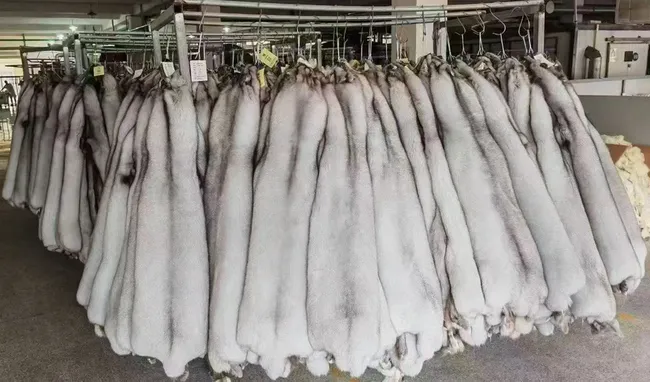
Foxes have fur. In science and common use, due to their special structure and function, their fur is classified as fur.
Fox fur is a classic double-layered coat, which is the symbol of what we call “fur” :
| Feature | Fur (Foxes, Wolves, Mink) | Hair (Humans, Horses) |
| Primary Function | Insulation and protection from elements. | Varied: sun protection, sensory, display. |
| Growth Cycle | Determinate growth: Grows to a set length, stops, and is often shed seasonally. | Indeterminate growth: Can grow continuously for years (e.g., human head hair). |
| Structure | Typically a double coat with underfur and guard hairs. | Usually a single layer of one hair type. |
| Density | Extremely dense (many hairs per follicle). | Less dense. |
Yes, to obtain the fox’s fur, one has to wait until the fox dies. Foxes are sometimes killed for their fur, which is the main source of commercial fox fur used in the fashion industry.
The vast majority of commercial fox furs come from factory farms (also known as fur farms), where foxes (usually bred to achieve the desired characteristics, such as thick and shiny fur or rare colors).
Such as silver foxes and Arctic foxes, they grow up in enclosed enclosures. Once they mature (usually 6 to 8 months old), they are killed by methods aimed at maintaining the integrity of their fur, such as electrocution, poison gas or neck amputation.
These methods are chosen to avoid damaging the fur, which is the only valuable product of animals. In many countries, including parts of Europe, North America and Asia, fur farming is legal, although it is facing increasing regulatory pressure due to concerns over animal welfare.
In some regions, especially in parts of North America, Russia and the Scandinavian Peninsula, wild foxes are also captured for their fur. Fox catchers catch foxes with traps that pinch their legs or grab their bodies, and then kill them to obtain their fur. The fur of wild foxes is usually less valuable than that of farmed ones because their quality and color are often inconsistent, and the number of catches is also lower. In most regions, this practice is regulated by wildlife management laws and subject to seasonal and quota restrictions to prevent overhunting.
Fox fur has always been an important part of the global fur industry. In 2018 alone, China produced approximately 1.74 million fox fur, making it one of the world’s largest producers of fox fur. China, along with countries such as Denmark, the United States and Canada, has long been a major player in fox fur production.
However, it is worth noting that due to ethical issues and changes in consumer attitudes, the fur industry in many parts of the world has been on the decline.
Although fur farming exists all over the world, it is particularly prominent in certain regions:
China: A major producer of fox fur, with a significant portion of production concentrated in provinces such as Shandong and Hebei.
Europe: Countries such as Finland and Poland have a large fur industry, although many European countries have imposed bans or restrictions on fur farming in recent years.
North America: The United States and Canada are also involved in the production of fox fur.
The practice of killing foxes to obtain their fur is the intersection of several complex issues:
Fox fur is prohibited in some places, allowed with restrictions in others, and not regulated at all in some places.
Therefore, regarding whether fox fur is legal, the answer is not simply a “yes” or “no”, but entirely depends on the laws of the specific country or region where you are located or involved. Globally, regulations vary greatly among different regions, ranging from strict prohibitions to licensing management.
| Region | Legal Status | Key Conditions / Explanations |
| Ireland | Banned | The law explicitly prohibits breeding foxes for fur. |
| California, USA | Strictly Restricted | Prohibits trapping fur-bearing animals for commercial or recreational purposes. |
| Ontario, Canada | Permitted with Regulations | Legally possessing, purchasing, or selling fox pelts requires compliance with detailed rules and may necessitate registration or permits. |
| Indiana, USA | Permitted with Regulations | Strict regulations govern the possession and sale of live foxes or raw pelts, requiring activities to be within hunting seasons or with appropriate licenses. |
| Arkansas, USA | Permitted with Regulations | Foxes legally captured can be sold, provided the seller holds the relevant permits. |
In addition to the specific animal protection or hunting regulations in some regions, the use of fox fur may also be subject to other restrictions:
Trapping wild foxes for fur is regulated, but it is usually legal in many areas:
Exception: In some states of the United States (such as California), the purpose of fox catching is prohibited, while in others, this behavior is allowed but subject to strict control.
More and more jurisdictions are prohibiting the sale of fox fur, regardless of their production methods.
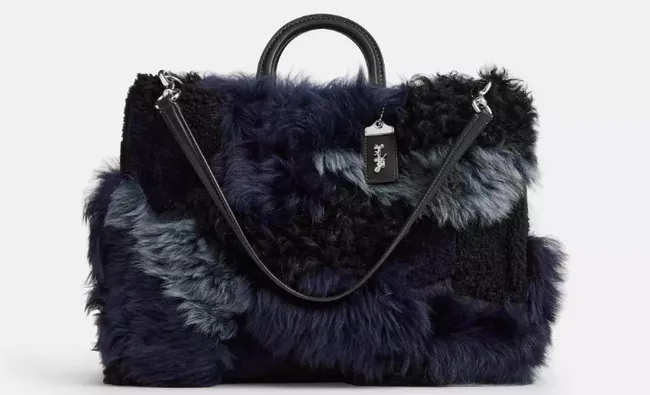
Fox fur can be used to make bags. It is a traditional luxurious material that has the advantages of durability and warmth retention, and is suitable for making luxury bags. However, it has problems such as high price, ethical controversy and high maintenance requirements, and is no longer the mainstream choice now.
| Characteristic | Real Fox Fur | Eco-Fur (Faux Fur, e.g., Super Fox) |
| Material Source | Animal skin and fur | Synthetic materials |
| Main Advantages | Unique luxurious sheen, plush and voluminous texture, excellent warmth. | Appearance, feel, and volume can rival real fur, no animal welfare concerns, easier to care for, wide variety of options. |
| Core Controversy | Involves animal welfare and ethical issues. Farming and processing have environmental impacts. Restricted or banned by laws in many places. | Generally free from the above ethical issues; represents the current market trend. |
| Common Uses | High-end fashion handbags, trim decoration. | Widely used in various fashion handbags for everyday needs. |
Alexander Wang’s application of fox fur bags interprets the brand’s dark rock and urban luxury. Ulla Johnson integrates flamboyant fox fur into its romantic Bohemian and exquisite craftsmanship brand style. And Coach has demonstrated its balance between classic and modern.
Although fox fur bags are relatively easy to maintain, it is still necessary to pay attention to:
If you are considering purchasing a fox fur handbag, you need to pay attention to the following points
Fox fur is an excellent material for making luxury bags, but it also has ethical issues. At the same time, the current market trend is also showing differentiation: some consumers still pursue the natural texture of high-end luxury, but the younger group prefers sustainable alternatives. This trend also forces bag brands to gradually adopt synthetic materials or recycled fibers, balancing aesthetics and ethics.
If you are running your own bag business and also want to use natural or synthetic fox fur to make your bags, then welcome to contact Gionar. Let us offer you more professional advice and create more possibilities together with you.



Mobile Website

Inquires Whatsapp