- +86 13922774531
- info@gionar.com

English


English
November 8 , 2025
Have you ever seen some fashionable people on the street carrying a bag that can show a wild luster, modern coolness and structural aesthetics? This material is very likely to be made of horsehair.
Compared with the hair of other animals, horse hair has less ethical controversy because it is mostly a by-product of daily grooming or natural shedding and does not cause harm to the horse.
Horsehair is a special material for bag making. Its value does not lie in its softness, but in its ability to provide a lightweight structure, durable support, natural luster, and unique decoration for luxury accessories, especially for manufacturing high-end, handcrafted or traditional handbags.
This post will explore the characteristics of horsehair and the advantages of making bags, etc.
Horse hair is the hair derived from the mane and tail of a horse. It is a natural protein fiber, similar to human hair or wool, but with unique properties that make it valuable for specific uses. For centuries, it has been used in textiles, interior decoration, Musical Instruments, and even fashion.
Unlike the fur of animals such as minks, horses are not raised or killed for their hair. It is usually collected during regular combing or as a by-product of animals in the meat industry, which makes it a more sustainable and ethical material for many people.
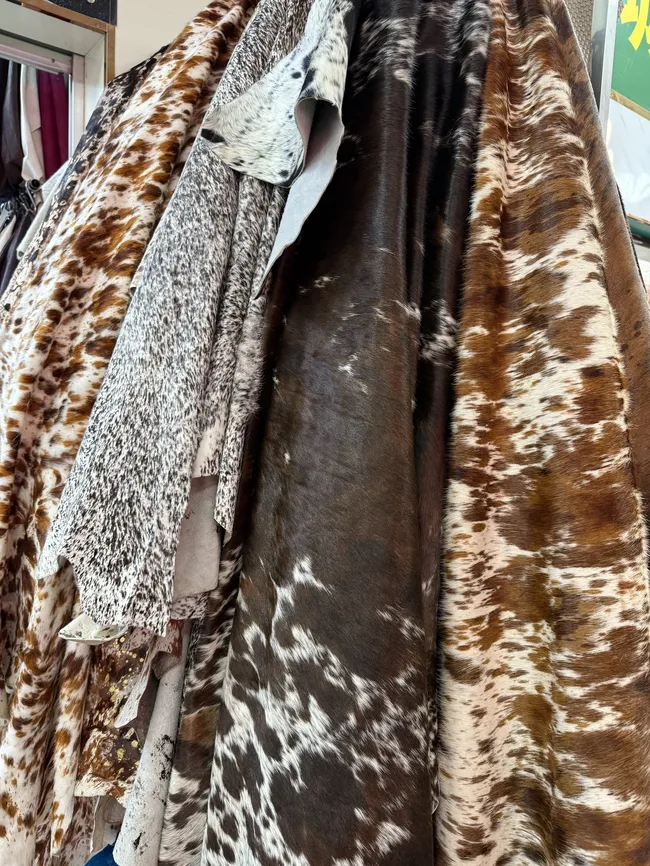
| Feature | Description |
| Source | Mane or tail of horses (tail hair is longer and coarser) |
| Texture | Coarse, strong, slightly stiff |
| Color | Naturally black, white, brown, or grey (can be dyed) |
| Collected from | Live animals (groomed and trimmed humanely) or post-mortem (less common) |
Unlike soft fibers such as wool or mink, horsehair is rigid and structured, making it highly suitable for applications that require support or elasticity. Due to the unique properties of horsehair, it has been used in various fields for centuries:
Summary of the common uses of horse hair
| Industry | Use |
| Textiles | Woven into fabric for stiff garments (e.g. crinolines, collars, canvas) |
| Upholstery | Used as stuffing or covering for high-end furniture |
| Fashion | Adds structure to garments, hats, and corsets (historically and occasionally today) |
| Musical Instruments | Bowstrings for violins, cellos, etc. |
| Brushes | Used in high-end brushes and brooms due to durability |
In the bag-making process, horsehair fabric (woven horsehair + cotton or silk) can be used for:
It is not often used in mainstream or cheap bags because:
Some ultra-premium or artisan brands (such as hermes) use horsehair in a limited range of products.
In conclusion, horsehair is a strong, hard and versatile natural fiber extracted from the mane and tail of horses. It is highly valued for its use in high-end tailoring, Musical Instruments, brushes, fashionable bags and various handicrafts. Most horsehair is obtained without harming the animal, but if you are concerned about ethical issues or want a vegetarian alternative, it is still worth verifying with the supplier.
Horses have hair, not fur.
However, the distinction between “hair” and “fur” is more about language and custom rather than a strict scientific difference. Biologically speaking, hair and fur are composed of the same main substance: keratin.
Hair: It refers to the coat of a horse, as well as that of other mammals such as humans, pigs and elephants. Hair is usually long, thick and grows in different strands, and it grows in a single hair follicle (for example, in horses and humans).
Fur: refers to the thick, soft and often shorter coats of animals such as cats, dogs and bears. The fur is often thick and has two layers (undercoat and protective coat), mainly used for insulation (such as mink fur and rabbit fur).
| Feature | Fur (e.g., on Cats, Dogs, Mink, Rabbits, Bears) | Hair (e.g., on Horses, Humans, Primates, Pigs) |
| Growth Cycle | Often has a determinate growth cycle. It grows to a certain length, stops, and then is shed in a seasonal pattern. | Typically has an indeterminate growth cycle. It will continue to grow until it is cut or falls out naturally (e.g., a horse’s mane/tail, human head hair). |
| Density & Layers | Usually very dense with a pronounced double layer: a dense, soft undercoat for insulation and longer guard hairs for protection. | Generally consists of a single layer of coats that are less dense. Horses have a summer coat and a winter coat, but it’s not a distinct undercoat/guard hair system like in fur-bearing animals. |
| Texture & Purpose | “Fur” implies a primary function of thermoregulation (keeping warm). | “Hair” often serves additional or primary purposes beyond warmth, such as protection from the sun and insects (the horse’s forelock), sweat dispersal, and sensory input (vibrissae, or whiskers). |
In summary: While biologically similar, we say horses have hair because its growth pattern (especially the continuously growing mane and tail) and structure align more closely with the common definition of “hair” than “fur.” Using “hair” is the correct and conventional term for equines.
A horse grows a layer of fur, which has several functions:
Some parts of the hair are soft, while others are hard. So whether it is “soft” or “not”, the softness of a horse’s hair completely depends on which part of the horse it comes from.
Moreover, even though horsehair itself is not soft, after meticulous processing, it achieves a luxurious, elastic and soft texture, which is very popular in industries that require comfort and elasticity. Its unique “soft yet supportive” quality makes it an outstanding material for professional products.
The mane (along the neck) is usually softer, finer and more flexible than the tail hair. It is often compared to human rough hair. Due to its texture, manes are usually more suitable for fine applications, such as:
The hair on the tail is coarser, harder and firmer. It has a unique, filamentous texture, not the kind that people usually say feels “soft”. Its main advantages are durability and elasticity, making it highly suitable for:
The hair that makes up a horse’s coat is very short and feels soft and fluffy, especially the thick winter fur. However, it is not used in commercial products like manes and tails.
Traditional processing methods, such as water washing, steam curing (120-150°C), and natural carbonization, can transform horsehair into a silky soft and elastic material.
Processed hair will form natural waves and become as soft as wool, making it an ideal material for high-end applications such as mattress fillings or luxury toothbrushes
Yes, horsehair is particularly sturdy. In fact, it is one of the strongest natural fibers, which is the main reason for its historical and continuous use in various products.
| Application | Property Leveraged |
| Luxury Mattresses | Resilience and springiness for lasting support. |
| Fine Upholstery Fabric | Durability and ability to resist wear for centuries. |
| Violin/Cello Bows | High tensile strength and stiffness to create friction. |
| Industrial Brushes | Stiffness and resistance to abrasion. |
| Concrete/Composite Reinforcement | High tensile strength to reinforce materials. |
Horsehair is not merely strong; It features a unique combination of tensile strength, resilience and flexibility, making it irreplaceable in specific applications where these properties are indispensable.
In most cases, the source of horse hair is moral, but there are also some immoral sources where horses are injured or killed for the sake of hair. In very rare cases, unscrupulous suppliers might purchase horsehair from animals specifically killed for their tails, especially in areas with less regulation.
Compared with other animal fibers, horsehair is often a more ethical choice, with the key factor being the collection method.
When you are considering products made from horse hair, asking a few key questions can help you make decisions that align with your values.
| Certification/Practice | Coverage | Impact |
| RMS (Responsible Mohair) | Animal welfare, land health, worker rights | Ensures humane treatment and sustainable farming (adapted for horse hair) |
| SN/T 4102-2015 (China) | Transportation, slaughter, feeding | Limits stress and injury during handling |
| Third-party Audits | Supply chain traceability | Verifies “farm-to-factory” transparency (e.g., Hästens mattresses) |
| Aspect | Ethical If… | Unethical If… |
| Animal Welfare | Sourced from certified farms (RMS/SN standards) | Harvested from stressed or mistreated horses |
| Environmental | Sustainably harvested (e.g., Mongolian pastures) | Overexploitation of local ecosystems |
| Social Impact | Workers paid fair wages | Labor exploitation in processing regions |
Yes, horsehair is very expensive, but the price of horsehair varies greatly. It is not a single, unchanging expensive material. Its cost largely depends on the type, quality and sales form of the hair.
Horse hair used for brushes, interior decoration or basic handicrafts is relatively inexpensive. For example:
This affordability stems from an abundant supply and minimal processing.
Dyed or processed horsehair used for fashion (such as accessories, decoration) or equestrian equipment belongs to mid-range brackets.
High-quality horsehair, especially for classical Musical Instruments, is very expensive.
This is due to strict quality standards (such as uniformity and tensile strength) and limited supply.
| Product Form | Price Range / Examples | Key Details |
| Raw Horsehair (Bulk) | ¥546.71/kg (Sample Price); $5.6 – $9.8/kg (Export Price) | Bulk, unprocessed material. Price varies by color, length, and processing (e.g., “double drawn”). |
| Processed Braid / Cord | $120 (Retail, 22-foot Mecate Rope) | Processed and manufactured goods for specific uses (e.g., equestrian equipment). Bulk inquiries for 2-inch braid exist. |
| High-End / Specialized | Information missing from search results | Includes specialty items like violin bows, luxury fabrics, or wigs. These are typically the most expensive category. |
Such a wide price range is caused by several key factors:
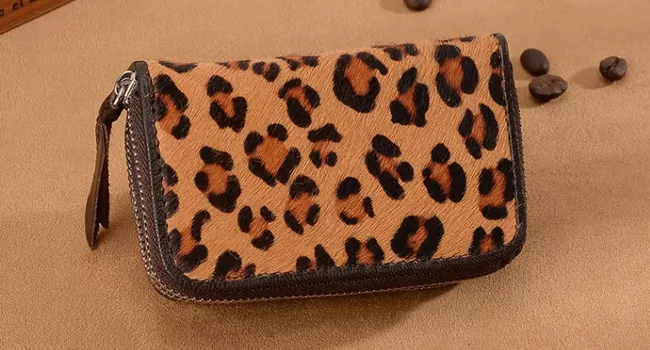
Horse hair is a unique and traditional material, and it is an excellent material for making bags, especially high-end, handcrafted or traditional handbags, which are highly praised for their unique aesthetic and structural characteristics.
Animal short horsehair, with its natural fine luster, smooth touch and unique animal textures (such as zebra print, leopard print, colorful patterns, etc.), tends to be geometrically pieced together, color-blocked or used as local embellishments. It showcases a tough and modern fur texture.
Application of short horsehair style
Horse hair has the characteristics of high strength and tensile resistance, ensuring long-term durability and resistance to deformation. It is coarse and hard, easy to maintain, dust-proof and wear-resistant. As an ethically compliant animal by-product, it aligns with the concept of sustainability.
Horsehair is suitable for a variety of bag designs, including classic and individual ones. While balancing practicality and aesthetics, it infuses the bags with a unique texture.
The light luxury positioning and versatile nature of horsehair make it a practical item that enhances the quality of your look. It has been used in the production of high-end or handcrafted bags. If you are running your own bag business and want to use materials like horsehair to create your own brand of bags, please feel free to contact Gionar. We will work with you to create new high-quality products.

Tags :


Mobile Website

Inquires Whatsapp