- +86 13922774531
- info@gionar.com

English


English
November 26 , 2025
Wolf fur is a special double-layered layer of hair covering the surface of a Wolf’s body. The touch of wolf fur is a unique combination of roughness and softness, featuring both the rugged and firm outer protective coat and the soft and dense inner undercoat.
This double-layer structure not only endows wolf fur with outstanding thermal insulation performance, but also makes it a unique luxurious material in the fashion industry, especially suitable for making winter clothing that requires wind resistance and wear resistance.
This post will explore the characteristics of wolf fur and whether it is suitable for making bags.
Wolves have fur. However, the difference between “fur” and “hair” can be confusing because they are both composed of the same protein: keratin. The difference lies in the structure and purpose of the coat.
In the context of science and biology, “fur” refers to the thick, short and soft down found on mammals such as wolves, foxes and bears. It provides insulation and protection.
“Hair” is a broad term referring to keratin-based filaments that grow from the skin, including all types of hair (for example, human hair, whale manes or lion manes).
The key lies in density, stratification and growth cycle:
As a typical carnivore, the covering on the Wolf’s body surface should be accurately called fur rather than simply “hair”.
To sum up, wolves do have a complex fur system rather than simple hair. This double-layered structure is a key survival feature for them to adapt to various environments, especially cold climates.
Although wolves strictly speaking have “fur” (just like all mammals), the word “fur” is more accurate when describing their thick functional fur.
Just as we say dogs have fur (even if it is hair), the word “fur” emphasizes the adaptability and insulation of their fur.
Wolves have a typical coat of fur. This complex double-layer system is a masterpiece of evolution, providing them with insulation, waterproofing and camouflage, enabling them to thrive in the world’s coldest environments and become top predators.
| Animal | Coat Type | Key Characteristics |
| Wolf | Fur | Double-layered (dense undercoat + long guard hairs); seasonal shedding; primary function is insulation. |
| Human | Hair | Single layer; grows continuously; primary functions are sun protection and sensory input. |
| Dog | Fur or Hair | Varies by breed. Double-coated breeds like Huskies have “fur,” while single-coated breeds like Poodles are often said to have “hair.” |
Wolf fur is a double-layered structure covering the surface of a wolf’s body, consisting of an outer layer of coarse and hard protective hair and an inner layer of soft and dense undercoat. It has excellent functions of warmth retention, water resistance and protection, and is a key survival feature for wolves to adapt to cold environments.
The difference in touch: Wolf fur is relatively rough and hard in texture, while fox fur is soft and comfortable, feeling as soft and fine as rabbit fur when touched.
Usage differences: Wolf fur is more suitable for making outer fur collars, as it is wear-resistant and cold-resistant. Fox fur is more suitable for making inner linings, but it sheds more easily.
The ethical and protection issues of Wolf fur
Wolf fur is not only a physiological characteristic of wolves but also a key adaptive feature for their survival in harsh environments, reflecting the ingenious design of biological evolution. With the enhancement of ecological protection awareness, the commercial use of Wolf fur has gradually decreased, and more attention has been paid to its significant value in the ecosystem.

“Wolf hair” generally refers to the fur or hair of a Wolf.
Wolf hair is divided into needle-like hairs (long and thick, providing protection) and downy hairs (short and dense, offering insulation), which together form a fur system that is both insulating and waterproof.
Wolf fur comes in a variety of colors, with common ones including gray, brown, black, and white. The specific colors vary depending on the region and season.
In some cultures, Wolf hair is regarded as a symbol of strength and wildness.
Historically, Wolf skins were used to make clothes and hats, but nowadays, imitations are mostly used to protect animals.
Imitation Wolf fur materials (such as artificial fur) are often used in the fields of fashion and decoration.
Wolves have thick and weather-resistant fur, which consists of two layers: a soft inner coat that provides insulation, and a coarser outer coat that offers protection. This helps them survive in cold environments.
Wolf fur is usually described as thick, long and soft, although it may vary by subspecies and climate. In cold climates, fur may be thicker, while in warm regions, it may be shorter and lighter.
Some people use “wolf fur” in fashion or craftsmanship, such as the fur or hair used to make clothing, accessories, and even artworks (like artificial fur products). This is sometimes confused with “Wolf skin” or “fur”, although it is usually regulated by laws related to wildlife protection.
In very rare cases, this term can be used to describe a texture or style that imitates the appearance of wolf hair, especially in products such as wigs or synthetic materials.
Wolf fur has a very unique functional texture. To imagine its feeling, it’s best to imagine a thick, high-quality dog coat, but firmer and wilder. The wolf’s fur feels thick, rough and insulating, and its texture varies slightly depending on the layer and the individual Wolf.
If you stroke the back or side of a wolf with your hand, your first impression will be its thick, rough and somewhat stiff fur. It is not as uniform and soft as plush toys. Its texture is a direct result of its two-layer design, which is crucial for survival.
| Feature | What It Feels Like | Real-World Comparison |
| Initial Touch | Dense, coarse, and stiff | A coarse, outdoor-grade rug |
| Pressing Deeper | A sudden, plush softness | A cashmere sweater buried under the rug |
| Overall | A complex mix of harsh and soft | A Husky’s coat, but more intense and rugged |
Yes, Wolf fur is indeed an expensive type of fur, with a very wide price range ($15-$3,500), usually far exceeding that of ordinary leather and most animal furs.
Northern wolves have thicker, longer fur and better warmth retention (the fur layer can reach 3 to 5 centimeters in winter).
Ninety percent of the products on the market that claim to be “wolf fur” are actually dog skin or artificial fur (priced at $5-$50). Genuine wolf fur has a unique touch: the inner layer is as soft as cashmere, the outer layer is smooth and tough, with a natural luster and a sense of weight.
The price of wolf fur is influenced by multiple factors. Mid-to-high-end wolf fur products are indeed quite expensive, but there are a large number of imitations and low-priced substitutes in the market. Consumers should make rational judgments when purchasing to avoid being misled by the concept of “wolf hair” and paying excessive prices.
Whether wolf fur is illegal largely depends on your location and specific circumstances, as laws vary greatly among different countries and regions. International trade is strictly regulated, and many countries have strong legal protection for wolves.
In China, as wolves are listed as key protected wild animals by the state, it is illegal to hunt, trade, transport or sell Wolf fur.
In the United States, the status of wolf protection varies by state.
44 western states and Mexico: Listed as an endangered species, strictly protected, and commercial trade prohibited.
Minnesota: Listed as a threatened species, trade restricted.
Montana, Idaho, Wyoming, etc. : Removed from the protected list, limited legal hunting and trading are allowed (state license required).
In Canada, wolves are legally hunted and traded in most provinces, but a license is required for export.
In May 2025, the European Union downgraded wolves from “strictly protected” to “protected”, but still restricted commercial transactions.
There are differences in implementation among member states: Germany, Norway and other countries strictly protect, while Spain, Croatia and other countries allow limited hunting.
| Legal Factor | Key Consideration | Example Regions / Countries |
| International Trade (CITES) | Trade in wolf fur is often restricted for conservation purposes. | Global (via CITES treaty) |
| Regional Protection Status | Determines if hunting/culling is allowed for population control versus strict protection. | EU: Status changed in 2025 from “strictly protected” to “protected”. USA: Regulated hunting/trapping of some wolf populations is permitted in certain states. |
| National & Local Laws | Laws can completely ban, or heavily regulate through licenses and quotas, the trade and possession of wolf fur. | Russia: Bans private ownership of wolves. USA: Has detailed labeling laws for legal fur products. |
| Import & Export Bans | Countries may ban imports from specific regions due to animal diseases or animal welfare concerns. | China: Bans imports from countries with specific animal diseases. Switzerland: Proposed bans on furs produced using cruel methods. |
Wolf fur can be used to make bags, but it is usually not ideal – and there are important practical and legal considerations.
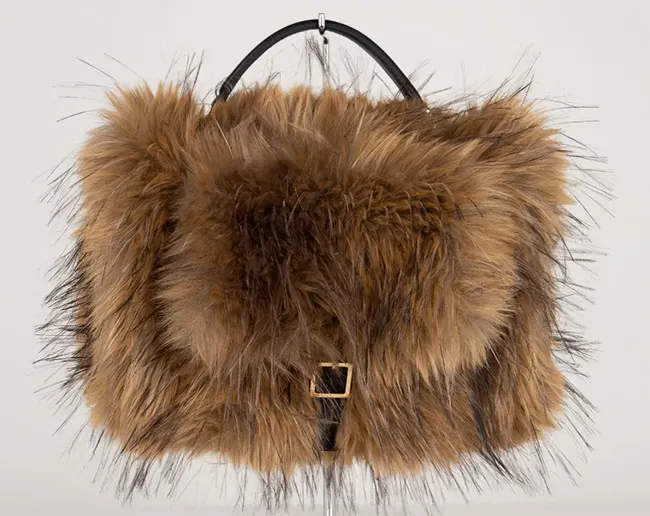
Double-layer structure
Natural and durable: Retain essential oils and prevent drying; Flexible leather can resist cracking over time.
Weight to warmth ratio: Light in weight but offers special insulation – an ideal winter bag.
| Disadvantage | Explanation |
| Legal and Ethical Concerns | Wolves are a protected species in many parts of the world. The international trade of wolf fur is often restricted by CITES. Sourcing it ethically and legally is extremely difficult and controversial. |
| High Maintenance | Like other furs, it is not water-resistant and can be damaged by moisture. It requires professional cold storage and cleaning, making it impractical for an everyday bag. |
| Lack of Versatility | A wolf fur bag is a very specific, seasonal (cold weather) statement piece that is difficult to style with everyday outfits. |
| Cost and Scarcity | Due to legal restrictions and the difficulty of sourcing, genuine wolf fur is scarce and can be very expensive, placing it in a niche luxury category. |
| Material | For Bag Making | Key Consideration |
| Wolf Fur | Poor | Niche, controversial, high-maintenance, and legally complex. |
| Cowhide Leather | Excellent | Durable, versatile, and easier to care for. The standard for most bags. |
| Mink Fur | Good (but controversial) | Softer, more established in luxury fashion, but shares similar ethical concerns. |
| Faux Fur | Good | Achieves a similar aesthetic without the ethical, legal, and maintenance issues. |
| Benefits | Drawbacks |
| Unique tactile experience: Soft underfur + sleek guard hairs create distinctive touch | Legal minefield: Protected by CITES and national laws—trade requires special permits |
| Weather resistance: Guard hairs repel water; ideal for cold climates | Maintenance intensive: Requires specialized care to preserve texture and integrity |
| Timeless appeal: Develops natural patina enhancing appearance with age | Ethical concerns: Most consumers uncomfortable with animal fur use |
| Conversation piece: Exudes exclusivity and wild aesthetic | Extreme cost: Authentic wolf fur bags range $500-$3,500 |
Characteristics of wolf fur: Wolf fur is hard and elastic, theoretically suitable for making durable leather bags. However, the processing technology for wild animal furs is complex, requiring professional tanning techniques and incurring high costs.
Artificial leather, such as PU and PVC, can meet daily usage requirements by simulating the texture and feel of natural leather, and it is also more cost-effective and environmentally friendly.
Plant-based materials, such as pineapple leaf fibers and mushroom leather, are sustainable and biodegradable, and represent the future trend of the leather goods industry.
Recycling leather: By recycling old leather goods or scraps, it reduces resource waste and conforms to the concept of a circular economy.
Technically speaking, wolf hair is an excellent material for making handbags – offering unparalleled luxury, durability and weather resistance – but for most people, the use of wolf hair is very impractical because:
If you are drawn to the inspiration of wolves, I suggest you explore high-quality artificial fur or textured leather alternatives – they offer 90% of the look, have no legal or ethical issues, and are also very low-cost.
Technically speaking, wolf fur is an excellent material for making handbags, but due to the restrictions on its acquisition and use, especially in some regions, it may be classified as an illegal act. Therefore, before customizing a wolf fur bag, it is necessary to be clear about the local policies to avoid breaking the law and causing losses.
In many countries, wolf fur can be used to make bags. If your local policies permit, you are welcome to contact us to customize wolf fur bags.

Tags :


Mobile Website

Inquires Whatsapp